Score
How the South Lawn at the White House will be transformed for Trump’s 80th birthday
The transformation of the South Lawn at the White House for Donald Trump's 80th birthday, featuring a UFC event, signifies a shift in brand strategy for presidential events, moving away from traditional family-friendly activities to a more spectacle-driven approach. This reflects Trump's willingness to break norms and create a unique identity that resonates with a specific demographic, potentially redefining how future administrations engage with sports and entertainment.
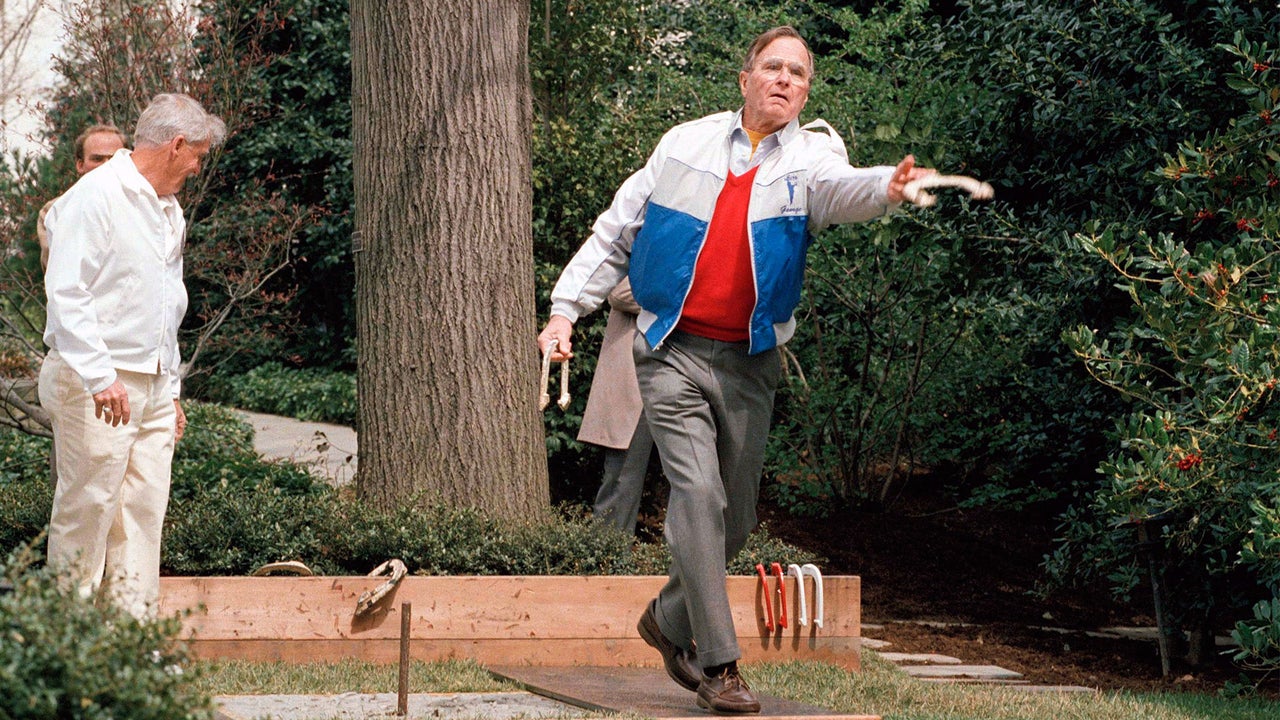
FastCompany: Teddy Roosevelt boxed. Richard Nixon bowled. Dwight D. Eisenhower put in a putting green. George H.W. Bush added a horseshoe pit. Herbert Hoover played a game named for himself to get more exercise, while George W. Bush threw open the space for youth T-ball. The White House and its storied South Lawn are no strangers to sporting events. But they’ve never seen anything like the UFC bout President Donald Trump is hosting to celebrate his 80th birthday on Sunday or the eight-sided, wire-mesh cage complete with an open overhead dome featuring large screens that are surrounded by thousands of arena seats.
Sometimes called America’s backyard, the South Lawn was until now known for low-contact sports and joyful events geared toward children or bipartisanship, like the annual Easter Egg Roll or the congressional picnic. The same space being used for blood sport, feting a president who relishes it and playing out in a hulking structure featuring a complicated overhead lighting scheme known as The Claw, illustrates yet another of the White House norms that Trump is gleefully laying to rest — or, in UFC parlance, forcing to tap out.
That the president has begun suggesting that he could make the cage-fighting venue a permanent South Lawn fixture further underscores just how far from T-ball the White House has come. “Sports has been central to presidents. I don’t know that it’s been quite the spectacle that it is with the Trump administration,” said Michael Patrick Cullinane, senior historian at the Theodore Roosevelt Presidential Library. Teddy Roosevelt pioneered sports at the White House Many early presidents were talented athletes before taking office. Abraham Lincoln and William Howard Taft were celebrated young wrestlers.
John Quincy Adams was fit enough to take daily naked swims in the Potomac River while in office. But Teddy Roosevelt was the first to make sports a large part of White House life, installing a tennis court on the lawn. His wife, Edith, was concerned about his workload, and the grass court outside his office was meant to force more relaxation.
Cullinane, who is the author of “Theodore Roosevelt and the Tennis Cabinet” and is a history professor at Dickinson State University, said Roosevelt loved tennis and, though he didn’t play well, he did so “long and vigorously.” Roosevelt would take the court daily at 3 p.m., rain or shine, for seemingly endless six-game sets against top aides. He also boxed, holding bouts in the White House that were far more intimate affairs than Sunday’s UFC fight. While sparring with his military aide Col. Daniel T. Moore in 1905, Roosevelt detached the retina of his left eye.
During a recent New York Post interview, Trump was asked about Roosevelt and replied that he “had a lot of energy, loved the outdoors.” He indicated that he knew about Roosevelt’s having boxed at the White House but didn’t comment on how the UFC event might compare. Other presidents brought more sports with them Hoover used the lawn to play a combination of tennis and volleyball involving 6-pound (2.7-kilogram) medicine balls that White House physician Adm. Joel T. Boone was credited with inventing to improve his fitness. The game eventually became known as Hoover-ball. His successor, Franklin D.
Article truncated for readability. Read the full piece →
The article discusses a significant shift in branding strategy for presidential events, which could influence future political branding, making it impactful and relevant, though the concept of spectacle-driven events is not entirely new.