Score
Calendly gets a rippling, gloopy rebrand for the AI age
Calendly's recent rebrand reflects its ambition to evolve beyond a simple scheduling tool into a comprehensive AI-powered productivity platform. The new identity, characterized by softer visuals and a focus on clarity, aims to communicate its expanded capabilities while addressing consumer perceptions that still associate it primarily with calendar functions. This strategic shift highlights the importance of design in helping users navigate the complexities of modern productivity software.
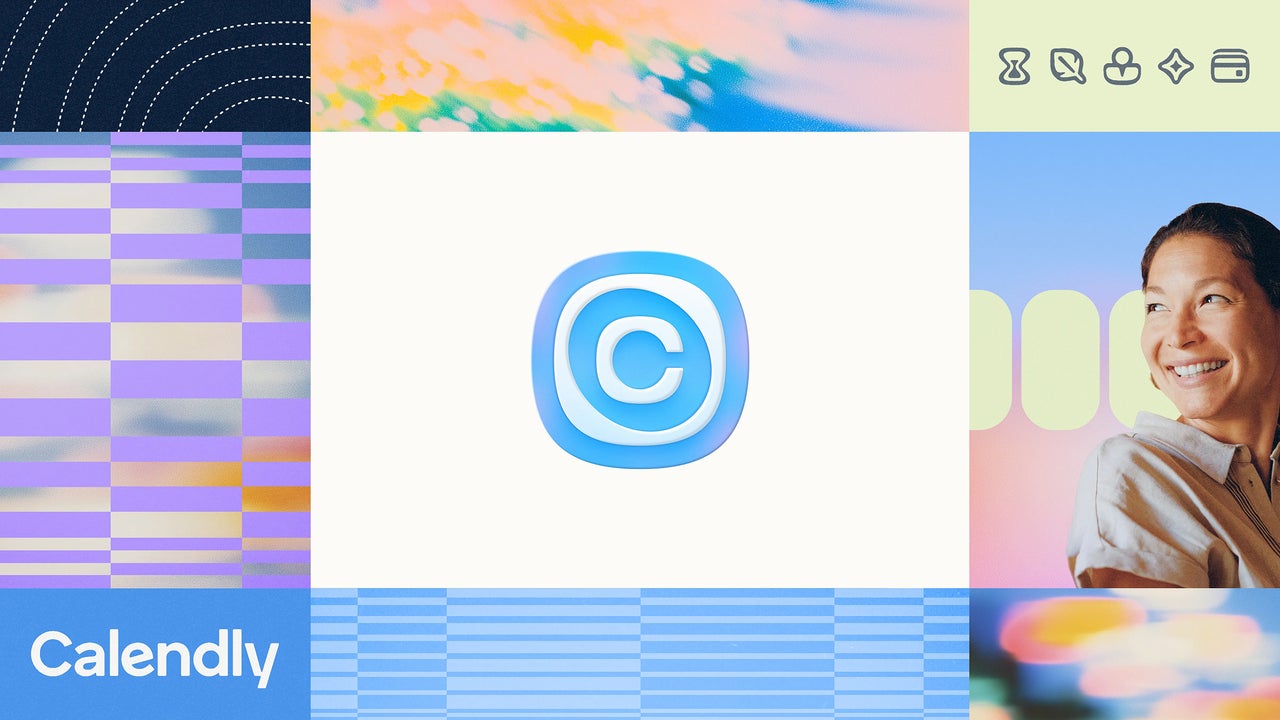
FastCompany: Calendly just got a major rebrand to let users know that it’s a lot more than a calendar. The meeting software company just revealed a new logo, wordmark, color system, and brand positioning, created by the design studio Smith & Diction .
At the same time, Calendly announced in a press release that it will be expanding its productivity offerings to include an AI email assistant and an AI-powered meeting notetaker, “forming a suite of AI tools designed to remove the friction—and frustration—surrounding meeting scheduling and busywork.” Calendly is facing a conundrum that’s become almost ubiquitous for the broad category of productivity software as a service (SaaS) brands: Its ambitions and capabilities in the AI era are outpacing how consumers perceive it.
Most people know Calendly for its original use-case of sending one simple blue link to set up a meeting without the hassle of discussing time zones and availability; now, though, the brand wants to be much more than that. [Photo: Smith & Diction] As AI fundamentally transforms the productivity SaaS space, its key players are using design to help smooth the transition. In Calendly’s case, that means shifting from a loud, bright brand identity to a softer look that communicates clarity. Calendly’s brand problem Calendly’s brand problem has two key facets.
First, over the past several years, the brand has moved from powering straightforward meeting scheduling to offering a larger toolbox of AI-powered meeting features. Largely, though, it’s still known as a calendar. Second, recent advances in AI coding tools means that, today, almost anyone has the ability to build and deploy their own productivity tools. In this environment, Calendly is fighting an uphill battle to convince users that it’s worth using their software instead. “AI is changing the expectation for software,” says Jamal Miller, Calendly’s VP of brand and product marketing .
“People no longer want a collection of isolated features; they want tools that understand context, work across the systems they already use, and can take action when they ask. At the same time, people can increasingly assemble their own workflows with general-purpose AI. That means Calendly has to be precise about the value only we can deliver.” [Photo: Smith & Diction] Calendly is far from the only SaaS brand tackling this challenge.
Notion, for example, has spent the last several years transforming from a website builder to a broad AI-powered workspace , and the grammar-fixing tool Grammarly has ballooned into a productivity tool that can send AI agents into your Google Docs, email, Notes app, and more. Both of these platforms have used design to help users acclimate to the shift. Notion introduced an amorphous, Clippy-esque mascot to help introduce users to its new AI agents in 2024; and Grammarly underwent an entire rebrand —including changing its name to Superhuman—in 2025.
Article truncated for readability. Read the full piece →
The rebrand of Calendly signifies a notable shift in its market positioning and highlights the role of design in evolving brand identities, making it impactful and relevant for brand strategy professionals, while the approach is somewhat novel but not entirely groundbreaking.
Weekly digest
Get the Signal digest
Every Monday morning — the top 3 brand trends, 10 high-signal articles, and one emerging signal to watch.
No spam. Unsubscribe anytime.