Score
Kevin O’Leary believes his 10,000-acre data center can be ‘beautiful’
Kevin O’Leary's ambitious Stratos data center project aims to redefine the aesthetics of data centers, moving away from traditional designs to create a visually appealing infrastructure. This approach highlights the importance of integrating design with functionality in brand strategy, particularly in industries facing public scrutiny over environmental impact and energy consumption.
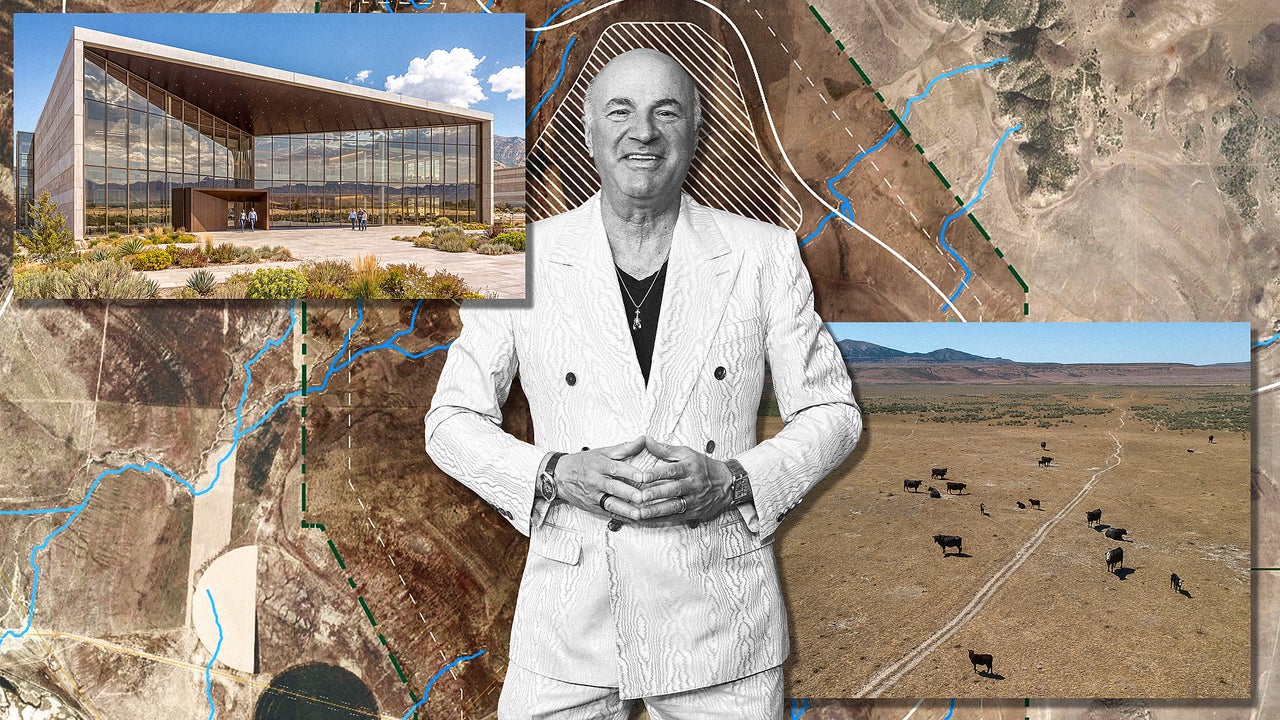
FastCompany: If it ever gets built, the 7.5-gigawatt Stratos data center project in Utah would dwarf the artificial intelligence infrastructure that’s been built to date. Covering 10,000 acres of cattle-grazing land north of the Great Salt Lake, it would arguably be the largest data center in the world. That has many people in Utah concerned. The developer behind the project is Kevin O’Leary, the real estate investor familiar to many as a star of the ABC television show Shark Tank (and also the villain in the 2025 movie Marty Supreme ).
He says the increasingly competitive race for AI dominance among hyperscaler companies like OpenAI, Anthropic, Amazon, Google, Meta, and Microsoft is paving the way for giant data centers like Stratos to become the new normal. Cows graze in the area where the Stratos Project, a proposed data center, will be built in Box Elder County, on May 15, 2026, near Snowville, Utah. [Photo: Natalie Behring/Getty Images] “They’re all going to be built like this because the economics are so brutal, you need scale,” he says.
Nonetheless, the prospect of a 10,000-acre data center has rankled some in the Salt Lake City area who worry about its energy use, impact on the land and, most sensitively, its potential to drain water from the Great Salt Lake. [Image: O’Leary Digital] The project received an initial approval on May 4 by the Box Elder County Commission, which oversees the unincorporated land on which the data center would be built, spurring further backlash.
O’Leary and his company, O’Leary Digital , have brushed aside many of the resource concerns, saying the project would be creating its own energy generation capacity and not be using any water from the lake, relying instead on closed-loop cooling systems. He’s also found himself explaining to anyone who will listen that despite the project being widely reported as covering 40,000 acres, it’s actually a 10,000-acre data center set on a 40,000-acre site. “We’re not building a 40,000-acre data center. Nobody is. That’s ludicrous. We’re not taking water from the Great Salt Lake. We are not taking energy from the grid in Utah.
That’s all fiction,” he says. But even at 10,000 acres, which is about two-thirds the area of Manhattan, the project is still immense. O’Leary is hoping to offset some of the sheer gigantism of the project with a design approach that softens the look of the data center buildings. The project, which has not yet been officially permitted for construction, was designed by the global architecture firm Gensler. The plan is for 55 data center buildings constructed in six phases over the course of a decade, with each building diverging from the typical warehouse look of most data centers.
[Image: O’Leary Digital] Instead, the renderings show angled glass facades looking in on modern offices and front-of-house spaces, followed by a long rectangular server floor broken up on its sides periodically by stairways built into a window well. The design recalls another O’Leary project the firm designed, Wonder Valley, a planned 7.5-gigawatt data center in Alberta, Canada, that has a more sculpted building form and a large facade of windows. “I don’t believe in gray boxes,” O’Leary says. “There’s no reason a data center has to be ugly. I don’t know where that law was written.
Article truncated for readability. Read the full piece →
The article discusses a significant shift in the design of data centers, which could influence brand perception in a critical industry, making it impactful and relevant for brand strategy professionals.