Score
Why McDonald’s, Dunkin’, Starbucks, and other chains keep making their rewards programs worse—and getting away with it
The article highlights the ongoing challenges faced by major fast-food chains like Dunkin', Starbucks, and McDonald's in managing their rewards programs, which have increasingly become less appealing to customers. As dissatisfaction with loyalty programs rises, brands must rethink their strategies to balance profitability with genuine customer engagement, as the traditional model of 'spend X, get Y' is losing its effectiveness in retaining loyal customers.
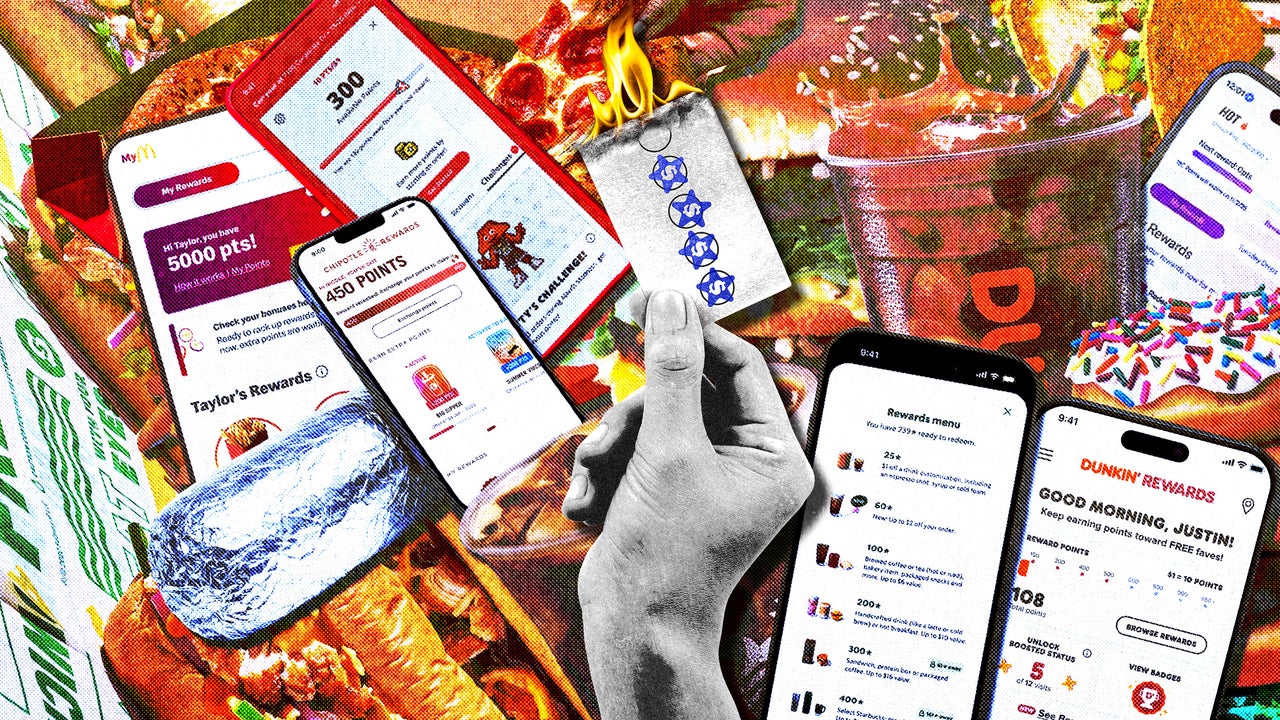
FastCompany: Aaron Braun had decided to play the long game with his Dunkin’ Rewards points. For five years, his employer, an IT company that kept him on the road, covered his coffee and breakfast via a company card linked to his Dunkin’ account, so he never bothered to redeem his points. In the Dunkin’ app, every purchase inches a progress bar further to the right, unlocking the first reward at 150 points, then topping out at 900. “My bar has been full forever,” Braun jokes. Last year, he was staring at a stockpile of more than 93,000 points. He had hoped to reach 100,000, telling me that his two teenagers had just started driving themselves to school.
“I was holding on to these for my kids,” he says. “The whole idea was that they could get Dunkin’.” Then Dunkin’ started canceling points more than a year old. Braun, who is more serious about rewards than many people are—on our call, he mentions the Hertz and Lowe’s programs, remembers carrying the physical Starbucks card, and has held upper-tier status with JetBlue and Hilton—opened the app in the fall to find that his balance was off . . . by “about 63,800 points,” he says, equal to roughly $250 worth of coffees. He is hardly the only chain restaurant customer who has watched a rewards program change underneath him lately.
In the past year, Starbucks made it harder for members to earn reward points, which it calls “Stars.” Subway removed the free-footlong reward from its revived Sub Club and replaced it with Subway Cash. As of May, it now takes 7,000 points, or $70 of spending, to earn a free Big Mac at McDonald’s. And in August, Panera put a hard cap on its supposedly Unlimited Sip Club, prompting people who prepaid for a whole year to trade tips online about how to get around the forced-arbitration clause if they want to take legal action. Some might argue that, at times, the entire restaurant rewards ecosystem can feel like an elaborate humiliation ritual.
Once a month, Starbucks chooses a Monday when members can claim one free drink customization. Burger King Royal Perks members get a free soft drink on their “half-birthday,” provided they spend at least $1 (the chain’s soft drinks typically cost $1.50 to $2.50). McDonald’s recently let members trade 1,500 burger points for a one-month trial of Snapchat+. [Image: McDonald’s] Unsurprisingly, a recent survey by restaurant technology firm Tillster found that dissatisfaction with fast-food loyalty programs has nearly doubled over the past year, from 15% to 28%.
Meanwhile, more than a third of diners still belong to no restaurant loyalty program at all. That’s an ostensibly large, unclaimed slice of the consumer pie for somebody’s taking. And restaurants have it easy. Practically every brand now chases loyalty in its own fragmented sector—travel companies, media outlets, fashion brands, even banks. But restaurants have a high number of customers already voluntarily placing orders through apps with accounts that log their personal data and shopping histories. Getting it right could unlock big bucks and position a restaurant brand well for the future.
The problem is the old-school bargain—spend X, get back Y—does not seem to work so well anymore. “That’s not really that exciting to consumers and it’s not really differentiated,” Zach Goldstein, CEO of loyalty software company Thanx, told Restaurant Business last year. And a restaurant can only give away so much free food. When restaurants try to make rewards more sophisticated and involved—personalized, targeted, and engaging—they risk making the bargain less compelling to consumers. Customers are already showing limited patience for this trade-off.
Article truncated for readability. Read the full piece →
The article addresses significant challenges faced by major brands in the loyalty program space, which is crucial for customer retention and brand strategy, making it highly relevant and impactful for industry professionals.
Weekly digest
Get the Signal digest
Every Monday morning — the top 3 brand trends, 10 high-signal articles, and one emerging signal to watch.
No spam. Unsubscribe anytime.