Score
This MIT spinout designed an artificial reef to save shrinking beaches
The article highlights how Coastal Assembly, a startup spun out of MIT, is revolutionizing coastal protection through the use of AI-designed artificial reefs. This innovative approach not only addresses beach erosion more effectively than traditional methods but also aligns with sustainability goals, making it a compelling strategy for brands in the coastal tourism and environmental sectors to adopt eco-friendly practices.
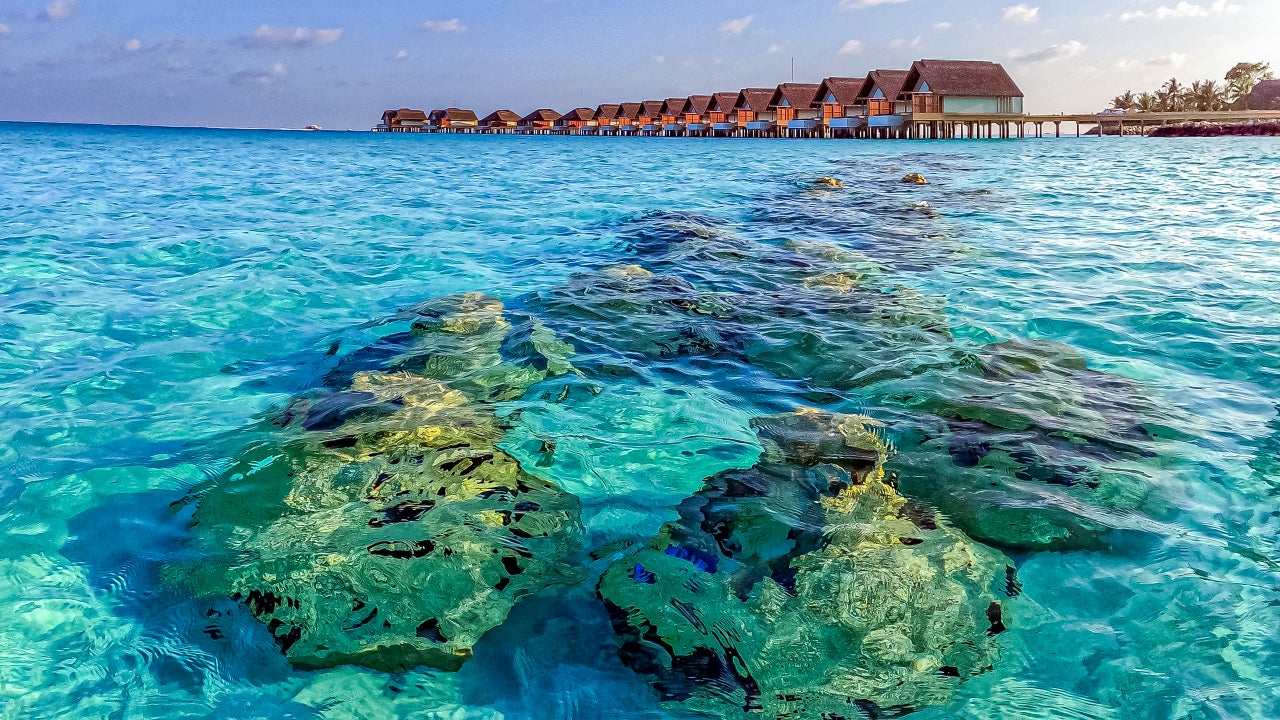
FastCompany: Until recently, a beach on a tiny island in the Maldives was eroding away. The usual solution would be to dredge sand to try to replace what was lost—but that works only temporarily, and it harms marine ecosystems. Two years ago, a Marriott resort on the island experimented with something different: using an artificial reef designed by Massachusetts Institute of Technology researchers to repair the beach. Within six months, across a 300-foot shoreline, the depth of the beach grew by 90 feet. Now, two years later, that same beach has doubled in size.
Underwater, the artificial reef is filled with new coral and marine life, from fish to sea anemones. [Photo: Coastal Assembly] Coastal Assembly , a startup that spun out of the MIT research at the end of last year and raised $4.4 million in a round of funding this summer, is now scaling up. The company uses AI to analyze satellite and ocean current data at a shoreline, then plans the layout of custom concrete blocks that can help sand accumulate naturally via ocean waves.
“We take 10 years of data, and we say, where do we predict the critical areas of erosion will be in the coming months to year?” says Skylar Tibbits, a professor in MIT’s architecture department who runs the university’s Self-Assembly Lab , a research group that explores how materials and environments can transform themselves.
“And that tells me where the best place is to intervene—what’s the part that is most critical, where we should focus our time, effort, and money.” [Photo: Coastal Assembly] In the case of the Maldives, the team installed 54 strategically placed blocks made from marine-grade concrete and local aggregate roughly 150 feet offshore. By dissipating wave energy, the blocks help redirect sand back to the beach that was previously lost, and also help keep the sand in place. The researchers track changes over time, and can adjust the blocks if needed—for example, if development nearby alters wave patterns.
The research started by chance, when Tibbits happened to visit a sandbar in the Maldives that had emerged naturally in only a month. “It was like, wait, what do you mean, this island formed in a month? We started to understand that we could tap into this process, and then it became a question of how you promote that to happen,” he says. Tibbits says he learned that traditional coastal protection methods don’t work well. Dredging sand harms coral reefs, and also only works temporarily, as the sand can quickly wash away. “It’s a continual process,” he says. “One of the resorts we visited is pumping sand 365 days. . . .
It’s the sort of thing that everyone does as a Band-Aid.” [Photo: Coastal Assembly] Building seawalls is expensive, and also isn’t necessarily very effective. As Tibbits points out, in a fight with nature, nature tends to win. And a seawall can end up accelerating erosion on other beaches nearby, or even unintentionally increasing erosion at the beach it was built to protect. In the lab, it took nearly a decade for Tibbits and his team to find an approach that worked, as they moved from simulations to 10 real-world deployments in the Maldives. Now AI makes it easier to analyze the data from any particular beach.
Article truncated for readability. Read the full piece →
The article discusses a significant innovation in coastal protection that could influence brand strategies in tourism and environmental sectors, making it impactful and novel, while still being relevant to professionals in brand strategy.
Weekly digest
Get the Signal digest
Every Monday morning — the top 3 brand trends, 10 high-signal articles, and one emerging signal to watch.
No spam. Unsubscribe anytime.