Score
Chrome’s new feature makes life easier for people with a million open tabs
Google Chrome's introduction of vertical tabs aims to enhance user experience by improving tab organization and accessibility, particularly for users who tend to keep numerous tabs open. This strategic move not only addresses a common pain point among users but also positions Chrome to retain its dominant market share by adopting successful features from competitors, thereby discouraging users from switching to alternative browsers.
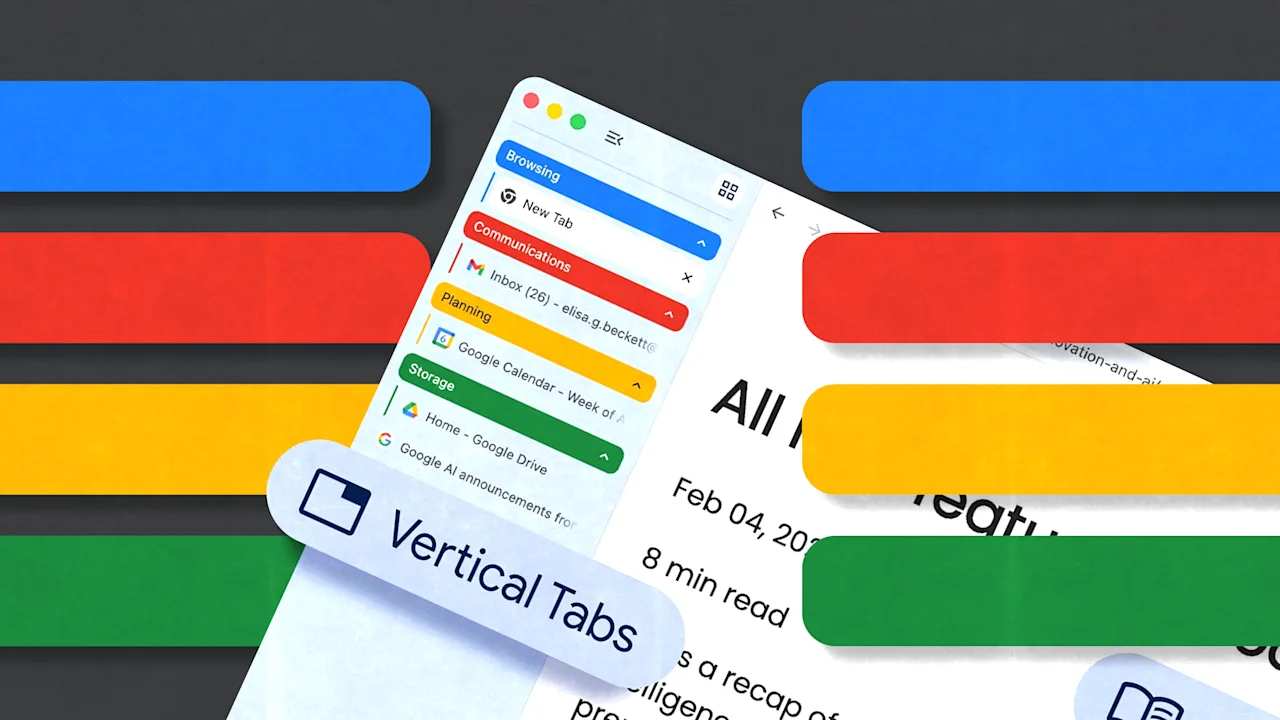
FastCompany: Google’s Chrome is taking browser tabs vertical. The company announced this week that it’s beginning to roll out an option for users to stack their tabs in a panel on the left side of the browser instead of horizontally at the top. For tab hoarders like me—who get lost in a million tabs while trying to remember which favicon went with which website, or who have multiple websites open with the same favicon—vertical tabs will give us more information to determine which tab is where. It even works when you have so many open that you have to scroll to reach the end.
The vertical tab interface has two modes: a collapsed version with just the favicons, and an expanded version that shows the full text of the page titles too, no matter how many tabs are open at once, unlike in the horizontal view. [Image: Google] “This layout is perfect for multitasking, saving you time by making sure you never lose a tab,” Chrome product managers Alex Tsu and Jess Carpenter wrote in a blog post . To turn on vertical tabs, users can right-click on a window and select “Show Tabs Vertically.” Chrome is also introducing “reading mode” in its latest update, which is a full-page text interface that removes visual distractions.
Google is pitching reading mode as a tool for deep focus. Many of Chrome’s most recently shipped updates are targeted at one of two aims: either adding AI functionality with Google’s Gemini or keeping up with alternative browser competitors. The Browser Company’s Arc browser launched in 2023 and had vertical tabs and split view before Chrome did . Google did not respond to a request for comment. While Chrome might not get to features like vertical tabs first, when it ships them, it reaches a mass audience.
Chrome is far and away the most popular browser, with about 66% market share worldwide, according to Statcounter GlobalStats, a web analytics firm. So while Chrome isn’t the first to market, as the industry leader it can adopt the best innovations from smaller competitors after the fact to discourage platform switching among its existing users. (Think of how Meta rips off features like Snapchat’s filters and stories for its own apps, for instance.) Regardless, the update meets an urgent need, as tab hoarding is common.
A 55% majority of respondents have trouble closing tabs, and 30% call their habit a “problem,” researchers from Carnegie Mellon University found. Plug-ins like Skeema can help rank tabs by priority, and with vertical tabs, the UI to do it yourself is now built in.
The introduction of vertical tabs in Chrome is significant for user experience and browser competition, but similar features have been implemented by other browsers, making it moderately novel and relevant to brand strategy professionals focused on user engagement.