Score
Dreamy handmade effects bring classic Disney magic to its new short film
Disney's latest short film, 'Once a Princess, Always a Princess,' emphasizes the value of practical effects in storytelling, reflecting a broader trend where audiences are increasingly drawn to authentic, human-made artistry over CGI. This strategy not only honors Disney's rich history but also aligns with a growing consumer preference for tangible experiences in an era dominated by digital technology, suggesting that brands should prioritize authenticity and craftsmanship in their narratives.
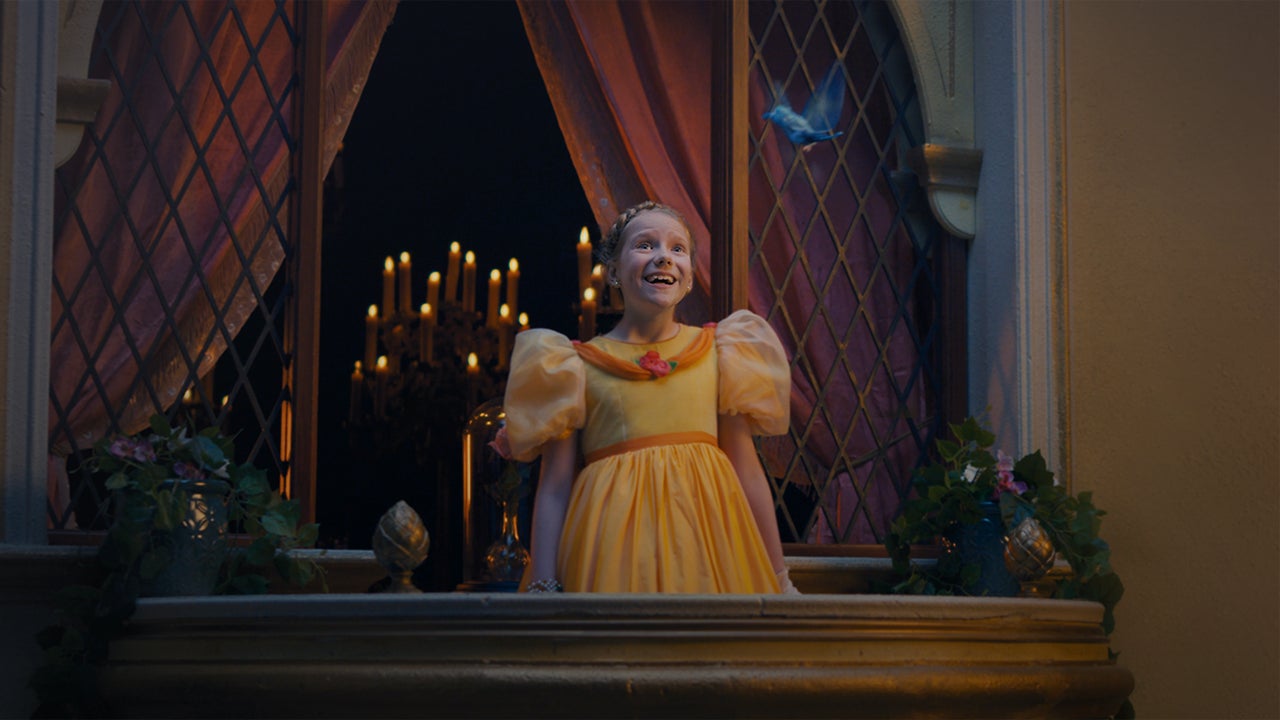
FastCompany: Disney ’s latest short film is an homage to practical magic. Once a Princess, Always a Princess , created by Disney and ad agency Fallon, debuted on August 17 for World Princess Week. It’s a four-minute-long tale about the joy of childhood friendship and play, set both in a modern city and the fantastical imaginations of its two protagonists. Aside from the touching story at its heart, the film shines because of its sets: Every single effect was made almost entirely practically (meaning no CGI was used), including its “bigature” castles, underwater scenes, and hand-painted backgrounds.
Just a day after the video’s launch, it’s already amassed nearly 7 million views. In a press release, director Alex Prager explained: “I brought the idea of using practical filmmaking techniques to Disney from our very first conversations because of their history, I wanted to go back to their roots.” Prager’s instinct to spotlight old-school practical effects for this project is one that’s recently been reverberating across advertising and Hollywood. As AI and CGI make smooth, optimized visuals increasingly accessible, audiences are craving the unique touch that only human-made effects can provide—and studios are catching on.
[Photo: Disney] A physical wonderland Disney and Fallon pulled out all possible stops to make Once a Princess, Always a Princess a practical wonderland. In the shots where the two protagonists’ apartment buildings are transformed into castles, for example, those turreted structures are real “bigature” models. Built to stand as tall as an adult, the castles were designed by blending architecture from Beauty and the Beast , Aladdin , and The Little Mermaid . On set, the young actresses were able to stand directly alongside them, creating real depth and forced perspective on camera without green screens.
In an underwater sequence, the team used “dry-for-wet” stagecraft, shooting on a blue-lit soundstage with oversize physical kelp, coral, and drifting fabrics to allow the performers to “float like true swimmers.” Another scene, which shows the two girls traipsing through a ballroom, required extensive puppeteer work to bring characters like Sebastian from A Little Mermaid and Lumière from Beauty and the Beast to life.
[Photo: Disney] Fallon CCO Leslie Shaffer recalls that the choreography and camera work had to come together perfectly in one moment to make the ballroom believable: “20 puppeteers in green suits standing on a table making the arms, legs, and even eyes of beloved characters move in the most charming ways; a man in a tiger suit . . . at the head of the table; the girls climbing atop the table—all while the camera descends and spins on an enormous crane inside of a real-life ballroom in a historic castle.
It took a full day to shoot that one scene, but the magic of that transition, and the immersion in their imaginary world, is so worth it in the final film.” For the whimsical backgrounds, artists pulled directly from matte painting techniques used in classic Disney films, and hand-painted storybook-quality images onto real backdrops. The music was provided by a 56-piece live orchestra. Even the costumes were made from scratch, led by costume designer Vin Burnham. Shaffer says no AI was used in the making of the film.
Article truncated for readability. Read the full piece →
The article discusses a significant shift in storytelling techniques by a major brand, Disney, which highlights the importance of authenticity and craftsmanship, making it highly relevant and impactful for brand strategy professionals.