Score
Jenna Arts On Why The Stumbling Silly Ordinary Human Is The Only One Worth Drawing
Jenna Arts emphasizes the importance of embracing imperfection in her illustrations, suggesting that brands should reflect the human experience in their storytelling to connect with audiences. By valuing authenticity and the quirks of humanity, brands can differentiate themselves in a market increasingly saturated with AI-generated content. This approach not only enhances brand identity but also fosters a deeper emotional connection with consumers.
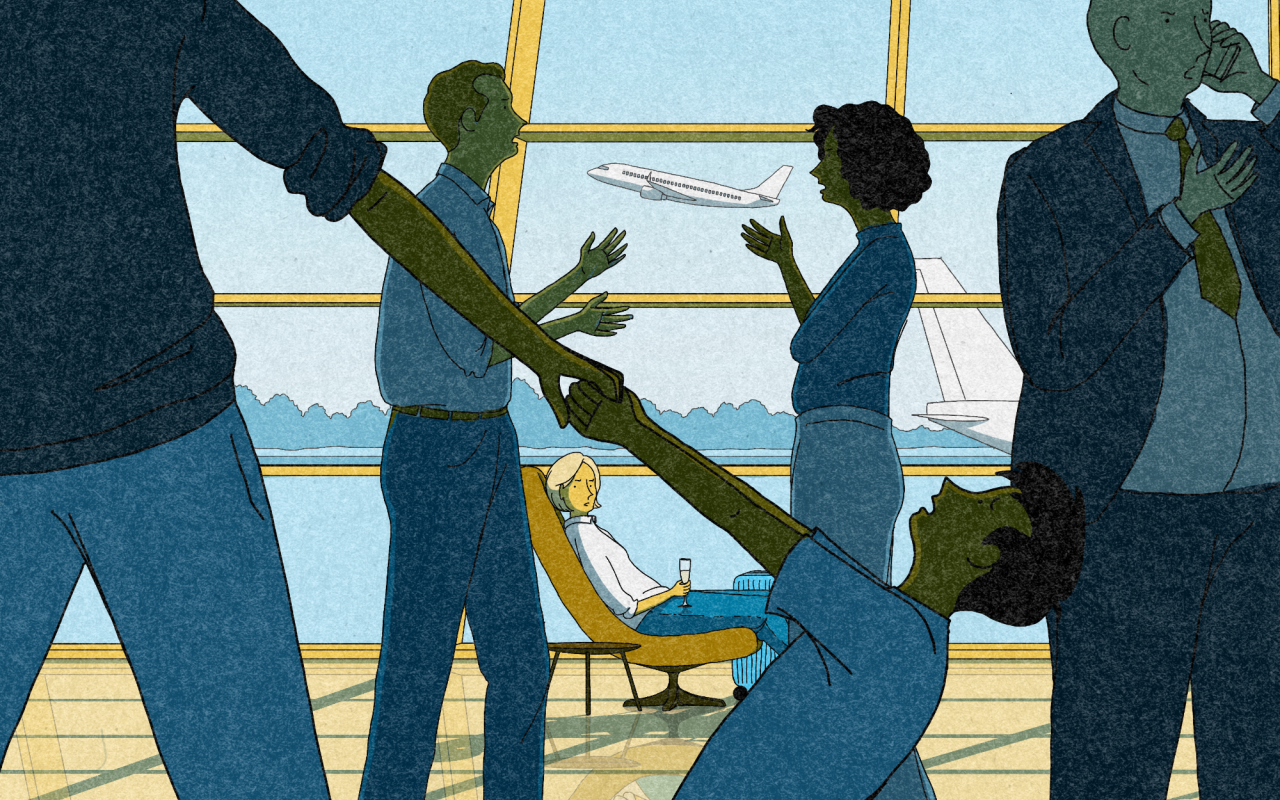
Creative Boom: Jenna Arts on why the stumbling, silly, ordinary human is the only one worth drawing The Antwerp-based illustrator on finding a style of your own, why the first idea is usually the best, and why you must never settle for less than your work is worth. There's a reason why videos about funny accidents are so popular on YouTube. We obviously don't enjoy seeing people fall over and hurt themselves, but there's something about the imperfection of humanity that grounds us. That no matter how many mistakes we make, we're not alone. I'm always bumbling into rooms and making awkward small talk.
I'm sure I'm not that bad, but the famous Instagram account, Very British Problems, exists for a reason. We're a funny bunch, us Brits. Just last week I went to the back of a queue and said to the person there, "Is this the back of the queue?" We might cringe at our own behaviour, but it's all rather charming, and...well, human. We're hankering after a lot more imperfection these days. It's a theme that keeps popping up as it makes a good antidote to all the AI-generated nonsense. And it's the whole point of Jenna Arts's work, too. "It's what makes us human," says the Antwerp-based illustrator.
"Not the perfection, but the imperfections, the silliness, the quirkiness, the unnoticed beauty, even the beauty in the ugliness, the unexpected, the fun when everything goes wrong. It's about laughing at ourselves. We're silly human beings. That's what puts a smile on our faces, and not perfection." Boy, could we do with that reminder. Jenna's website describes the person she draws as "the one who stumbles, marvels, acts a little strange and is at the same time completely ordinary". Which, let's be honest, is all of us. But you'll find that normal person in much of her work.
From the pages of NRC, De Volkskrant and De Correspondent to campaigns for Eurostar and Frontaal Brewery. "I hope that my characters aren't perfect," she says. "I would take that as a compliment." Many of us have that inspirational moment when lightning strikes and we realise what we want to do. For Jenna, it was when she was 15 or 16 that she read a magazine article about an illustrator living in Paris and realised, for the first time, that drawing could be a profession. After graduating from AKV St. Joost, she got an internship at the Dutch newspaper NRC.
"Illustrating live in a newsroom with very little time meant that I was forced to just draw something," she says. "That led to a lot of surprises in the work. It was pure, honest drawing. It was drawing over thinking, over any style. And eventually, it led to a style. But I don't think there's an end to developing a style." Indeed, it's an ongoing process. Her current preoccupation is finding balance between the story she's trying to tell and the characters. "You don't want to give the setting the main role, because that weakens the story," she explains.
"I'm also trying to add more depth to my work lately." If you've been following Jenna's work for some time, then you'll know her early characters used to have tiny heads, wavy arms and legs, and everything deliberately "wrong". She's since matured her style and opted for a more realistic approach. "I do sometimes miss the rebellion and creative freedom in my work back then," she says. Editorial illustrations have to meet deadlines, as any artist knows. Jenna admits she's not a huge fan of the time pressure.
Article truncated for readability. Read the full piece →
The article presents a significant perspective on authenticity in branding, which is increasingly important in a digital landscape, making it relevant and impactful for brand strategy professionals, though the concept of embracing imperfection is not entirely new.
Weekly digest
Get the Signal digest
Every Monday morning — the top 3 brand trends, 10 high-signal articles, and one emerging signal to watch.
No spam. Unsubscribe anytime.