Score
The White House’s security checkpoint is getting a modern makeover—if Trump’s design team allows it
The proposed modernization of the White House's security checkpoint highlights the importance of aligning design with historical and aesthetic values in brand strategy. As the Secret Service seeks to implement a tech-centric facility, the challenge lies in ensuring that the design meets classical architectural standards, reflecting the brand identity of the White House while embracing modern functionality.
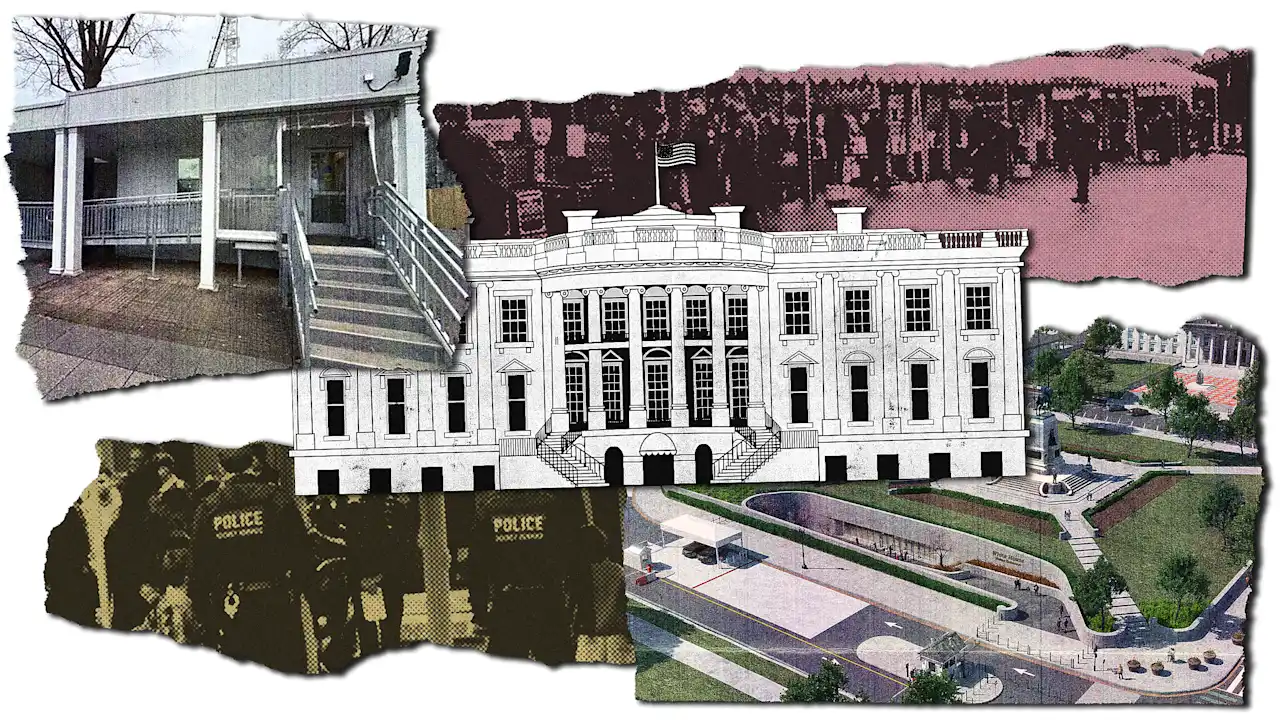
FastCompany: For more than 20 years, anyone visiting the White House in Washington, D.C., has first stepped inside a trailer. Technically a temporary building, this trailer on the southeastern edge of the White House grounds is where visitors are screened for security. When there’s a big event, which is often, security screening bleeds out of the trailer into temporary tents, much to the chagrin of the U.S. Secret Service. “This has not been the best situation for those visitors coming to visit the White House. They’re outside.
We cannot deploy all the technology we’d like to at all the different times, and it’s very limiting as one security screening lane,” said Andy Stohs, senior adviser for technical operations with the Secret Service. [Image: cfa.gov] His comments came during a formal presentation of the recently released conceptual design for an updated security screening facility on the White House grounds. The facility would support security screening for visitor tours and large-scale events, as well as the daily comings and goings of White House staff and contractors.
Instead of temporary and pop-up facilities, the Secret Service is proposing a modern, tech-centric building, and it hopes construction can begin later this year. The big concern for the panel charged with reviewing the plan, though, is whether the building is “classical” enough. What does the proposed building look like? The proposal details a largely subterranean, 33,000-square-foot facility designed by global architecture and engineering firm AECOM. It was presented at the March 19 meeting of the U.S.
Commission of Fine Arts , the independent federal agency that advises the president and Congress on matters of design and aesthetics affecting Washington, D.C., including new federal buildings. The subterranean security screening facility would sit adjacent to President Donald Trump’s multimillion-dollar ballroom (under construction), with an entry point a block away at the edge of Sherman Park and the column-lined exit building directly across the street from the expanded White House building.
Visitors would enter the facility and quickly move beneath the park for multiple ID checks and an airport-style security screening through equipment and Secret Service personnel. After, they would wind through a corridor, travel up an escalator, and emerge on the surface level within the secured space of the White House grounds. [Image: cfa.gov] Renderings of the design presented during the Commission on Fine Arts meeting were met with predictable critiques, tempered with support for the overall project.
Commission member Mary Anne Carter, the Trump-appointed chair of the National Endowment for the Arts, focused on the entrance to the facility, which is carved into the edge of Sherman Park and lined with a curving retaining wall of concrete and limestone. “The entrance, although I love the curve, it doesn’t seem to match the overall appearance of everything else,” Carter said. “It seems odd. That is a lot of concrete.
Article truncated for readability. Read the full piece →
The article discusses a significant redesign of a high-profile government facility, which has implications for brand identity and design strategy, making it impactful and relevant, though not entirely novel in the context of design modernization.