Score
China just gave humanoids a national ID. What could go wrong?
The Chinese government's initiative to assign digital ID cards to humanoid robots signifies a strategic move to integrate AI into society while maintaining strict regulatory control. This approach not only aims to address workforce challenges but also raises concerns about surveillance and the ethical implications of treating robots as digital citizens under state oversight.
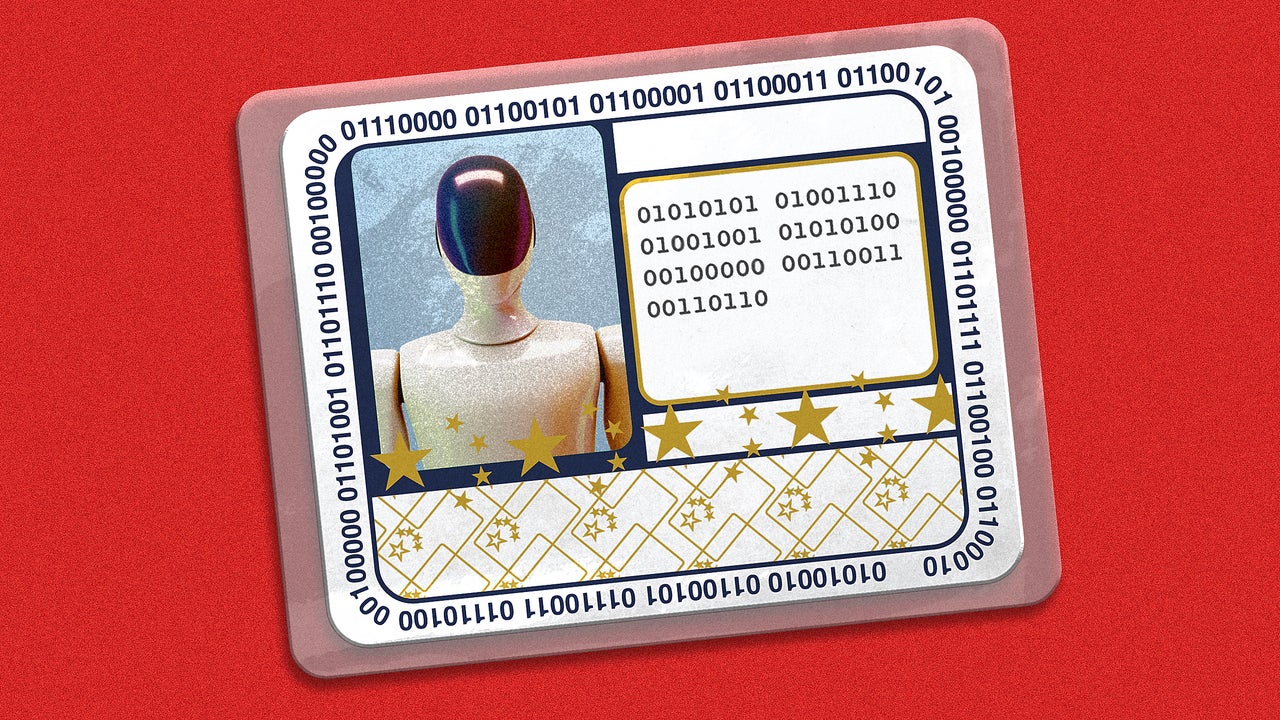
FastCompany: The Chinese government has launched an official system to assign digital ID cards to all humanoid robots operating in its territory. It may seem surprisingly early, given that most robot deployments at this stage are very limited, but this urgent legislation is driven by a state that knows exactly how fast the technology is accelerating.
Facing a demographic crisis and a shrinking workforce, the legislation follows a Beijing directive designed to aggressively push embodied AI into society “wherever it is needed.” This new state control platform assigns a unique alphanumeric code to each machine, tracking its existence from the exact moment it leaves the assembly line until it is scrapped. It is, for all practical purposes, the imposition of a mandatory ID card for the new synthetic working class that Beijing wants to spread throughout the country.
What at first glance seems like a mere bureaucratic formality to standardize the industry could potentially be the prologue to a new version of Blade Runner . Because the Chinese government is keenly aware of how quickly domestic tech firms are rolling out consumer-ready robots, it is deploying this digital leash to ensure its regulatory grip outpaces commercial innovation.
Blade Runner 3.0 The initiative, driven by the Ministry of Industry and Information Technology together with the Hubei Humanoid Robot Innovation Center, is not a future conceptual plan, but a fully operational system that already governs the standards for over 100 companies and has codified some 200 industry models. The identifier itself is a mammoth 29-character code —eleven digits longer than the ID of a flesh-and-blood Chinese citizen—that meticulously details nationality, manufacturer, model, and an unrepeatable serial number. This ID is not a simple static license plate.
It functions as a real-time telemetry umbilical cord that reports everything the robot does—which includes their “senses” too (more on that later)—to the authorities, from the physical wear and tear of its joints to its battery status and the cognitive capacity of its artificial intelligence.
As Liu Chuanhou, an executive at the Hubei center, told Chinese media, “If the robot breaks down, we can check its operational logs and maintenance records through its unique ID to locate the malfunction, determine liability, and carry out efficient maintenance.” This new working class is integrating into society much faster than Western observers anticipated. The tech firm GigaAI, backed by Huawei’s investment arm and collaborating with state research hubs, has recently announced what it claims is the first commercial robotic butler .
Article truncated for readability. Read the full piece →
The article discusses a significant government initiative that could reshape the integration of AI in society, presenting novel implications for brand strategy professionals concerned with ethics and technology.