Score
When Defeat Looked This Good The Street Fighter Sculptures That Hit Different
The project 'Losers' by Martín Kukso reinterprets the defeated characters from Street Fighter II into sculptures, highlighting the emotional resonance of these overlooked moments in gaming history. This approach emphasizes the importance of nostalgia and emotional storytelling in brand strategy, suggesting that brands can connect with audiences by tapping into shared experiences and memories, rather than solely focusing on victory and success.
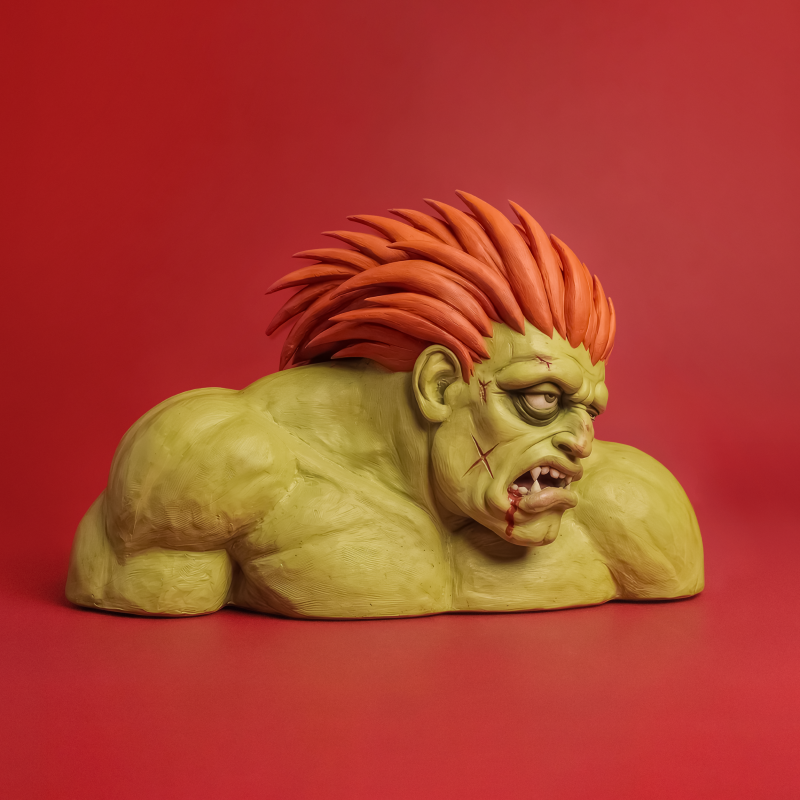
Creative Boom: Inspiration Art When Defeat Looked This Good: The Street Fighter sculptures that hit different Buenos Aires-based creative Kukso has turned the most overlooked moment in arcade history into a series of sculptures that are equal parts nostalgia trip and genuine art. As a lifelong gamer who grew up hammering buttons after school every day, I was completely floored. Written By: Katy Cowan 25 March 2026 I'll be honest with you. The moment I saw these sculptures, I let out an involuntary noise. Something between a gasp and a chuckle. Because there, rendered in three dimensions, was a face I hadn't thought about in years.
Battered, swollen-eyed, defeated. Those old pals of mine – Ryu, Guile and, of course, dear Blanka. Their losing portraits from Street Fighter II, brought back to life in physical form. It came flooding back immediately. My buds and I huddled around a small screen in my parents' tiny study, fighting it out on one of our favourite video games. And then experiencing that sting of pixelated humiliation once more. Somehow, Martín Kukso – the Buenos Aires-based art director and creative force behind the personal project DAMN! – has taken that very emotional moment and turned it into something genuinely moving.
The project is called Losers, and it does exactly what it says on the tin. Rather than celebrating the triumphant, flawless victor portraits that most of us enjoyed lording over our mates on our way to the next fight, Martín zeroed in on the beaten-up ones. "I was especially fascinated by those pixel-art illustrations of characters at their lowest point," he tells me, "weak and almost begging the player for help to keep going." As someone who spent an embarrassing portion of their teenage years in front of a screen, learning the hadouken and perfecting the sonic boom, I find this perspective unexpectedly profound.
These weren't just Game Over screens; they were little moments of drama and character. When you could dance around the room and humiliate your opponents. Martín saw that when most of us were too busy being annoyed to notice. What makes the leap to sculpture so inspired is the way it amplifies without distorting. The original pixel-art illustrations – credited to legendary Capcom artists Akiman and Kinu Nishimura – were already slightly caricatured, which gave them a playfulness that stopped them tipping into cruelty.
(Although to be fair, I'd have gladly seen my opponents suffer more if I ever managed to beat them!) Nevertheless, Martín has preserved that tone with care. "I wanted to bring that same energy into a different medium," he explains, "something that doesn't feel violent, but instead comes across as a bit playful." And it works. These heads are bruised and puffy and cross-eyed in a way that makes you grin rather than wince. The choice of characters is telling. Ryu had to be there. Of course he did... he's the saga's beating heart.
But Guile's beaten portrait was one Martín had always remembered in particular, and Blanka was irresistible precisely because his morphology is so strange, so unlike the rest of the roster. "Ken rules too," he adds, laughing. The process itself is fascinatingly layered. Martín began, as he insists, that all ideas should be on paper. "Even when I teach, the first thing I say is 'paper first'," he tells me.
Article truncated for readability. Read the full piece →
The article presents a creative reinterpretation of a well-known gaming franchise that emphasizes emotional storytelling, which is a significant yet niche perspective for brand strategy professionals.