Score
Creative agencies are quietly moving everything into Air
Air is redefining the role of AI in creative operations by positioning itself as a supportive tool rather than a replacement for creative teams. This approach emphasizes the importance of context in creative work, allowing teams to leverage AI while maintaining control over their brand's identity and creative processes. For brand strategy, this means adopting technologies that enhance creativity and streamline workflows without compromising originality.
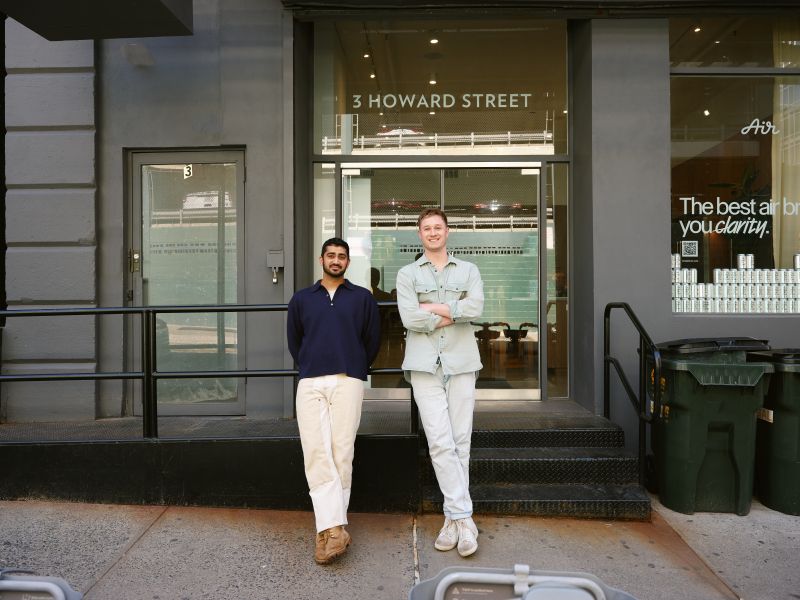
Creative Boom: Resources Sponsored Creative agencies are quietly moving everything into Air — here's why you should too While most AI tools are declaring war on creative jobs, one platform is taking the opposite approach. And on 24 March, it's shifting things up a gear. Written By: Tom May 23 March 2026 Air founders: Shane Hegde and Tyler Strand Spend any time following AI, and you'll notice a pattern. Every few days, a new model launches with breathless claims about what it can replace. Which, in our sector, increasingly means replacing designers. Ugh. Air, the New York-based creative operations platform, is taking a radically different view.
So different, in fact, they recently took out a full-page ad in the New York Times to say so. Its message was clear: any platform that wants to replace your creative team is selling something you don't need. "Every AI company approaches creatives the wrong way," argues Shane Hegde, Air's co-founder and chief executive. "They say, 'This new model is going to replace 20 creative jobs' or 'Our product is the CMO killer.' Obviously, creatives are going to hate AI if that's how companies try to work with them. "Our approach is different," he counters.
"We want you to get access to all the new ways you could work, and all the new technologies that are emerging. That way, you can decide where to get value from new tech, and where it's better to keep doing things the way you already do." That philosophy sits at the heart of what Air is releasing tomorrow, on 24 March, in what Shane calls the largest update in Air's history. Before we get to that, though, just what is Air, and why should creative studios care about it?
A memory machine for your creative team Air is a creative operations platform: a centralised workspace where teams store, organise, search, share, approve and distribute their creative assets. Think of it as the place where all your images, videos, campaigns and brand materials live, in a system designed around how creative work actually gets made. Air uses AI to auto-tag everything (faces, products, scenes, objects), so anyone in your company can find what they need through natural language search. Version stacking keeps every iteration of an asset in order.
Approval workflows and timestamped video commenting keep projects moving without the usual back-and-forth over email. This all, as you can imagine, saves a lot of hassle. It's not surprising, then, that more than 250,000 people across 3,000 businesses use Air on a daily basis. They include big firms like Google, CAA, Mars and JPMorgan, along with creative agencies ranging from small shops to giants like Saatchi & Saatchi. Three features to scale your creative library The new update introduces three interconnected new features: a context layer, a set of AI agents, and a canvas.
Understanding how they connect is the key to understanding what Air is actually trying to build. The context layer is where teams can train Air on their brand. Not just a logo and a hex code, but the full picture: photography style, typography, tone of voice, creative rules and constraints. Like a permanent creative brief that lives inside the platform and informs everything the AI does. This is the bit most AI tools skip entirely, and why their output looks so generic. Context is what creates originality, and without it, AI simply finds the most average answer across the largest possible dataset.
Article truncated for readability. Read the full piece →
The article discusses a significant shift in how creative agencies are integrating AI into their workflows, which is highly relevant and impactful for brand strategy professionals looking to enhance creativity while maintaining control over brand identity.