Score
Billionaire urbanism: How Walmart heir Alice Walton engineered a small-town paradise
Alice Walton's investment in the Crystal Bridges Museum has catalyzed a transformative development in Bentonville, Arkansas, turning it into a cultural hub and setting a model for community-driven urban development. This strategy emphasizes the importance of creating spaces that enhance local quality of life while attracting visitors, showcasing how philanthropic efforts can lead to sustainable growth and community enrichment.
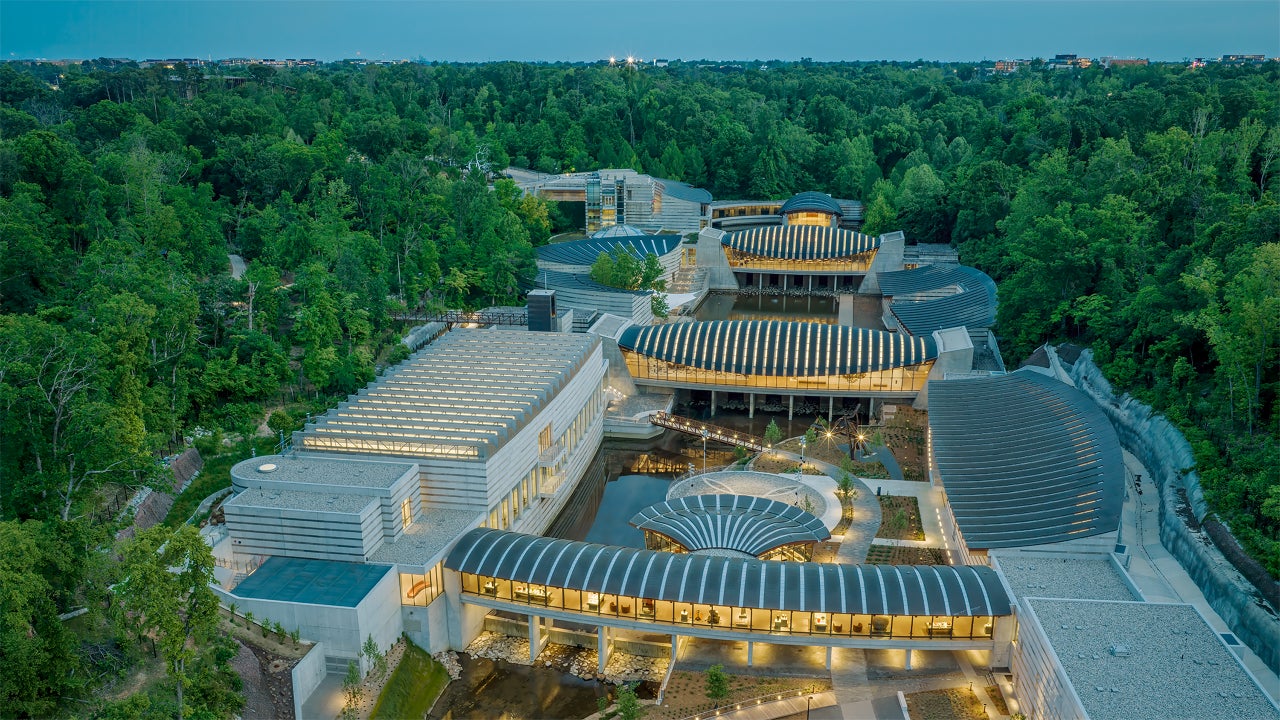
FastCompany: On any given day, a visitor to the Crystal Bridges Museum of American Art in Bentonville, Arkansas, could encounter something uncommon. Alice Walton, daughter of Walmart founder Sam Walton and the current richest woman on Earth, is known to stroll the galleries of the world-class art museum she built in a ravine in the Ozark Mountains. Since its 2011 opening, the admission-free Crystal Bridges has turned Walmart’s modest hometown into a global arts destination, and kicked off a remarkable 15-year spree of cultural and civic development. It’s impossible to miss the scope of transformation that’s happened in Bentonville, population 63,000.
From the downtown square alone, one can see two high-end hotels, a pedestrianized street lined with public art, a large public park under construction, a stretch of the 40-mile Razorback Greenway bike trail, and a modern office building designed so that people can ride their bikes up a winding ramp to a sixth-floor overlook. Beyond the square, you’ll find a contemporary arts venue, a new school of medicine, a forthcoming healthcare campus, and a science, technology, engineering, and mathematics (STEM) university that’s just breaking ground.
Alice Walton [Photo: Wikipedia ] Almost all of this has been directly instigated or indirectly supported by Walton, her extended family, and their various philanthropic and business arms. The June 6 opening of the major expansion of Crystal Bridges is a victory lap for Walton and the museum itself, where she’s routinely seen walking through the galleries “in her little tennis shoes,” as one aide put it. With about 800,000 visitors a year, Crystal Bridges has become the heart of the town, and the fuel for a widespread metamorphosis of the region. Walton, 76, won’t exactly take personal credit for remaking Bentonville.
But that doesn’t stop her from taking in the pleasures of the museum, which sits a short walk from her family home on land she’s steadily converting from a private estate into a publicly accessible campus of art, health, and wellness. She can often be found inside the museum because, like most visitors, she’s there to see the art, most of it technically her own personal collection. But she’s also bearing witness to the real-time impact of her investment—on locals, on visitors, and on a growing roster of projects that have made Bentonville one of the fastest-growing communities in the country.
“It brings me great joy to see all the kids running around, and young people out on dates, and people enjoying it,” Walton tells me. “I believed that it could be transformational for the town, but I would never have expected it to be where it is today.” [Photo: Tim Hursley] Yet for all the uniqueness of this situation, the fact that the richest people from the richest company in the world are transforming a small town is not what stands out in Bentonville.
Rather, it’s the particular way the Walton family has chosen to transform their town: zeroing in on projects that can enrich the lives of people living there while also giving people who don’t a reason to visit. Not everyone is a fan of the extraordinary change that’s occurred, and the knock-on effects have left some in the community behind. It’s urban development on steroids, with one very powerful philanthropic hand guiding the way. But by and large, the outcome is creating a place and a quality of life that many people across the U.S. would envy.
Article truncated for readability. Read the full piece →
The article discusses a significant philanthropic initiative that has transformed a small town, showcasing a model for urban development that is highly relevant to brand strategy professionals focused on community engagement and sustainable growth.