Score
Irina Werning On Photographing The Sacred Power Of Long Hair In Latin America
Irina Werning's photography project, 'Las Pelilargas,' highlights the cultural and spiritual significance of long hair in Latin American indigenous communities, transforming a personal exploration into a broader narrative about identity and resistance. For brand strategy, this underscores the importance of storytelling and cultural connection in visual representation, suggesting that brands can benefit from deeply understanding and reflecting the values and traditions of their target audiences.
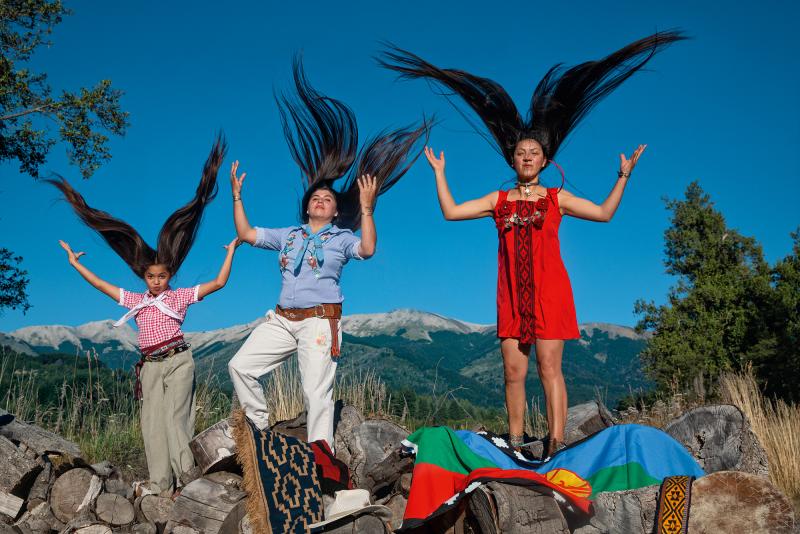
Creative Boom: Resources Books Irina Werning on photographing the sacred power of long hair in Latin America Across nearly two decades, the Buenos Aires-based photographer has travelled to remote mountain communities in Argentina and Ecuador, seeking out subjects whose hair carries centuries of spiritual meaning. Written By: Ayla Angelos 28 April 2026 From Las Pelilargas © Irina Werning Hair is, on the surface, a simple thing. It grows, we cut it, style it, tie it back. And yet, in many indigenous communities across Latin America, it is anything but simple.
It carries ancestry and spirituality and centuries of cultural meaning – and for almost 20 years, it has been the subject that has consumed photographer Irina Werning. Irina came to photography at the age of 30. After studying a BA in Economics and completing an MA in History in Buenos Aires, she went on to complete an MA in Photojournalism in London before discovering that the camera was, as she puts it, "the best tool to combine what I loved: research, storytelling and human connection." That combination of the academic and the deeply human has shaped everything she has made since.
In 2006, the year she won the Ian Parry Scholarship, she travelled to the northwest of Argentina to document rural schools in the Andes, where teachers sometimes walk up to 10 hours to reach a community of just six families. She fell in love with the community, and the way of life was rooted so completely in the land. And then, almost without realising it, she kept finding herself photographing the same thing: the extraordinarily long hair of the girls she encountered. It wasn't the project she had come to make, but the one that found her.
From Las Pelilargas © Irina Werning From Las Pelilargas © Irina Werning From Las Pelilargas © Irina Werning From Las Pelilargas © Irina Werning By 2012, Irina had won both the Emerging Photographer Fund from Burn Magazine (supported by the Magnum Foundation) and a first-place Sony World Photography Award for portraiture.
Her book Back to the Future – a project in which she photographed people recreating their childhood photos with meticulous precision, same clothes, same pose, same expression, decades on – was named one of the best photobooks of 2014 by Time Magazine, which also selected her as one of nine Argentinian photographers to follow in 2015. A National Geographic Covid Emergency Grant followed in 2020, a Pulitzer Reporting Grant in 2021, and a World Press Photo award in 2022. Most recently, she received the Eugene Smith Grant in 2023 and the Leica International Society Women Grant in 2025.
She is, in short, not someone who does things by halves, Through all of it, Les Pelilargas – the long-haired ones – was developing in the background. What she found over nearly two decades was that traditions were evolving, with long hair functioning as both a mark of continuity and, in some cases, a subtle act of rebellion. The book, published by GOST, contains 88 black-and-white and colour images. Subjects are pictured amongst cacti and rocky Andean landscapes, and others are arranged more playfully in domestic settings.
Article truncated for readability. Read the full piece →
The article presents a unique perspective on cultural representation in branding, which is significant for brand strategy professionals seeking to connect with diverse audiences.