Score
Painter Jenny Beard On The Automatic Drawing Problem What It Is And How To Fix It
Jenny Beard's approach to art emphasizes the importance of introducing deliberate challenges in the creative process to avoid producing hollow work. For brand strategy, this highlights the value of authenticity and depth in creative expression, suggesting that brands should embrace complexity and resistance to foster genuine connections with their audience.
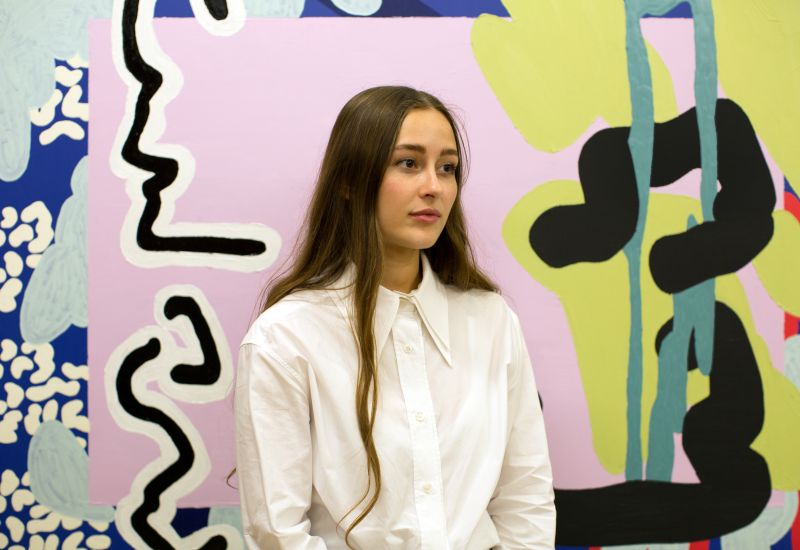
Creative Boom: Inspiration Art & Culture Abstract painter Jenny Beard on how to make art that isn't hollow The Leeds-based artist's new show, Listen Love, is about obstruction, resistance, and saying the quiet part out loud. Written By: Tom May 31 March 2026 Jenny Beard If you've ever sat down to do creative work and found your hand just... going—producing something competent, fluent, but a bit hollow—Jenny Beard has a solution. Make things deliberately, wilfully, almost perversely difficult. Jenny is an abstract painter whose new exhibition, Listen Love, opened recently in Leeds.
The show runs until 8 April and features five new paintings, including a large-scale oil on canvas, a work painted on carpet, a woodblock piece, and a canvas-and-paper-pulp cube that looks like it's been through something. (It probably has.) Jenny works with oil paints, acrylics, textural mediums and foam, usually presented on stretched canvas. But even if you're not a painter yourself, there's still a lot for any creative to learn here. Namely, that Jenny doesn't just allow difficulty into her process; she engineers it. Deliberately. Gleefully, almost.
Automatic drawing Automatic drawing is at the heart of how Jenny composes; it is used at every stage of her process, with close attention paid to a piece's overall weight and balance. For Jenny, it's also personally significant: the automatic drawing nods to dissociation, reflecting her lifelong experiences with it. Fluke Slip Snag Some paintings end up with floating elements; others sit top-heavy, awkward, full of interruptions. She draws and adjusts until the composition feels right, but never expected.
Crucially, though, the introduction of unwieldy materials and repetitive actions is designed to disrupt the ease of this method—preventing the process from becoming purely automatic and instead introducing what she describes as "moments of resistance and negotiation". Objects with weight The new show marks a major shift in Jenny's practice. Her earlier paintings were hard-edged and abstract, precise in a way that edges toward the digital.
That was entirely appropriate, given that reverse entropy (the process of digitising a painterly gesture and then repainting it by hand, back through the filter of a screen) sits at the conceptual core of her work. There's something deliberately unnerving about her monolines; they're too clean to be handmade, too warm to be digital. That's the point. This new body of work, however, moves somewhere more physical, more bodily. The pieces have weight, literal and compositional. Fumble Slip, painted on carpet (71 x 71 x 7cm, so emphatically not flat), brings density to what might otherwise be a "light" piece.
Fumble, a wooden block, was built up through layers of covering, removing, and revealing. Fluke (canvas and paper pulp together) has an irregular edge that makes it look like it grew rather than was made. The scale shift is intentional, too. Rather than the expansive canvases that dominate a room and define the space, these works invite you close. You have to bring yourself to them. Stand in front of them and consider your own size. That's a curatorial choice with a point: Jenny is interested in how we encounter paintings with our bodies, not just our eyes.
Article truncated for readability. Read the full piece →
The article presents a unique perspective on creativity that can influence brand strategy, emphasizing authenticity and depth, which are increasingly important in today's market.