Score
U.S. Soccer players helped design their own 2026 World Cup jerseys
The collaboration between U.S. Soccer and Nike to design the 2026 World Cup jerseys highlights the importance of player involvement in the branding process, leading to designs that authentically represent the team's identity. This shift towards a more inclusive design strategy not only enhances fan engagement but also creates products that resonate with both players and supporters, ultimately strengthening the brand's connection with its audience.
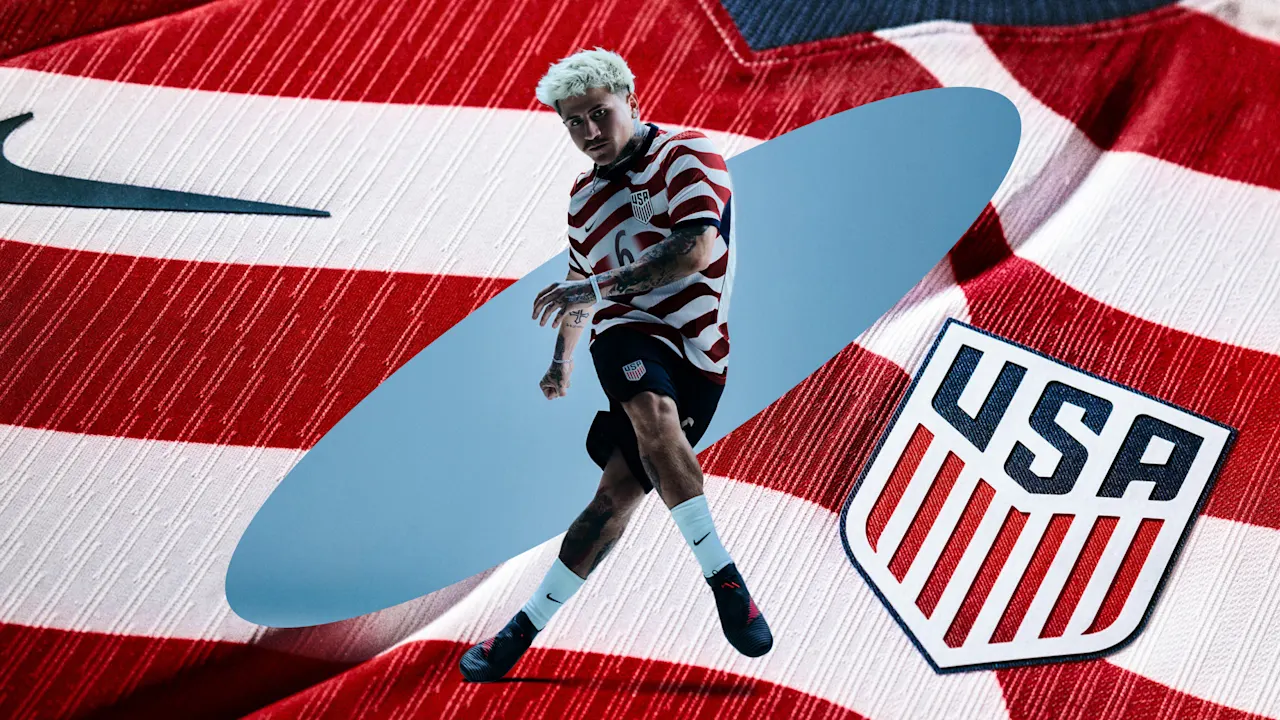
FastCompany: Nike and U.S. Soccer just revealed the official team jerseys for the 2026 FIFA World Cup , and they’re the perfect blend of something old and something new. The U.S. men’s national team (USMNT) kits include two distinct home and away jersey designs that take visual inspiration from the American flag. The home “stripes kit” features classic rippling red and white waves; the away “stars kit” highlights subtle shining stars on a dark navy backdrop. [Photos: Nike] The designs will be worn across all 27 U.S.
Soccer national teams (including men’s and women’s, youth, and senior teams) in the lead-up to the 2026 World Cup, which will conclude with a final match on home soil at New York’s MetLife Stadium. Nike has served as the official apparel partner of U.S. Soccer since 1995, and the two entities signed another 10-year deal back in 2021. But this year marked a turning point in the 31-year collaboration. After athletes and fans reacted negatively to the team’s jerseys in 2022, USMNT players were much more involved in the latest design process.
Their aesthetic sensibilities shine through with uniforms that balance an homage to World Cup history with a modern, undeniably cool edge. [Photo: Nike/USA Soccer] Starting from square one The design process for the 2026 team kits started all the way back in fall 2023. It was just about a year after several USMNT players held up a team photo shoot because they were so displeased with that year’s kits , which included one plain white jersey and one blue tie-dye jersey.
In an interview with The Athletic this March, midfielder Tyler Adams explained that the delay stemmed from the fact that the team “didn’t feel that [the kits] represented us.” The shake-up nudged Nike and U.S. Soccer to rethink the design process from beginning to end. In past years, players’ feedback was taken into consideration, but it was typically collected through a predesign interview phase, meaning players took more of a back seat during active brainstorming and prototyping. This time around, players were consulted throughout the process, from the very earliest meetings to the final draft stage.
Adams told The Athletic that by the end, he felt like the team “had more say than Nike had.” “This was the first time players got direct, in-person face time with the designers over multiple touchpoints,” says Maribeth Towers, VP of consumer products at U.S. Soccer. “This was sparked by the players expressing an interest in being able to share their input into the design of the kits early in the process. Nike and U.S.
Soccer came together to bring the players along the journey to ensure the kits authentically represent the identity of the team.” [Photo: Nike] One jersey for the stadium, one jersey for the club During the brainstorming phase, Towers says, players expressed a “diverse array of preferences”—with a few key notes in common. First, they wanted a jersey design that was recognizable enough to easily identify fans in the stands as a source of motivation. Second, they wanted a trendier jersey that could be worn both on and off the field (some players, according to The Athletic , specifically requested a jersey that could be worn “to the club”).
Article truncated for readability. Read the full piece →
The collaboration between players and designers for the World Cup jerseys is significant for the brand/design industry as it emphasizes player involvement in branding, though collaborative design is becoming more common in sports branding.