Score
Thomke Meyers Dynamic Illustration Are Inspired By Sound Cinema And Nature
Thomke Meyer's dynamic illustrations, inspired by sound, cinema, and nature, emphasize the importance of emotional connection in visual storytelling. For brand strategy, this highlights the need for brands to create engaging narratives that resonate with their audience, fostering a deeper connection through creative expression. By prioritizing personal inspiration and reflection in the design process, brands can differentiate themselves and avoid clichéd motifs.
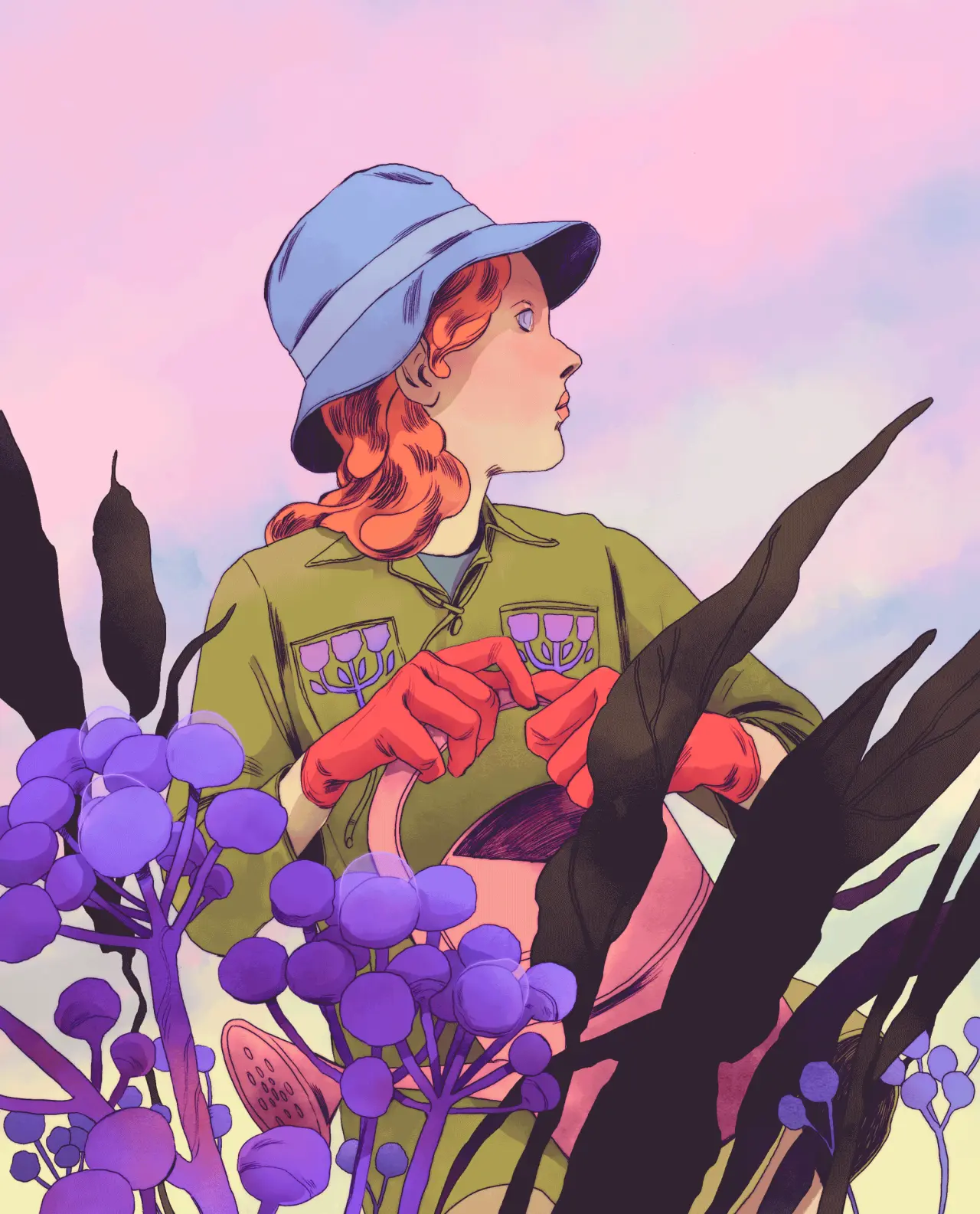
Creative Boom: Thomke Meyer's dynamic illustration are inspired by sound, cinema and nature The illustrator talks about the winding path that led her to editorial covers for Die Zeit, Elle, and Der Spiegel, and the graphic novel she's now building. In Thomke Meyer's illustrations, you'll spot hair whipping sideways, vines coiling and unravelling across a page, figures leaning mid-stride as if the wind is about to set them afloat.
Whether it's personal work or a commission for a magazine cover, all her pieces have a sense of motion inspired by the sounds around her, as well as trips to the cinema and time by the water. "There are so many things that are inspiring, but for me, it's mainly listening to music and imagining pictures that go with the music – or the feeling that resonates with me as I listen," she says.
"I tend to think in terms of moving images rather than static motifs, and I try to capture that movement in my illustrations." Thomke grew up in a village in East Frisia, in a close-knit community with sweeping, flat views, and drawing was one of the few constants of her childhood. When she was 10, her grandmother noticed how much time she spent at it and enrolled her in art school – it became something of a second home through her teenage years, alongside life drawing and theatre classes on the side. The path from there wasn't so smooth.
After finishing school, Thombke moved to Berlin hoping to study fine art, and was turned down everywhere she applied. "I was met with nothing but rejections from art universities, haha," he says. It took a year of building a portfolio for her to realise illustration suited her better than fine art – which led her to HAW Hamburg, where she studied from 2013 to 2021 and came out with a master's degree. She's been working from a home studio in Hamburg ever since. Rather than bouncing off the client's brief, Thomke's process starts with an internal moment of reflection.
"I try to start by thinking about 'what I'd like to draw' before combining that with the client's specifications," she says, "in order to steer clear of the obvious ideas and avoid boring motifs." It's a way to protect her own curiosity in commissioned work, which she admits is hard to sustain over a career. From there, sketches turn into outlines, then rough colour, with the composition often shifting as it goes. "I'm not the type of person who has a clear vision of an illustration from the very beginning," she admits, which is also why personal projects without a deadline forcing her hand can take three times as long to finish.
"I have a hard time finishing it because I could improve it further." One commission that sticks out for her was an illustration for die ZEIT Schweiz, made on her way to an artist residency in Switzerland, tackling child abuse and the country's lack of protective laws. Working with the art director, Thomke built the piece around an unsettling playground, drawing on personal sketches she'd been making of 1970s toys at the time – a way of folding something playful and childlike into a heavy subject. Elsewhere, a small bird she drew and animated for The Different Folk gave her total creative freedom.
Article truncated for readability. Read the full piece →
The article discusses a unique approach to illustration that connects emotional storytelling with brand strategy, making it significant for the design industry while offering actionable insights for brand professionals.