Score
Meet the hair color startup that’s giving L’Oreal a run for its money
Madison Reed is redefining the hair color market by offering high-quality, at-home hair dye products that compete directly with established brands like L'Oreal. Their strategy focuses on innovation in product formulation and a unique multi-channel approach that combines direct-to-consumer sales with physical Hair Color Bars, allowing for a flexible customer experience that fosters loyalty and repeat business.
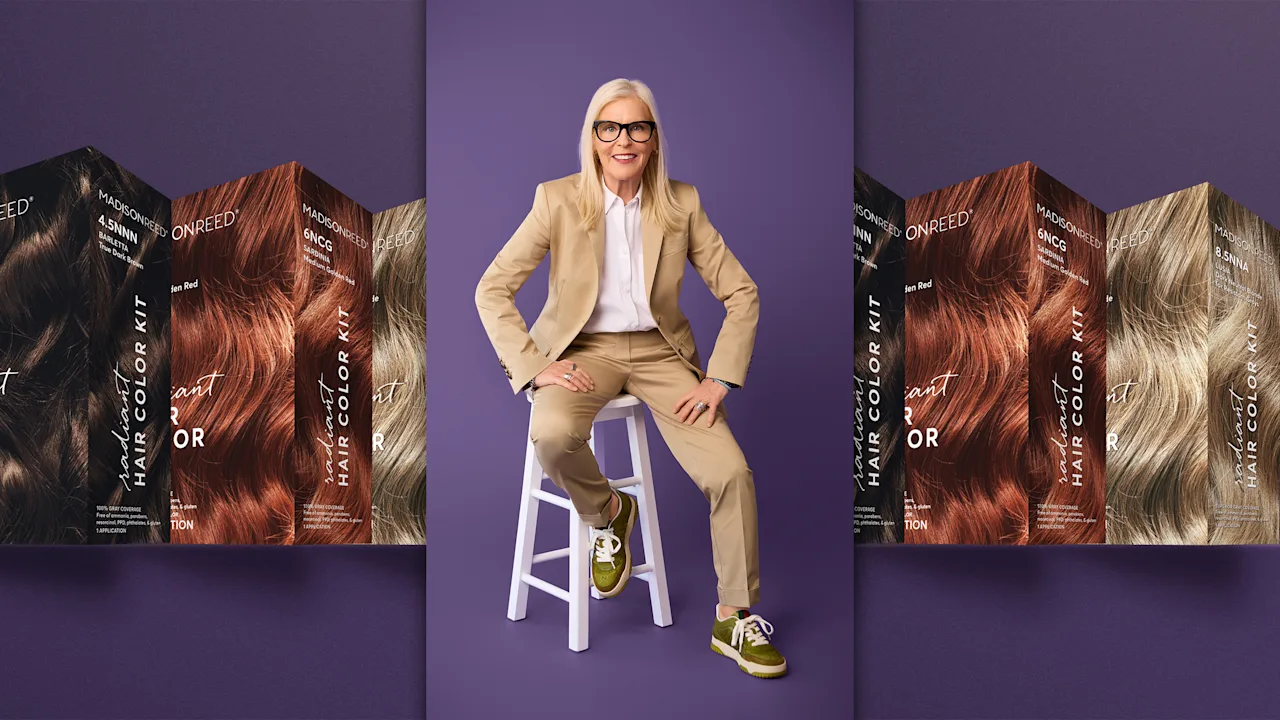
FastCompany: For decades, the millions of American women who dye their hair had two options: They could spend three hours and upwards of $300 in a salon or grab a $10 box off the drugstore shelf, squint at the ingredient list, and hope for the best. There was no middle ground. Amy Errett thought that was absurd. “There was no prestige product that a woman could buy for at-home use,” the founder and CEO of hair color startup Madison Reed tells me. “Just because you color at home does not mean you can’t afford good color.
That was, in my opinion, a very elitist viewpoint.” Errett established Madison Reed in 2013, right as the direct-to-consumer wave was cresting. But while brands like Warby Parker and Dollar Shave Club were mostly rethinking distribution—taking existing product categories online and cutting out the middleman—Errett wanted to do something more fundamental. She wanted to reformulate hair color from the ground up, rethinking how it reaches consumers. [Photo: Madison Reed] The result is a company that is profitable and has raised approximately $250 million in venture capital. Across the U.S.
Madison Reed operates 98 Hair Color Bars—which exclusively offer hair coloring services—and sells through Ulta, Amazon, and its own website. The brand is now poised to take market share from competitors that have been around decades longer, like L’Oreal, Schwarzkopf, and Wella. “A lot of the DTC models were picking off a very narrow aspect of something and trying to build a commerce brand,” says Jon Callaghan, cofounder and managing partner of True Ventures, which has backed Madison Reed since 2013, along with Norwest Venture Partners, Comcast Ventures, and Jay-Z’s Marcy Ventures.
“Amy’s tackling something substantially larger—a fundamental activity in beauty and wellness that women do every four to six weeks.” Callaghan describes Madison Reed as a classic disruption story. “The industry was dominated by large incumbents, very low innovation, poor-quality product,” he says. “Amy sort of flipped the script on every aspect of that.” [Photo: Madison Reed] Anthropological research Madison Reed’s origin story begins with a woman and a bathroom. Errett, a serial entrepreneur and former venture capitalist, recorded about 50 women at home doing their hair with drugstore box dye and observed them.
The experience left a lot to be desired. The instructions were unreadable. The smell was off-putting. The shade ranges—often only eight or so colors—bore no resemblance to the complexity of actual human hair. “Dark hair has a multitude of colors,” Errett says. Her first breakthrough was upending the product itself. Errett set out to reformulate home hair color without ammonia and other harsh chemicals that were standard across the category. Madison Reed’s boxes, which retail for $35, contain hair dye made in Italy using a production process the company controls end-to-end.
Today, the brand offers roughly 90 shades of color, 55 of which are available to consumers as permanent color. The second breakthrough was matching the right color to the customer. Half of American women color their hair at home, Errett points out, but the fundamental challenge of the at-home market is that you can’t see the customer. “There’s a lot of science in hair color,” she says. “I have to know what her natural color is, how gray is she, the texture of her hair.” From the beginning, Madison Reed developed AI to bridge that gap. Customers answer an 18-question quiz, then the system recommends two shades most likely to suit them.
Article truncated for readability. Read the full piece →
Madison Reed's innovative approach to the hair color market presents significant competition to established brands, showcasing a blend of direct-to-consumer and retail strategies that are highly relevant for brand strategy professionals.
Weekly digest
Get the Signal digest
Every Monday morning — the top 3 brand trends, 10 high-signal articles, and one emerging signal to watch.
No spam. Unsubscribe anytime.