Score
What a Democratic America 250 might have looked like
The article discusses how the branding and celebration of America's 250th anniversary has been influenced by political leadership, particularly contrasting the Democratic and Republican approaches. For brand strategy, this highlights the importance of aligning brand messaging and events with broader cultural values and inclusivity, suggesting that a nonpartisan approach could attract wider engagement and sponsorship.
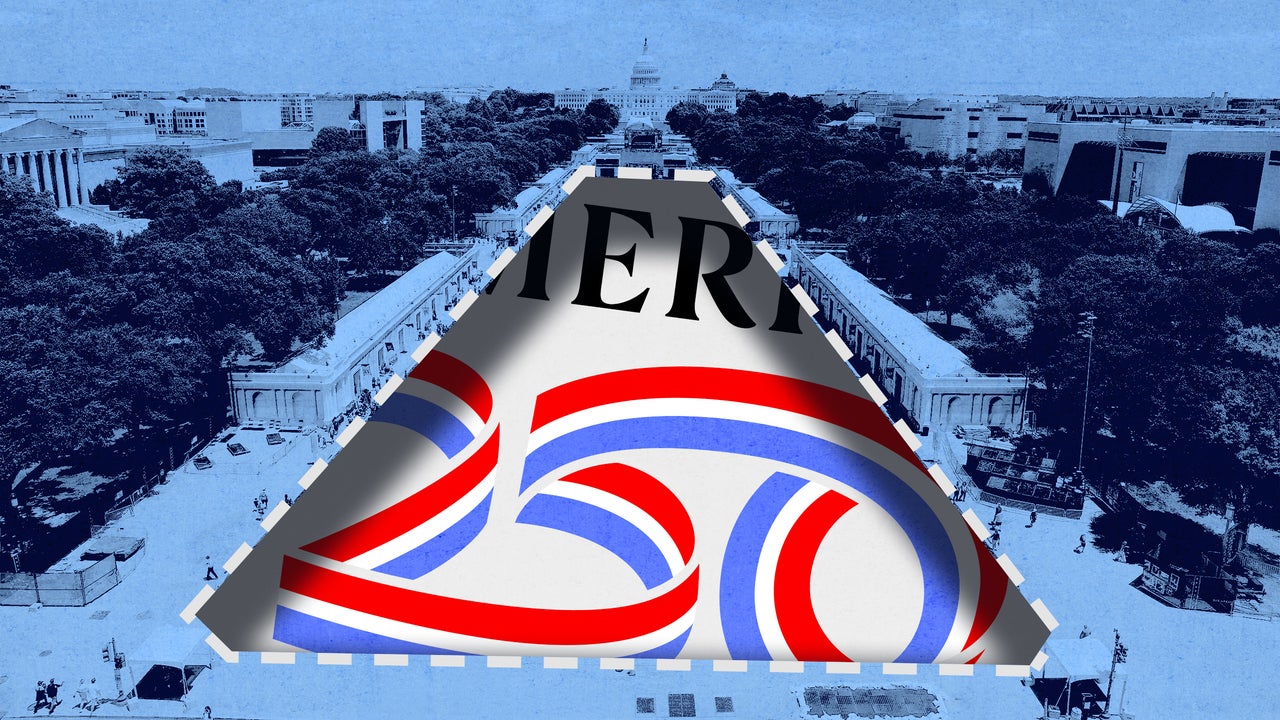
FastCompany: The opening of the Obama Presidential Center last month had an all-star lineup of performers, a bipartisan guest list, and speeches encouraging the country to rise to its highest ideals. On social media, some Democrats called it the real America 250. In an alternate universe where President Donald Trump lost the 2024 race, and the East Wing tear down, tariffs, and Iran war never happened, America’s 250th anniversary would certainly feel much different. There were plans for a parade in Washington, D.C., a festival put on by the Smithsonian on the National Mall, and coins that were never minted.
Attendees gather on lawn chairs and blankets at the Midway Plaisance Park public watch party to view the live grand opening dedication ceremony of the Obama Presidential Center on Chicago’s South Side in Chicago, Illinois, United States on June 18, 2026. [Photo: Jacek Boczarski/Anadolu/Getty Images] Instead, we got a UFC fight, Trump rally, and a fair that’s drawn negative attention for its soft attendance . Under a President Kamala Harris, it could have looked different, according to Democrats.
The Washington Monument is seen behind the stage as attendees watch the rally to kick off the Freedom 250 backed “Great American State Fair” on the National Mall on June 24, 2026 in Washington, DC. [Photo: Tasos Katopodis/Getty Images] Imagine a Beyoncé concert for 1 million people on the National Mall “You don’t have to squint real hard to see a Beyoncé concert for literally 1 million people on the Mall,” one Democratic professional who requested anonymity because of their work on the Great American State Fair tells Fast Company about what a Democratic America 250 might have been like.
“It’s not hard to see how that could have been.” Beyonce delivers remarks at a campaign rally in support of US Vice President and Democratic presidential nominee Kamala Harris on ‘Reproductive Freedom’ at Shell Energy Stadium in Houston, Texas, United States on October 25, 2024. [Photo: Kyle Mazza/Anadolu/Getty Images] Plans for America’s 250th anniversary celebrations began a decade ago when Congress created the United States Semiquincentennial Commission, which then-President Barack Obama signed into law in 2016.
Since then, the non-partisan group has been rebranded once , and it’s lasted through to both Trump administrations and former President Joe Biden’s term. Plans have evolved and changed. The Smithsonian Institution’s Folklife Festival, held annually in Washington, D.C., wasn’t able to be hosted on the National Mall this year as it was for the 1976 Bicentennial since Trump’s Great American State Fair booked the space. Called “Of The People: The Smithsonian Festival of Festivals,” it’s now on the road for a national tour in cities from Detroit to Tucson. There were plans for a D.C.
parade with “diverse floats” and marching bands, as well as concerts across the country that capture “the nation’s cultural diversity,” according to a September 2024 playbook created by America250 and obtained by Time . At the U.S. Mint, which approved designs for coins commemorating civil rights during the Biden administration, Trump’s administration scrapped those plans for coins focused heavily on America’s colonial and Revolutionary War eras . U.S. Secretary of Transportation Sean Duffy speaks during a rally to kick off the Great American State Fair on the National Mall on June 24, 2026 in Washington, DC.
Article truncated for readability. Read the full piece →
The article provides insights on the intersection of political branding and cultural values, which is significant for brand strategy professionals, though the concepts of nonpartisan branding are not entirely new.
Weekly digest
Get the Signal digest
Every Monday morning — the top 3 brand trends, 10 high-signal articles, and one emerging signal to watch.
No spam. Unsubscribe anytime.