Score
Trump’s NASA man has a new plan to take the U.S. to the moon
NASA's new 'Ignition' initiative represents a significant shift in the U.S. space strategy, aiming to establish a permanent lunar base by 2029. While the plan is ambitious and positions NASA to compete with international rivals, the feasibility of achieving such rapid advancements in aerospace engineering remains questionable, highlighting the need for realistic timelines and adequate funding in brand strategy.
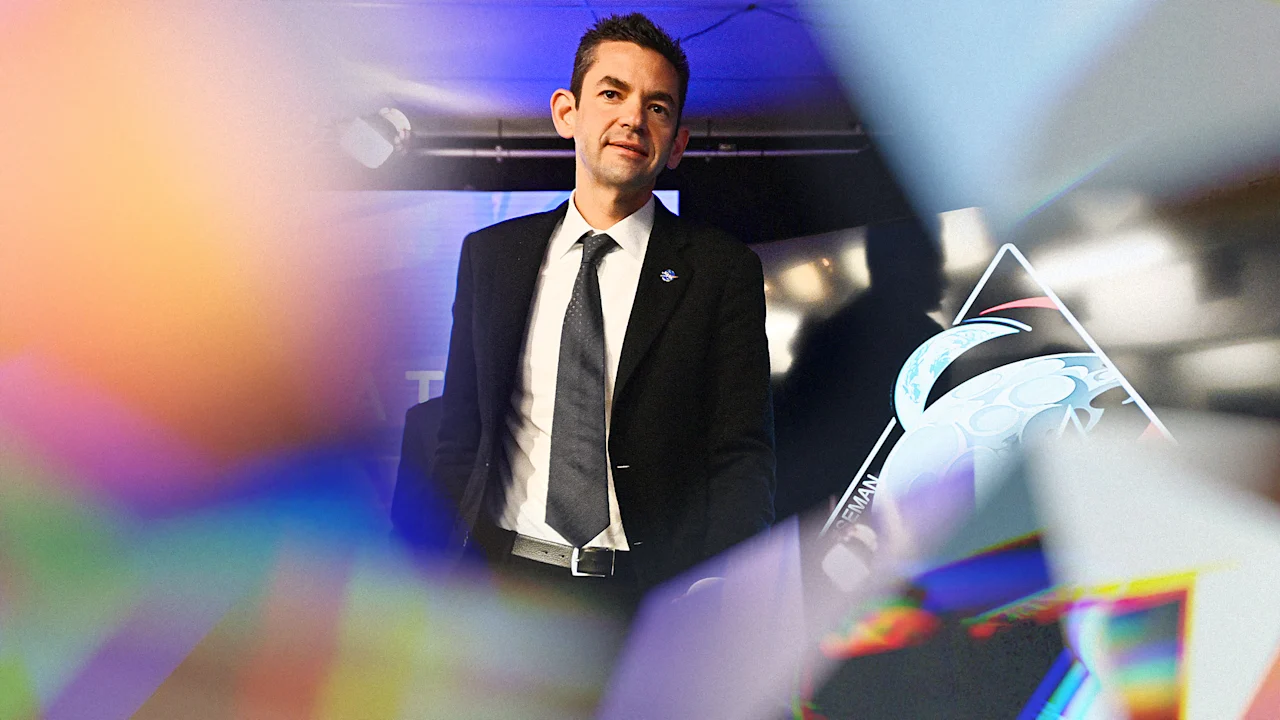
FastCompany: NASA Administrator Jared Isaacman just announced a sweeping overhaul of America’s space strategy. Dubbed “Ignition,” it’s a tectonic shift in how the nation intends to conquer the moon. Isaacman, who took the agency’s helm in late 2025, laid out a hyper-accelerated road map to build a permanent lunar surface base before the end of President Donald J. Trump’s term. It is an aggressive departure from the agency’s previous trajectory, but looking at the unforgiving physics and glacial pace of actual aerospace engineering, the timeline reads like pure fantasy. The plan is great on paper, though.
It lays out three deployment phases—which will progress from landing robots to building human habitats to establishing a permanent base crew. Isaacman says the plan positions the U.S. to compete with China, a country that is steadily advancing on its 100-year plan to build its own lunar base and set up a network of spaceships to control and exploit the resources in our satellite and the solar system. Isaacman is very aware of this.
“The clock is running in this great-power competition, and success or failure will be measured in months, not years,” he stated in NASA’s official press release announcing the Ignition presentation event at the agency’s headquarters in Washington, D.C. But the history of space exploration is not actually written in months. Not even years. It’s written in decades. The hardware required for all the milestones that Ignition has set up is nowhere near ready, starting with the landers that will fly the humans from the moon’s orbit to its surface and back.
According to a March 9 report from the NASA Office of Inspector General, the lifeblood of this lunar ambition—SpaceX’s colossal Starship lander— simply will not be prepared for a 2027 touchdown. Nobody really knows when it will be ready, as Starship itself keeps exploding in midair from time to time. And the Space Launch System, the Boeing-built rocket that Isaacman criticized in the past , has been delayed again and again, given that it is plagued with problems .
Every critical component of the supply chain is notoriously behind schedule, making the prospect of constructing a permanent extraterrestrial habitat before January 2029—the end of Trump’s presidency—less of a viable blueprint and more of an impossible dream. Members of the media look on as the mobile launcher 1 containing the massive Artemis II Space Launch System (SLS) rocket and Orion spacecraft rolls back to the Vehicle Assembly Building from Launch Pad 39B at the Kennedy Space Center at dusk in Cape Canaveral, Florida, on February 25, 2026.
[Photo: Gregg Newton/AFP/Getty Images] Big change The Ignition initiative starts with the immediate suspension of the Lunar Gateway, the planned space station that would have orbited the moon like a cosmic tollbooth. Following the previous plan, astronauts would arrive in a spaceship from Earth—like Lockheed Martin’s Orion—to dock and transfer to a lunar lander made by SpaceX or Jeff Bezos’s Blue Origin, designed specifically to just go up and down the moon’s surface. With the new plan, instead of docking with the orbiting station, the lander will orbit the moon while waiting for Orion to arrive.
Article truncated for readability. Read the full piece →
The article discusses a significant shift in U.S. space strategy that could influence branding and positioning within the aerospace industry, but its direct relevance to brand strategy professionals is somewhat limited.
Weekly digest
Get the Signal digest
Every Monday morning — the top 3 brand trends, 10 high-signal articles, and one emerging signal to watch.
No spam. Unsubscribe anytime.