Score
It’s the world’s best-selling spirit you’ve never heard of—and it’s growing while the rest of America quits drinking
The article discusses the rising popularity of Jinro soju, the world's best-selling spirit, in the U.S. amid declining alcohol consumption. With a focus on cultural rituals and social drinking, Jinro is leveraging its Korean heritage while adapting to Western tastes and marketing strategies, including collaborations with influencers and K-pop stars. Brand strategists can learn from Jinro's approach to balancing authenticity with modern consumer preferences as it seeks to expand its global presence.
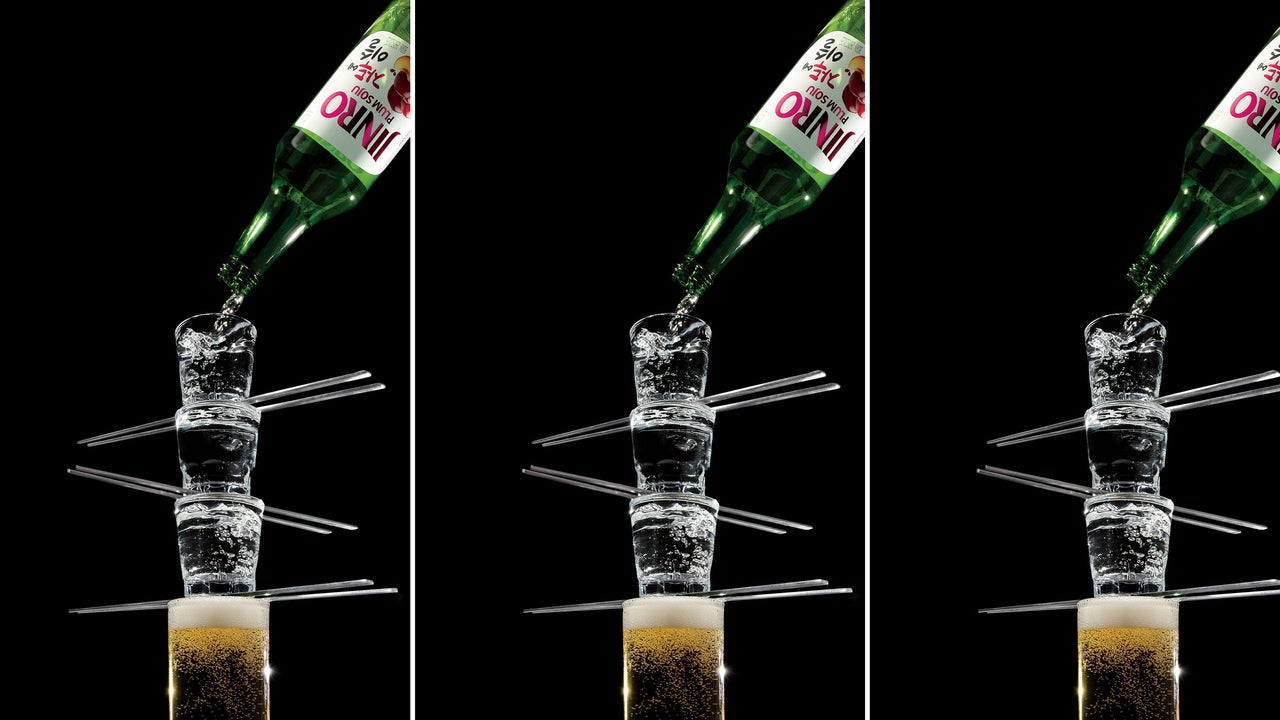
FastCompany: Daniel Dae Kim, the actor, is walking Jimmy Fallon through the finer points of somaek , a popular Korean drink that mixes beer with the spirit soju. “Like a boilermaker,” Kim says on The Tonight Show , where he’s promoting his CNN series K-Everything . As with most drinking cultures around the world, there are rules. The youngest person should pour, though Kim, 58, takes up the job on Fallon’s behalf. He perches a pair of Korean flat metal chopsticks in parallel lines over a half-full beer glass; the shot glass of clear soju rests on top.
What happens next is fast: They slam the table in unison, and the vibrations send the shot into the beer. They grab their glasses, clink, shout the Korean cheers, “ Geonbae! ,” and down ’em in one. It’s a soju bomb, featuring a tall bottle of Terra beer and a sky blue bottle of Jinro soju. For the Korean alcohol heavyweight HiteJinro, which owns both brands, the scene was a moment of pure, earned-media bliss. Kim had summed up in a few minutes what makes Jinro—a brand that’s ubiquitous in Korea and increasingly recognizable here—the world’s top-selling spirit brand by volume: the communal ritual of sharing a bottle.
Alcohol consumption in the U.S. has been on a steady decline amid changing consumer habits and rising inflation. The proportion of U.S. adults who report drinking alcohol dropped from 62% in 2023 to 54% last year. But soju—typically made by fermenting rice into wine and then distilling it into a clear, neutral-flavored spirit—is a bright spot for the industry. Soju represents just 1% of U.S.
spirit sales volume, according to Koryn Ternes, consulting director at the alcohol industry research firm IWSR Americas, but “it’s gaining a lot of traction.” Sales volume grew 30% in the last year, and IWSR predicts a compound annual growth rate of 14% from 2025 to 2030, compared to a 1% decline in total U.S. spirits sales volume over that same period. Jinro, Korea’s oldest brand of soju, has long been the go-to bottle among Korean people. Now, it’s aiming for global dominance. In 2024, the brand declared its intention to reach 500 billion South Korean won, or about $323 million, in international sales by 2030.
HiteJinro made progress on this goal in 2025, expanding export revenue by 6.7% year over year to 192 billion won ($136 million), while taking in roughly $1.5 billion domestically, on a nonconsolidated basis. But with the spirit’s rising popularity abroad, it’s facing increasing competition on the shelves of global liquor stores. Jinro will also have to thread the cultural needle between its Korean roots and Western ambitions. The company is riding the ever-growing K-wave, which has brought K-beauty, K-pop, and K-dramas (where its products are ubiquitous) into the mainstream. But that wave tends to both change and be changed by its expansion.
The members of the K-pop group BTS, for example, have to consider the balance of English lyrics versus Korean ones in their songs, and streamers like Netflix will create full English dubs of K-dramas for viewers disinclined to overcome what the Korean director Bong-Joon Ho has called the “one-inch-tall barrier of subtitles.” For Jinro, success might mean non-Korean customers taking the rituals and traditions associated with the drink and making them their own.
Article truncated for readability. Read the full piece →
The article highlights a significant trend in the beverage industry with Jinro's unique marketing strategies, making it highly relevant and impactful for brand strategists looking to adapt to changing consumer behaviors.
Weekly digest
Get the Signal digest
Every Monday morning — the top 3 brand trends, 10 high-signal articles, and one emerging signal to watch.
No spam. Unsubscribe anytime.