Score
Minted spent two decades building an artist-led business. Now it’s experimenting with letting AI in
Minted is exploring the integration of generative AI into its artist-led business model, allowing customers to customize existing designs while maintaining the original artist's style. This strategy aims to enhance customer satisfaction through personalization without compromising the quality and integrity of human-created artwork, thus positioning Minted uniquely in a competitive market focused on artistic authenticity.
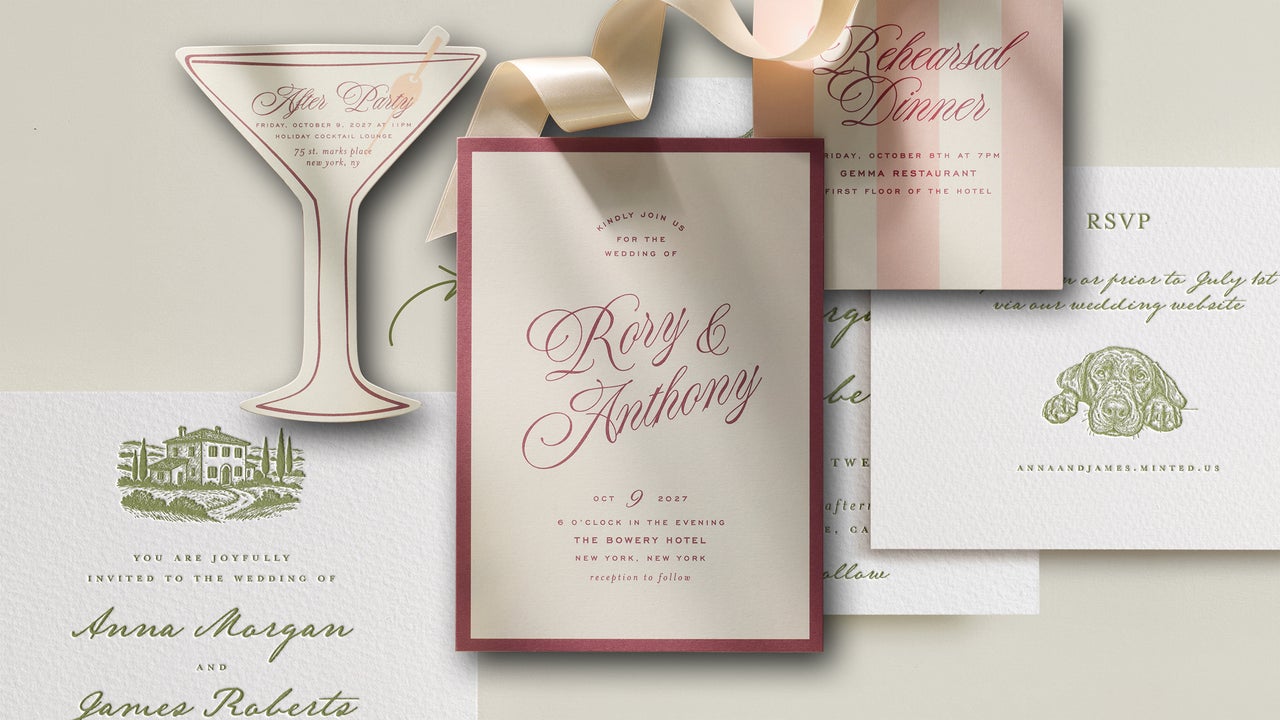
FastCompany: You’ve found the wedding invitation of your dreams. The illustration is a delicate watercolor by an artist whose work you’d happily hang on your wall. There’s just one problem: the painting on the card is of a generic vineyard, and you want the actual barn in Vermont where you’re getting married. Commissioning the original artist to redo the work just for you would be prohibitively expensive—assuming they’d even take the job. So most customers do what they’ve always done: pick something close enough, and move on.
Minted, the artist-driven stationery company founded in 2007, announced this week that it has a third option in the works—its first foray into generative AI —and shared an exclusive early look at the technology with Fast Company. Over the past eight weeks, it has been quietly building an AI customization tool that will let customers swap a specific element of an existing design for something personal to them—a venue, a pet, a person—while preserving the original artist’s style. The tool isn’t live yet, and the company hasn’t set a launch date.
But it offers an early look at how artist-led businesses are trying to fold generative AI into their products without becoming the very thing their customers came to them to avoid. “Our customers want high-quality, human-created artwork,” says Minted CEO Melissa Kim. “And they want the ability to do more customization.
This seems like a productive use of AI that will benefit the artist, since it will lead to more sales.” [Image: Minted] The Artist Economy Minted launched in 2007 with a then-novel premise: rather than have a handful of in-house designers, it would crowdsource its catalog from a community of independent artists, then let consumers vote on which designs went into production. Today, that artist community numbers roughly 21,000 artists. Minted finds artists through design competitions—a holiday photo card challenge, a painting challenge, a save-the-date challenge—which happen dozens of times every year.
Artists submit work, receive critique from peers, and then both artists and consumers vote on the submissions. Minted runs the results through an analytics process to decide what makes it onto the site. Winning artists receive a cash payment up front, which allows Minted to license the art and then earn a commission, typically six to 10 percent, every time their design sells. “If you have a hit holiday card,” Kim says, “that artist can make a significant amount of money in commissions during the holiday season.” [Image: Minted] This model has given Minted a distinct position in a crowded category.
Compared with Vistaprint or Canva, the site is relatively rigid—you choose a design, you customize the text, you maybe swap in a photo, and you’re done. Instead, Minted’s selling point is curation. Someone who lands on Minted is opting into an aesthetic shaped by working artists rather than an infinite design canvas they have to navigate themselves. “We generally attract customers who want high-quality artistic content,” Kim says. “And I think with that comes a little bit more rigidity, in terms of being faithful to the artist’s intent.
Article truncated for readability. Read the full piece →
Minted's innovative approach to integrating AI into an artist-led business model represents a significant shift in the design industry, offering actionable insights for brand strategy professionals focused on personalization and authenticity.