Score
Our post-carbon future is already here—if you know where to look
The article emphasizes the importance of integrating climate justice and community ownership into brand strategies, particularly in the context of a post-carbon future. Brands should focus on sustainable practices and equitable solutions that resonate with consumers' growing awareness of environmental issues, showcasing real-world examples of successful initiatives that prioritize community well-being over mere aesthetic appeal.
FastCompany: This year has seen one environmental catastrophe after another. Collapsing glaciers triggered a devastating flood in Nepal , heat waves in Europe caused more than 35,000 deaths, and extreme temperature swings in the Midwest destroyed crops . “The climate alarm is blaring in every direction,” Simon Stiell, the executive secretary of UN Climate Change, said earlier this year . According to a recent report from the UN , the world is on course to cross the average warming level of 1.5 degree Celsius (2.7 Fahrenheit) in the next few years.
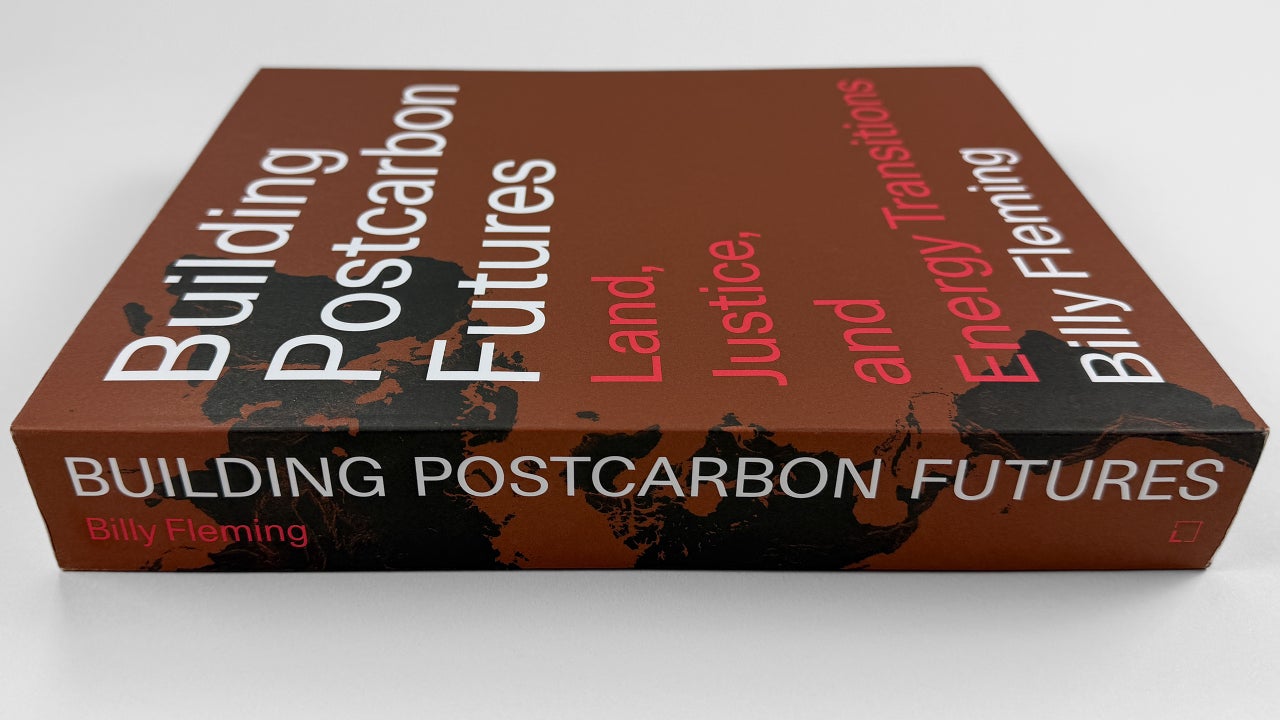
That’s considered a tipping point by the 2016 Paris Agreement, which called for net zero global carbon emissions by 2050. [Photo: Building Postcarbon Futures: Land, Justice, and Energy Transitions] As dire as the headlines are, there are also reasons to be optimistic about addressing climate change. Dozens of them are listed in Building Postcarbon Futures: Land, Justice, and Energy Transitions , a new book by the landscape architect Billy Fleming. It turns out that we don’t have to look far for equitable, just, and environmentally sensitive solutions to decarbonization.
Fleming is an associate professor of landscape architecture at Temple University and an advisory board member of the Climate and Community Institute, and was a policy advisor to the Obama administration. In 26 case studies spanning 43 countries and six continents, he walks readers through proven ways that communities are addressing the challenge. [Photo: Building Postcarbon Futures: Land, Justice, and Energy Transitions] The atlas’s examples aren’t simply swapping conventional energy for green options; they challenge conventional ownership structures and what types of knowledge and innovation are prized.
It isn’t always a race to the newest technique that matters, as demonstrated by the Zapatista movement’s milpa farming system in Chiapas, Mexico, which relies on techniques that date back 2,000 years. It also isn’t necessarily good design that is the most important outcome, as Lacaton & Vassal’s renovation of public housing in Bordeaux, France, demonstrated; the architects found ways to complete building retrofits, like new balconies and energy-efficient systems, without displacing residents.
We spoke with Fleming about the book, which he hopes becomes a reference for designers, policymakers, and everyday readers who are interested in learning more about solutions to the climate crisis. This interview has been edited and condensed. [Photo: Building Postcarbon Futures: Land, Justice, and Energy Transitions] The book arrives at an interesting time. Year after year, we’ve faced more extreme environmental conditions. Here in New York, we’re now classified as a subtropical climate. How are you feeling these days about the movement toward a postcarbon future?
This book was a salve to work on for the last five or six years because, as bleak as it is today, it’s been like that for a long time in the environmental and climate justice movement. The unfortunate nature of doing that kind of work is we just often lose most of the things we’re fighting for. And when we win, we celebrate. In some ways, the book is growing out of a frustration with the way my fields—designers broadly, planners, climate policy folks—tend to think about what a postcarbon future can or should look like, or what climate resilience actually is.
Article truncated for readability. Read the full piece →
The article addresses a significant shift in brand strategy towards sustainability and community engagement, which is increasingly crucial for brands in today's market, making it highly relevant and impactful for industry professionals.
Weekly digest
Get the Signal digest
Every Monday morning — the top 3 brand trends, 10 high-signal articles, and one emerging signal to watch.
No spam. Unsubscribe anytime.