Score
Spredges, glitter, and lots of gold foil: Penguin is betting on deluxe book design to win over kids
Penguin Young Readers is launching a series of deluxe book editions this holiday season, including special features like gold foil, sprayed edges, and interactive elements aimed at attracting young readers. This strategy is designed to appeal not only to existing bibliophiles but also to casual readers who may be drawn to the aesthetic and collectible nature of these books. Brand strategists can learn from Penguin's approach to leverage design and emotional connection to enhance product appeal and foster reader loyalty.
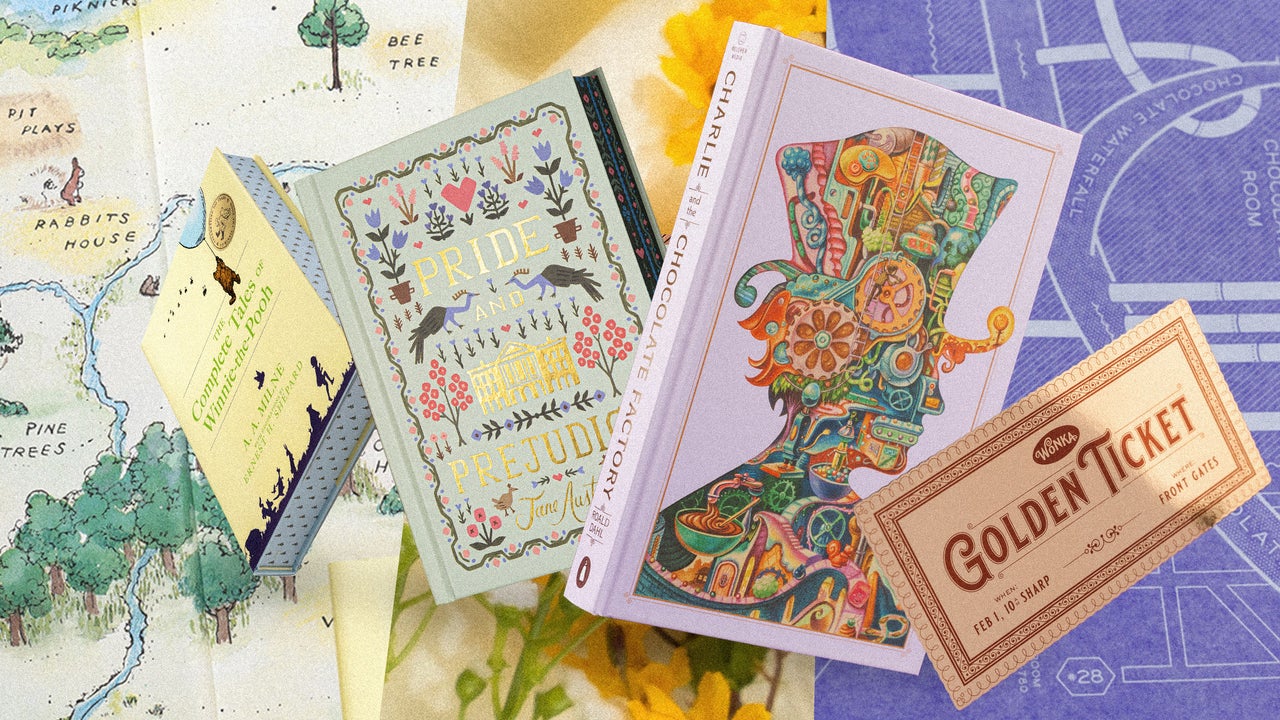
FastCompany: This holiday season, you can give your child an actual Golden Ticket. It comes tucked inside a new special edition of Charlie and the Chocolate Factory , one of a slew of deluxe editions of books Penguin Young Readers is releasing this fall. The new volume is full of little surprises. Willy Wonka has scribbled notes throughout the book in his curlicued script and tucked bits of paper into the pages, like a secret blueprint of the factory and an Ooma-Loompa to-do list.
There are also new editions of Pride and Prejudice and Sense and Sensibility featuring new art by Anna Bond, of the Rifle Paper Co., or a deluxe copy of the hit romantasy novel, The Secret World of Briar Rose , that comes with a fairy-tale inspired embossed jacket, a gold foil-stamped case, and sprayed edges. [Photo: Penguin Young Readers] None of these books come from a boutique press catering to rare-book collectors. They’re from the children’s division of the world’s largest publisher, Penguin Random House, which generated $5.76 billion in revenue last year.
This wave of new books is part of a deliberate strategy to cater to the company’s most devoted readers by designing premium editions that they want to own, display, and carry around as a marker of their identity. There’s a good reason for this push. Today’s young readers are more passionate about reading than ever, driving Penguin Young Readers’ growth. “We’re selling more books than we’ve ever sold,” says Jen Loja, president of Penguin Young Readers. However, there are actually fewer of these bibliophiles than ever before. Government data shows that only 37% of 9 -year-olds and 14% of 13-year-olds read for pleasure every day.
“Readers are reading more,” Loja says. “Now our next goal is to make sure that we’re getting more people reading.” One way Loja wants to achieve this goal is by investing in design. By creating beautiful, collectible books, Penguin can serve existing booklovers, while also winning over more casual readers who might be intrigued by a glittery cover or fancy sprayed edges. [Photo: Penguin Young Readers] An Old Idea, A New Customer For much of the history of the written word, books were luxury objects that were carefully crafted by hand. Early Bibles were made of vellum and calfskin, with gold leaf laid into the pages.
Even after the printing press was invented in 1455, books were still rare and expensive, bound in leather and decorated with beautiful illustration. Then, in 1935 in the U.K., a publisher called Penguin decided that books should be as cheap as a pack of cigarettes; it famously began selling paperbacks for sixpence, equivalent to about 12 U.S. cents at exchange rates then. This ushered in a new era when reading could become a pastime of the masses. (Disclosure: Penguin is the publisher of my upcoming children’s book .) Still, there has always been niche of bibliophiles who have wanted special editions of their favorite books.
Folio Society , founded in 1947, publishes high-end, illustrated, slipcased hardcovers of everything from Jane Austen to Dune . And Juniper Books, which launched in 2001, sells collectible sets of books for adults and kids, including the Harry Potter and Percy Jackson series. “There’s always been some element of the book as object,” Loja says. In the past, Penguin and these collectors’ presses served two different audiences: one that bought books to read, and the other that bought books to display. But now, Penguin has observed that tweens and teens are increasingly asking for beautiful, collectible editions of books.
Article truncated for readability. Read the full piece →
Penguin's strategy to enhance book design with deluxe features is significant for the publishing industry and offers actionable insights for brand strategists, though the concept of premium product design is not entirely new.
Weekly digest
Get the Signal digest
Every Monday morning — the top 3 brand trends, 10 high-signal articles, and one emerging signal to watch.
No spam. Unsubscribe anytime.