Score
Alex Chenglin Wu Of DeepWisdom: How AI Is Disrupting Our Industry, and What We Can Do About It
The article emphasizes that AI is not merely a tool but a transformative force that will reshape workflows and business processes, particularly in the tech industry. For brand strategy, this means companies must adapt to these changes by fostering a culture of rapid learning and innovation, ensuring that their products resonate with users' evolving needs in an AI-enhanced landscape.
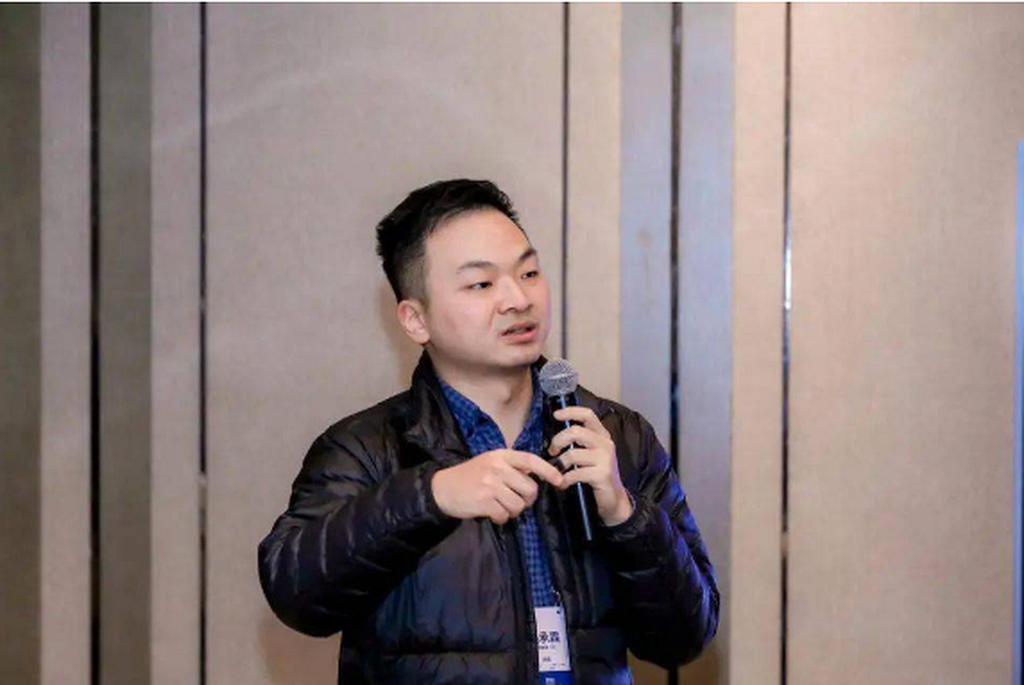
Authority Magazine: Alex Chenglin Wu Of DeepWisdom: How AI Is Disrupting Our Industry, and What We Can Do About It -- Listen Share AI is not just another tool. It is going to reshape the workflow itself. AI is not just another tool. It is going to reshape the workflow itself. As a part of our series about the future of artificial intelligence, we had the pleasure of interviewing Alex Chenglin Wu. Alex Chenglin Wu is the founder and CEO of DeepWisdoms, launched by OpenManus, a VC-backed AI coding startup. The team is also behind MetaGPT and MGX. DeepWisdom collaborates with Xiangru Tang, a PhD at Yale, primarily on co-authoring research papers.
Also, the company conducted the Foundation Agent Survey with Xiaoliang Qi at Stanford. OpenManus is a VC-backed AI coding startup about to launch a vibe coding product to the global market: ATOMS. This ground-breaking product revolutionises business processes and helps build the AI economy. Atoms has reached №1 on Product Hunt. On January 14th, Cathay Capital officially announced its leadership of the current round of financing for DeepWisdom (product name: Atoms). Thank you so much for joining us in this interview series! Before we dive into our discussion our readers would love to “get to know you” a bit better.
Can you share with us the backstory about what brought you to your specific career path? When I was in high school, I felt very confused. I kept asking myself what the meaning of life is, living in such a vast universe, and we are so small. I read a lot of philosophy for answers. Over time, I came to feel that philosophy always offers theoretical systems that are internally coherent, but it doesn’t really solve practical problems.
It keeps asking, thinking, and doesn’t come up with a solution to so many problems in the world. Then, I thought: could we build a machine capable of searching for answers on its own, perhaps even the kinds of problems humans have never been able to solve? I chose computer science as my major in university to explore the possibilities of such a machine. In 2010, I entered university and began to see that building a machine to solve every problem was still far beyond my reach.
So I took a more practical path: I would earn enough money first, and then continue exploring those deeper questions. I began using automated machine learning for quantitative trading, where I achieved roughly 46% annualized returns at one point. Automated machine learning was itself an early attempt to use AI to build AI. In 2014, I joined Tencent, where I applied automated machine learning to search and recommendation systems.
The work went well, and over time, I received more than a dozen awards for it. By 2018, as the traffic dividend of the mobile internet era began to fade, I went back to my old notebook of ideas and started thinking seriously about building a startup. In 2019, I founded DeepWisdom. From the very beginning, our ambition was to make AI build AI. We initially focused on the enterprise market, but the customized systems we built for customers were difficult to scale. — How could customized capabilities be turned into standardized products and scaled up?
Article truncated for readability. Read the full piece →
The article discusses the significant implications of AI on the tech industry and brand strategy, highlighting the need for adaptation and innovation, which is highly relevant and impactful for professionals in the field.