Score
Nuclear power is China’s key for transitioning to a fully renewable grid design
China's aggressive expansion of its nuclear power capabilities is a strategic move to stabilize its renewable energy grid as it transitions to a fully renewable energy system. By integrating nuclear energy, which provides a consistent baseload output, China aims to balance the intermittent nature of wind and solar power, ensuring a reliable electricity supply as demand continues to surge.
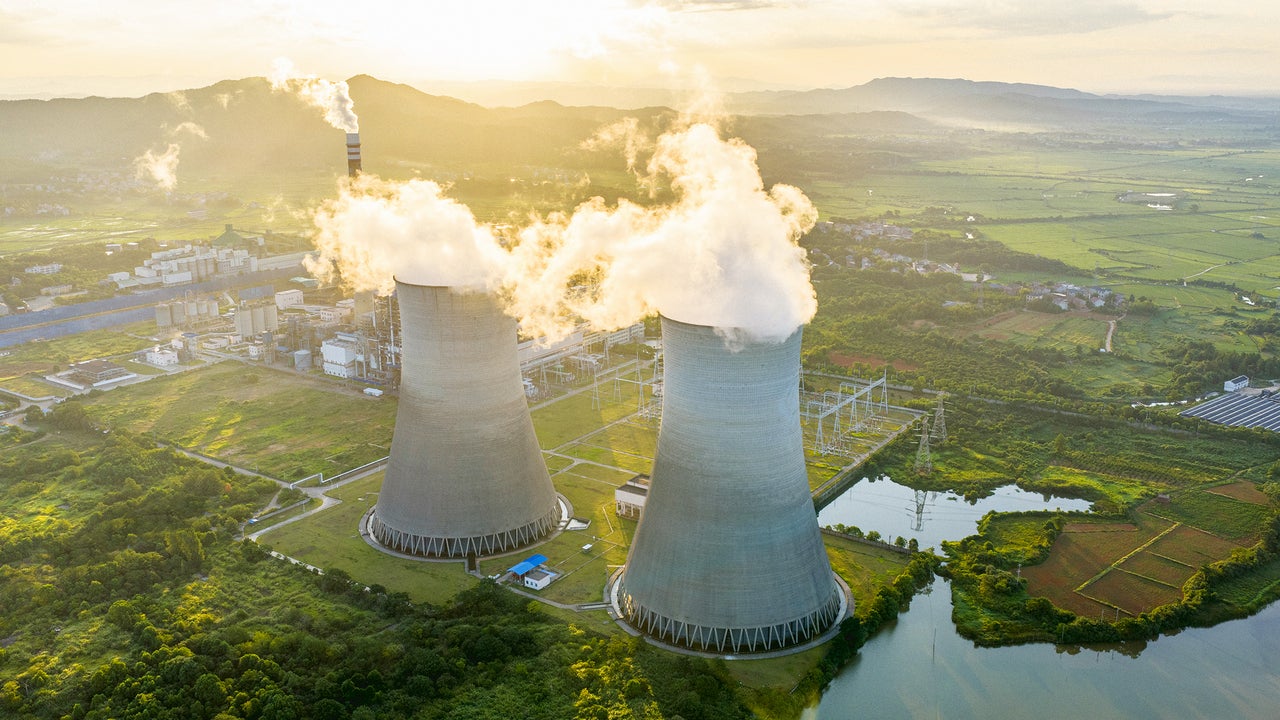
FastCompany: Between late 2016 and August 2026, China connected 27 new nuclear reactors to its grid. In the same period, the United States connected two. As Jacopo Buongiorno—professor of nuclear science and engineering and director of the Center for Advanced Nuclear Energy Systems at the Massachusetts Institute of Technology—tells me, “China is the world’s leader in nuclear power plant (NPP) construction.” It’s an impressive data point on its own but when you consider the greater picture, it’s even more striking.
Those nuclear power plants are only a small fraction of China’s current power throughput, but they are the crux of the country’s electricity generation. The reason is that Chinese engineers have designed a power grid that relies heavily on renewables (and aims to eventually be 100% green). But, since wind and solar generation fluctuate a lot, they need a lot of nuclear generation to keep their electrical network stable and fully operational. Without that constant power, the fluctuations will make the grid crash.
Beijing’s electricity hunger traces back to Deng Xiaoping’s “Reform and Opening-Up” policies, launched in December 1978, which set China on a path of rapid industrialization, market liberalization, and urbanization that has continued for nearly five decades. That transformation drove a surge in electrification, originally fed by coal and, in recent years, increasingly by renewable energy.
“We’re in this incredible race to add enough power generation capacity in China to meet what is adding one extra Germany of new electricity consumption every year,” David Fishman, a principal at energy consultancy firm The Lantau Group, recently told the South China Morning Post . The math checks out: China’s power consumption surpassed 10 trillion kilowatt-hours—10,000 terawatt-hours (TWh)—in 2025, pushed up by advanced manufacturing and artificial intelligence . China’s electricity demand grew by 503 TWh that year alone.
Germany’s gross electricity consumption , from every source combined, was estimated at roughly 517 TWh over the same period—meaning China added nearly one Germany’s worth of new demand in a single year. Almost none of that growth is being met with nuclear power. Coal still supplies the largest share of China’s electricity, but renewables are closing the gap fast: Wind and solar rose to 22% of national generation in 2025, up from 18% the year before, and by the first half of 2026, coal’s share had fallen below 50% of total generation for the first time on record. Nuclear, meanwhile, holds steady at about 5% of the mix.
If the extreme electricity build-up is almost entirely driven by wind and solar now, why is nuclear so important for China’s power grid design? Designing a grid is not a matter of building power plants and connecting them to cities and factories the same way you connect your toaster to the wall plug. Energy production fluctuates, and every node in a national grid needs to be controlled and balanced so the entire network doesn’t go down ( see what happened during the Spanish power outage last year , where renewables produce most of the energy now, but it’s not well balanced).
Article truncated for readability. Read the full piece →
The article discusses China's strategic use of nuclear power in the context of renewable energy, which is significant for global energy strategies and sustainability discussions, making it impactful and relevant, though the concept of integrating nuclear with renewables is not entirely new.