Score
This cheerful Brooklyn playscape is intergenerational by design
The new playscape at Marlboro Houses, designed by Urban Conga, emphasizes the importance of community engagement and adaptability in public space design. By creating an intergenerational and multifunctional environment, the project illustrates how thoughtful design can foster social interaction and cater to diverse community needs, which is crucial for effective brand strategy in urban development.
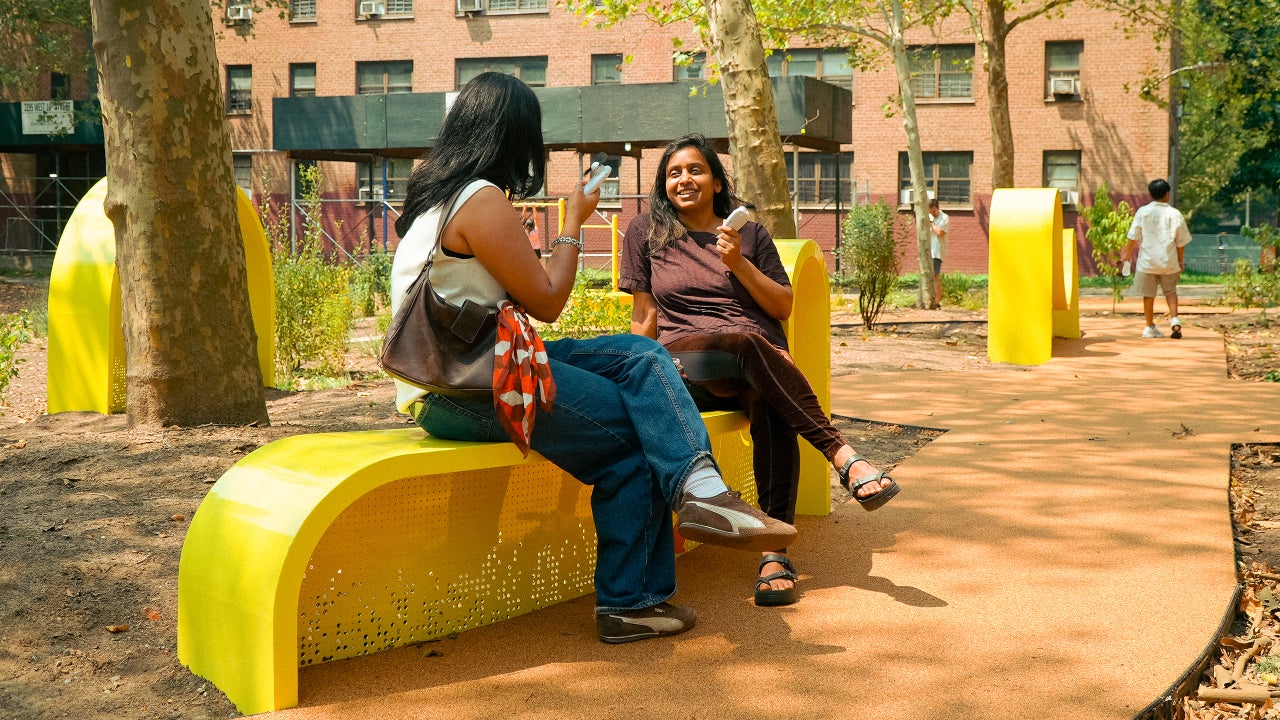
FastCompany: There’s really no wrong or right way to use the new playscape at Marlboro Houses, a New York City Housing Authority (NYCHA) campus in the Gravesend neighborhood of Brooklyn. The abstract, bright-yellow play structures are composed of undulating forms that can serve as benches, slides, hills to climb atop, nooks to hide inside, and portals to gaze through. Each of the forms is open to interpretation, inviting curiosity.
In addition to its abstract form, the playscape is unusual for another reason: It’s designed to be multigenerational and encourage social interaction within Marlboro’s diverse community of some 5,800 residents across 28 buildings. The open-endedness of each element means that each person who encounters the space can use it as they wish. [Photo: Tameek Williams] “We talk about this idea of a ‘playable city,’” says Maeghann Coleman, cofounder, with Ryan Swanson, of the Urban Conga , the design firm that conceived of the installation alongside the community’s residents.
“How can play be layered into our infrastructure and really be these simple moments that we can engage with every day?” The 7,250-square-foot playscape, which is divided between two separate areas on the campus, resulted from Green Space Connections . The initiative, led by the Public Housing Community Fund in partnership with NYCHA and the Design Trust for Public Space, seeks to transform underused open space within public housing into more environmentally sustainable and culturally responsive uses through participatory design.
In workshops organized by the Center for Justice Innovation, a resident stakeholder group selected the Urban Conga to help enliven their outdoor space. The residents wanted stronger connections to nature and more recreation opportunities. For reasons that have to do with design and policing, most of the outdoor areas at Marlboro aren’t hospitable. There are large grass-filled courtyards, like the ones where the playscape is located, and mature trees, but the design tends to nudge people to keep walking. Benches face walkways, not green space. There aren’t places for groups to linger and enjoy being outside.
[Photo: Tameek Williams] To determine exactly how a project could address those issues, the Urban Conga held numerous design workshops with the residents. Elders in the community described how law enforcement clamped down on public gatherings on the campus in the 1990s and how they wanted to reconnect with nature and give children the opportunity to do so too. The Urban Conga also set up a phone line for residents to call and share their hopes and ideas for the project.
Feeling safe, joyful, and excited to be outside were recurring themes, as was developing something that could better support the campus’s neurodiverse and ethnically diverse population. The result of those collaborative workshops is a linear playscape beneath a grove of mature sycamore trees. It’s designed to provide opportunities for physical play, constructive play, fantasy play, social play, and gameplay—five common types of play that psychologists and sociologists have identified. “I think often people think play needs to happen in this bells and whistles type of way,” Swanson says.
Article truncated for readability. Read the full piece →
The article highlights a significant urban design project that promotes community engagement and adaptability, which is increasingly important in brand strategy, particularly in urban development contexts.