Score
Chinese humanoids are leaving American robots in the dust
The rapid deployment of humanoid robots in China and Japan highlights a significant shift in the global robotics landscape, driven by economic and demographic factors. For brand strategy, this emphasizes the importance of innovation and adaptability in technology sectors, as companies must respond to labor shortages and leverage advanced robotics to maintain competitiveness in an increasingly automated world.
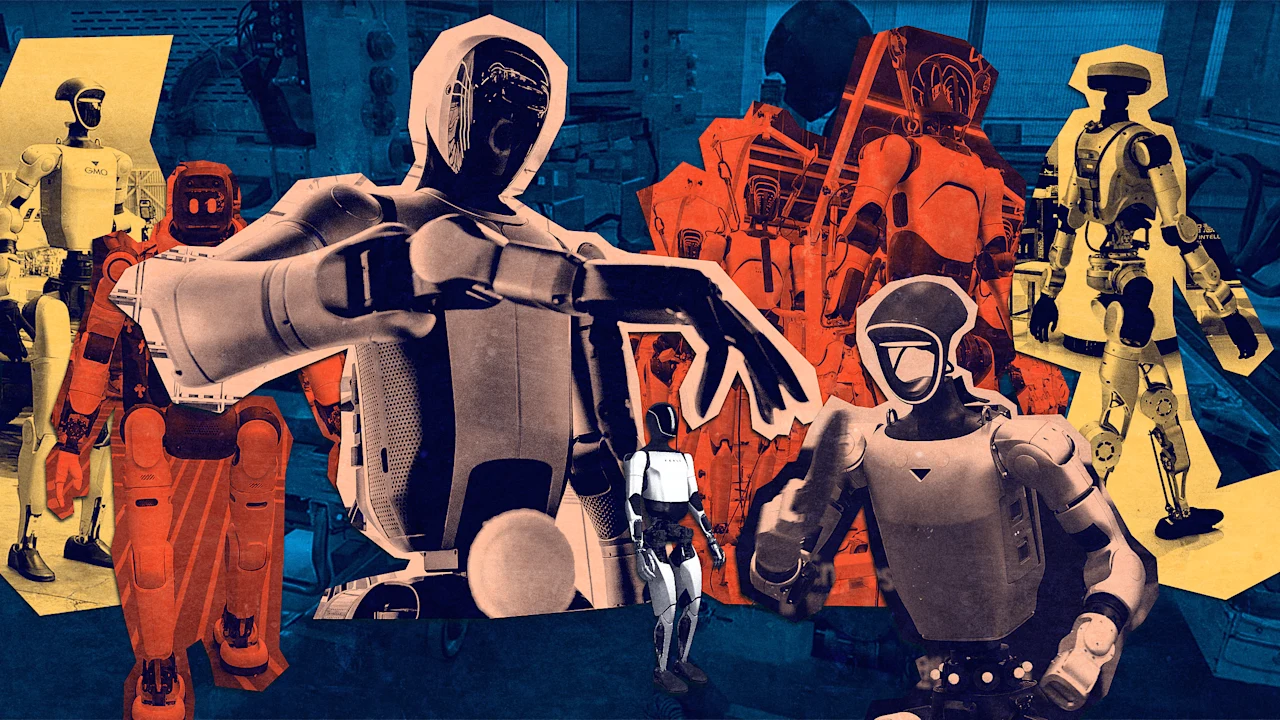
FastCompany: In December 2025, the biggest battery maker in the world, CATL, started what it calls the world’s first large-scale deployment of robots in its Luoyang, China factory. Last week, the State Grid Corporation of China began its $1 billion 2026 plan to deploy a humanoid army to maintain its grid autonomously. And just a few days ago, at the other side of the East China Sea, Japan Airlines announced the beginning of a test program of humanoids to carry luggage at airports.
While we listen to Elon Musk tell us how magical and civilization-changing Tesla’s Optimus robots are, Asian countries are light-years ahead of us, deploying humanoids to do their bidding in real-life scenarios. There are two main reasons humanoids are happening much faster in Asia than in the U.S. or Europe. One of the reasons is purely economic: China is always looking at cost optimization. For years, industrial robotics has been a main driver in the country’s quest to reduce manufacturing prices and times. China’s dark factories, where fully automated robots churn out devices with the lights off because they don’t need them, are famous.
View this post on Instagram A post shared by GMOインターネットグループ (@gmogroup) “China is by far the world’s largest robotics market in 2024. It represents 54% of global deployments. The latest figures show that 295,000 industrial robots have been installed in the country, the highest annual total on record,” says the International Federation of Robotics in its World Robotics 2025 Report . So humanoids—bipeds or wheeled—are the logical next step. This is especially true as AI models begin to understand the world, and companies realize that a huge market awaits for general and specialized tasks that only human-like robots can properly do.
The other reason is demographic: Japan’s population is quickly getting older, while in China, fewer people want to do hard and dangerous work like maintaining power grids. Japan became the world’s first “super-aged” society back in 2006, and as of 2026, over 30% of its population is aged 65 or older. The country’s total population is currently shrinking by nearly one million people per year. The sheer lack of young, able-bodied workers makes manual labor roles in logistics and aviation impossible to fill, forcing the country into reliance on machines.
A Unitree G1 humanoid robot competes in table tennis with an audience at the Global Unicorn Innovation Exhibition in Hangzhou, Zhejiang Province, China on April 23, 2026. [Photo: CFOTO/Future Publishing/Getty Images] In China, the issue is slightly different, but equally pressing. While China has a massive population, its traditional blue-collar workforce is aging out. An estimated 300 million migrant workers —the people who physically built the country’s modern infrastructure and power grids over the last four decades—are now approaching retirement age.
Younger generations are simply not stepping in to replace them in highly dangerous roles, like maintaining live 10,000-volt power lines. Facing a critical workforce shortage in the trades, China has chosen to deploy robotic electricians that operate 50% faster than human crews with a 98% success rate. Business and political drive At the same time, China and Japan have the means and the willpower to make this happen. The former controls the majority of the global supply chain to make humanoids—and robots of any kind—in huge quantities. Meanwhile, the U.S. can’t even produce magnets—a key component to robotics—without reliance on its rival.
Article truncated for readability. Read the full piece →
The article discusses a significant trend in robotics that could reshape industries, highlighting the need for brands to innovate, which is highly relevant for brand strategy professionals.