Score
These Nuts May Contain Traces Of Plastic Worth Your While Gets Ballsy For World Environment Day
The campaign 'These Nuts May Contain Traces of Plastic' by Plastic Change and Worth Your While aims to raise awareness about the dangers of microplastics on male fertility by using provocative imagery and humor. This approach transforms a common food warning into a personal health alert, effectively engaging a demographic that often ignores environmental issues, thus highlighting the need for brands to connect global problems to individual experiences in their strategies.
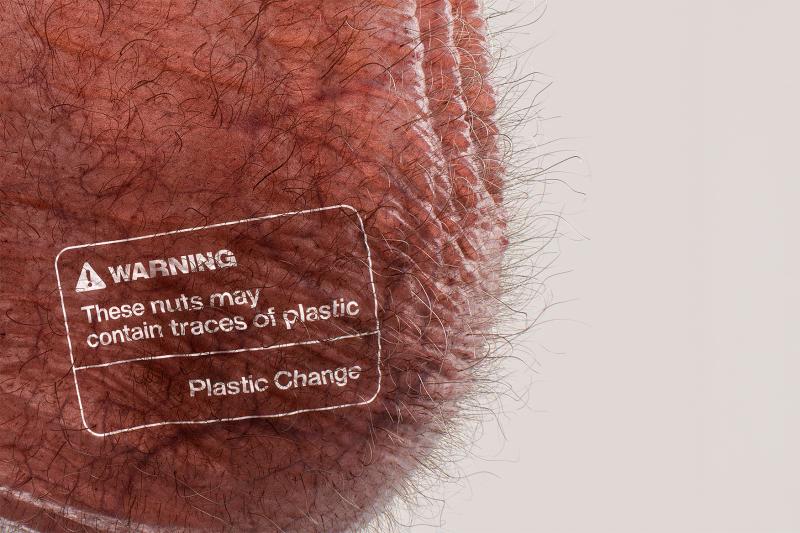
Creative Boom: News Advertising These nuts may contain traces of plastic: Worth Your While gets ballsy for World Environment Day For Danish NGO Plastic Change, the agency has turned a familiar food-packaging warning into an NSFW wake-up call about microplastics and male fertility... part visual gag, part genuine health alert. Apologies if you're eating breakfast. Written By: Katy Cowan 4 June 2026 There are far easier ways to talk about microplastics than a huge billboard of wrinkled testicle skin staring you in the face. Yes, really. But Plastic Change and agency Worth Your While have gone with the hard route.
'May contain traces of nuts' is about as familiar as a warning gets. But it's a line most of us skim past on the back of a chocolate bar; unless you're one of those people who see it as a genuinely life-saving alert, then you'll probably ignore it. These Nuts May Contain Traces of Plastic, launching on World Environment Day tomorrow, takes that everyday phrase and points it somewhere far more personal: the male body, and the microplastics now turning up inside it. Created by independent creative agency Worth Your While, the campaign takes the familiar food alert and twists it into a deliberate double meaning.
It comes in the wake of the Netflix documentary The Plastic Detox, released in March, which drew widespread attention to the reproductive-health implications of microplastics. It wants to build on that momentum with shocking out-of-home ads that will roll out across Denmark and are impossible to ignore. What's so out there, you might ask?
Hyper-real, close-up images of testicle skin, created by digital imagery studio We Are Eli, but dressed up as product packaging, complete with nutrition-style labels stamped on that list microplastics as an "ingredient" and flag potential side effects including infertility, hormone disruption and reduced sperm count. Part visual gag, part health warning, it's designed, as the team puts it, to land like a "kick in the nuts".
The campaign is based on research around microplastics in semen, testicles, and even penile tissue, with preliminary work suggesting that men with microplastics in their testicular tissue have sperm counts about half those of men without them. Further evidence suggests that microplastic buildup can suppress testosterone and the hormones that govern male fertility. The findings also note that global sperm counts have fallen by more than 50% over the past half-century, with plastic exposure increasingly among the environmental factors under scrutiny.
And yet, the campaign argues, public awareness of all this remains stubbornly low, especially among men. That gap is what informed the strategy. Worth Your While's approach surrounds a blunt behavioural insight: many men simply tune out of environmental messaging. So by recasting microplastics as a direct threat to male fertility, the campaign turns a vast, abstract global issue into something immediate and impossible to ignore, and that's their own bodies. This year, Plastic Change is asking men to think long and hard about what else they might be passing on, and what needs to change before they do.
Article truncated for readability. Read the full piece →
The campaign creatively addresses a significant environmental issue with a unique approach, making it highly relevant and impactful for brand strategy professionals focused on sustainability.