Score
Tesla says a flying car is coming. BYD already has one that makes sense
Tesla's announcement of a flying car aims to restore its innovative image, but the concept raises questions about practicality and market relevance, especially in light of BYD's already available 'flying car' with advanced jumping suspension technology. This situation highlights the need for Tesla to focus on genuine innovation and design improvements to compete effectively against rivals like BYD, who are delivering functional products that resonate with consumers.
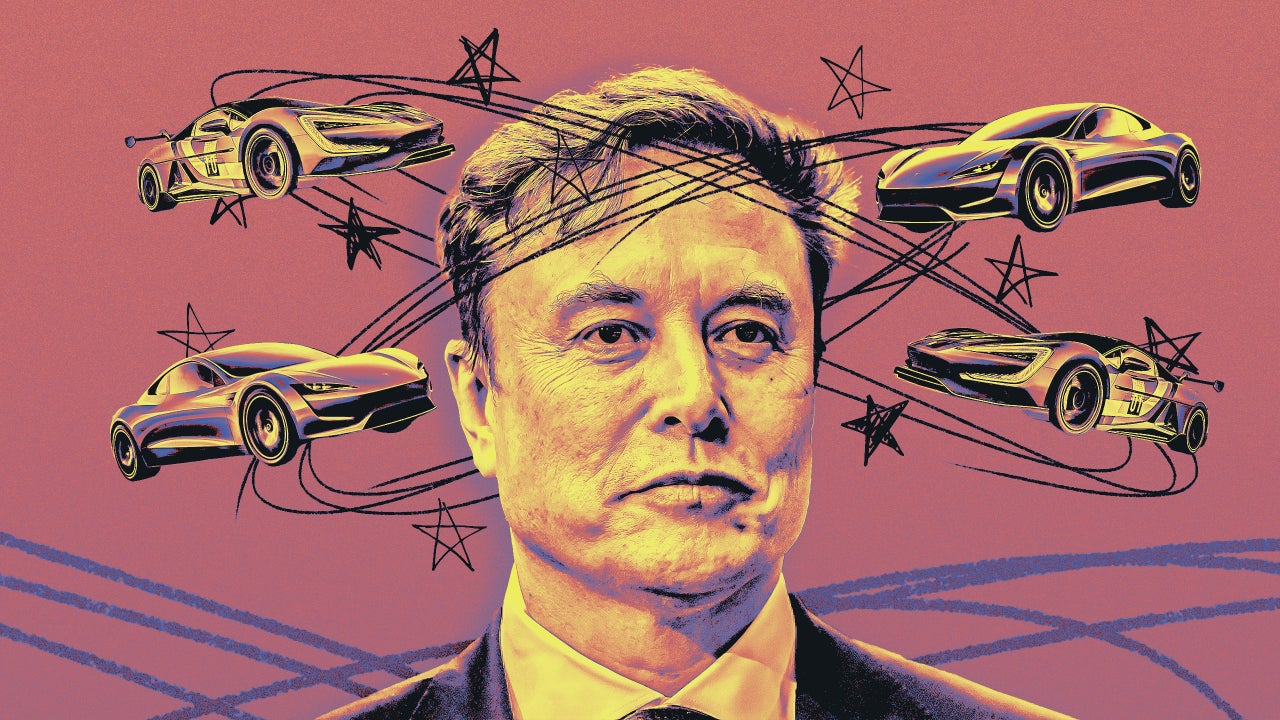
FastCompany: Elon Musk is reportedly going to launch a “flying car.” Not a flying taxi like those oversize drones that want to take rich people from Manhattan to JFK Airport, laughing at us peasants traveling in regular cabs. Not another old Tesla Roadster mounted atop a Falcon 9. No. This will be a next-generation Tesla Roadster that can fly on its own using cold gas thrusters developed by SpaceX. Like Nick Fury’s flying car . For the umpteenth time, Musk will try to overexcite fans and Tesla bulls with yet another epic announcement, demoing this fantastic car this month, sources tell The Information .
Three people with knowledge of the car claim that the upcoming show-and-tell will have “the vehicle racing onto a magnetized roller-coaster–like ramp and driving upside down before righting itself and hovering in the air.” The demo and the new Roadster, if it works— remember the Cybertruck bulletproof windows? —want to restore Tesla’s initial design allure, which has been gone for years now .
The reality is that, even if it wows the world with some amazing design, the alleged flying car already comes with a load of problems, starting with the fact that its flying nature—only available in a limited-edition model, if it really happens—doesn’t bring any real useful innovation to the industry. Meanwhile, Tesla’s uber-nemesis, BYD , has—since February 25, 2024—been shipping a real “flying car” designed to jump 20 feet over obstacles like an 8.2-foot-wide pothole.
And Musk needs to steal back the thunder from the Chinese cars that have been consistently destroying his company’s market share worldwide, especially the Shenzhen-based automaker . Tesla has been struggling with poor sales for years now, caused mainly by stale design, technology, and a poor image after its CEO’s DOGE handiwork in the second Trump administration. Design crisis Things are getting so bad that, earlier this year, Tesla killed the Model S after 14 years without ever designing its replacement, and the Model X died right alongside it, leaving the Model Y—a stretched Model 3—as the company’s only SUV.
The 3 and Y got refreshes, but new bumpers and ambient lighting don’t change what they are: the same car, photocopied and airbrushed. Back in 2012, Tesla’s “blandly handsome” design was a feature—the conservative silhouette that reassured buyers nervous about unproven battery tech. The market caught up years ago , and that doesn’t cut it anymore. Musk tried to correct course with the Cybertruck, going from bland to brutal—a garish design that has managed to become more broken than its critics predicted.
It’s been recalled nearly a dozen times for issues ranging from stainless trim panels peeling off at highway speed to stuck accelerator pedals and, this past spring, even wheels that could literally detach. It’s a bird! It’s a plane! It’s a . . . Roadster? Which brings us to his latest occurrence: a flying car! According to The Information ‘s sources, the propulsive lift comes from cold gas thrusters engineered jointly with SpaceX’s Starship propulsion team, including Starship engineering VP Bill Riley. Beneath the thrusters sits a clean-sheet carbon fiber tub hypercar, internally code-named A-71.
Article truncated for readability. Read the full piece →
The article discusses significant developments in the automotive industry with potential implications for brand strategy, particularly in innovation and competition, making it highly relevant and impactful.