Score
Caraway’s $495 coffee maker is designed to keep plastic out of your morning cup of joe
Caraway's new coffee maker, designed without any plastic components in the brew path, represents a significant step in the brand's mission to create nontoxic home goods. This innovative approach not only addresses health concerns related to microplastics but also emphasizes aesthetic appeal and simplicity in design, positioning Caraway as a leader in sustainable kitchen appliances.
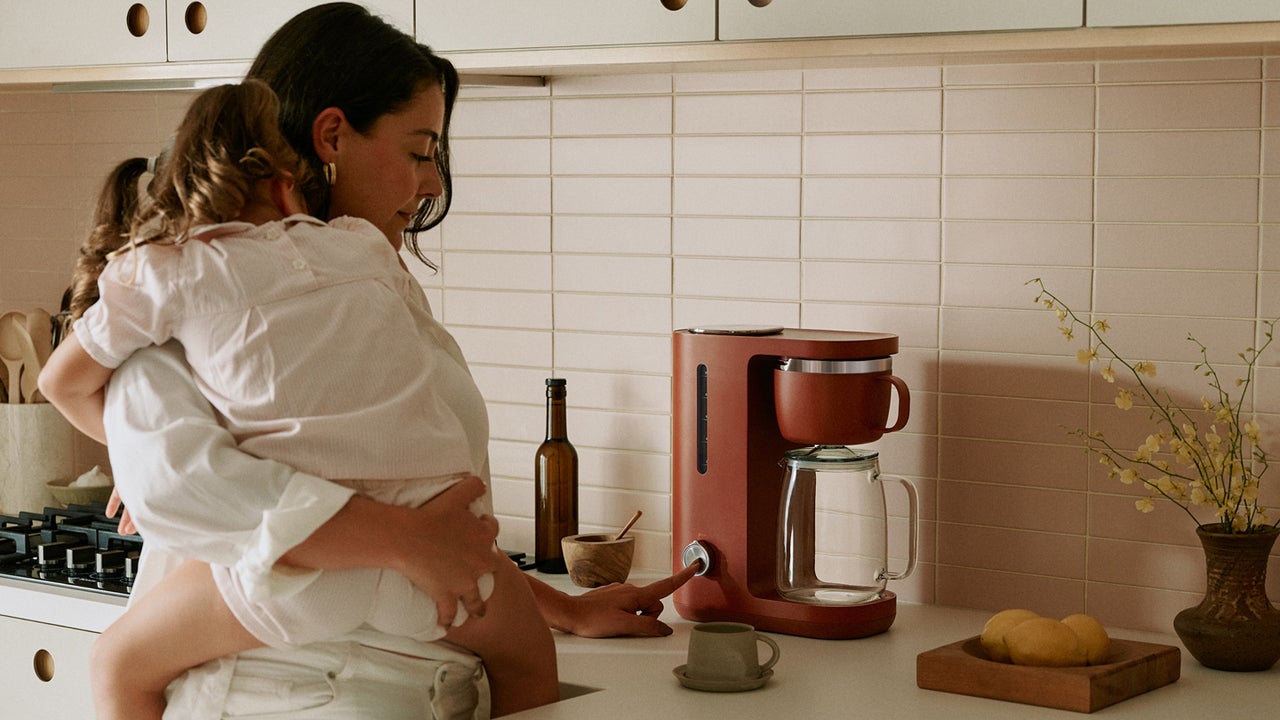
FastCompany: Caraway spent years designing pretty pans without the toxic coatings . Next, it’s coming for the coffee maker. The brand’s first appliance, which launches today for $495 online and at Crate & Barrel stores, took five years and 10 pending patents. The result is a sleek 10-cup coffee maker that, unlike almost every competitor on the market, has zero plastic components in its brew path. For Caraway, this product is the continuation of a broader goal. The company was founded in 2019 by Jordan Nathan after he experienced “ Teflon flu ,” a condition caused by inhaling fumes from burning polymer products; in Nathan’s case, a nonstick pan .
His first product was a line of Teflon -free ceramic pots and pans with delightfully color-coordinated exteriors. Since then, the Caraway CEO has expanded the brand’s wares into knives, cutting boards , trash cans , and more. [Photo: Caraway] “Our mission is really simple: to create the first generation of nontoxic homes,” Nathan says. Caraway’s thesis is that there’s a consumer niche out there that’s willing to invest more in their home goods for both health-conscious and aesthetically pleasing design. So far, that’s proven true.
The company has accumulated more than 2.5 million customers, raised $40 million over several rounds of financing, and is available via its own direct-to-consumer site and partners like Target, Crate & Barrel, Walmart, Amazon, and Costco. But Nathan isn’t slowing down. He’s planning to build out an entire ecosystem of Caraway-branded home products that will set the brand up for the next “100 years”—and he’s starting with his least favorite appliance. “Ever since I started Caraway, the coffee maker has always been the most offensive item in the kitchen from a design perspective,” Nathan says. He thinks he’s built the solution.
[Photo: Caraway] Engineering a healthier coffee maker Take a look inside the coffee maker on your kitchen counter, and chances are good that you’ll find plastic, plastic, plastic. “All coffee makers have plastic in some way, shape, or form entering the brew path—whether it’s the tubing or the brew basket or the actual carafe,” Nathan says. The issue with that is fairly straightforward: Plastic degrades into microplastics, and that degradation is worsened by heat . Every time hot water runs through the plastic pieces of a standard coffee maker, chances are good that some microplastics are ending up in your morning joe.
(We’re already breathing and eating enough microplastics that scientists have found the weight equivalent of an entire plastic spoon in human brains.) [Photo: Caraway] But finding a good alternative is no simple task. Nathan says he scoured the market and found very little overall innovation, especially when it came to eliminating plastic (an ex-SpaceX engineer only just unveiled a plastic-free pot this March). When Nathan started ideating his own nontoxic coffee maker, he discovered that the necessary parts didn’t even exist on the market.
So, he spent several years custom engineering the necessary components from the ground up, including stainless steel internal tubing, a steel brew basket, a glass water reservoir and carafe, and metal housing. The design had to eliminate plastic in the brew path, make “a great cup of coffee,” and look good—a combination that took 200 iterations to perfect. [Photo: Caraway] Once the design and prototype were complete, Nathan’s challenges were just beginning. He recalls bringing the concept to two dozen factories, none of which wanted to take it on.
Article truncated for readability. Read the full piece →
Caraway's innovative approach to creating a plastic-free coffee maker addresses significant health and sustainability concerns, making it highly relevant and impactful for brand strategy professionals focused on eco-friendly products.
Weekly digest
Get the Signal digest
Every Monday morning — the top 3 brand trends, 10 high-signal articles, and one emerging signal to watch.
No spam. Unsubscribe anytime.