Score
Amazon wants to sell your Kindle’s physical buttons back to you for $35
Amazon's latest Kindle redesign reflects a shift in user preferences, as the company introduces new physical page-turn buttons through accessories despite having phased them out in previous models. This strategy highlights the importance of listening to customer feedback and adapting product design to enhance user experience, which is crucial for brand loyalty and market growth.
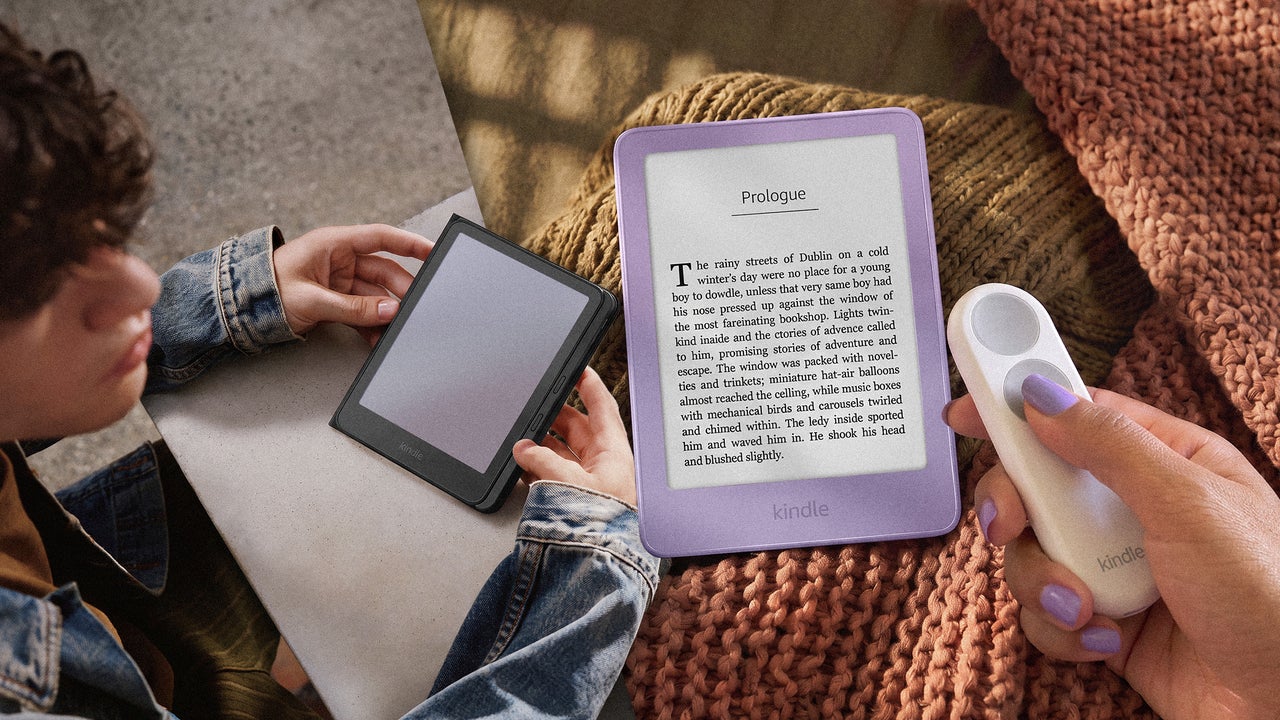
FastCompany: Amazon has new Kindles. The company says it redesigned the lineup from the ground up. I look at them and see, well, Kindles. What new can you do with a slab of digital ink? Not much. Still, they made the front completely flat, with no seams, like a phone. And some of them come wrapped all around in colors with names like ube, alpine sky, seaglass green. Like all recent Kindles, the new versions have no physical buttons . But it seems some people miss the ability to click to a new page because Amazon is now offering a new $80 cover with page-turn buttons and a $35 Kindle Bluetooth clicker.
[Photo: Amazon] Goodbye to buttons These gadgets for your gadget is an interesting choice considering earlier Kindles all had physical buttons. Amazon started to phase them out with the first Kindle Touch back in 2011. Much to its users’ dismay , Amazon discontinued the last physical-button model—the Oasis—in October 2024. That was the only Kindle still sold with physical page-turn buttons. Amazon added a workaround in 2025: A ‘Double Tap to Page Turn’ gesture that lets you tap the sides or back of the 2024 Kindle Paperwhite and Kindle Colorsoft to advance a page. But that only goes forward, not back.
The company spent about a decade phasing out page-turn buttons, and now it wants to sell them back in the form of a clicker and a Page-Turn Cover (which only works in the Special Edition models). I can’t help but think that keeping some form of button all along would have been a benefit to Kindle’s design. Kindle sales have grown at a double-digit rate worldwide for three straight year, the e-commerce giant claims. Readers burned through more than 720 billion pages in 2025. That’s a lot of thumbs that could have benefited from actual physical buttons built into these readers. Physical buttons on the Page-Turn Cover.
[Photo: Amazon] The new Kindles Amazon released a new basic 6-inch Kindle that costs $150 and has 16 GB of storage, up to six weeks of battery life and book-opening speeds 30 percent faster than before. It comes in ube (“a rich purple”) and graphite colors, with a fully recycled cobalt battery and recycled enclosure materials, according to the company. An aluminum version—a first for these devices—doubles the storage to 32 GB, uses an 80 percent recycled matte aluminum back, and comes in alpine sky (blueish) and seaglass (greenish). Amazon also says the color finish now wraps from front to back on every model.
Kindle Aluminum [Photo: Amazon] The waterproof Paperwhite starts at $200 with 12 weeks of battery and a warm adjustable light. Their new Signature Editions costs $250 and adds an aluminum back, auto-adjusting light, pogo-pin dock charging and double-tap page turning. The Colorsoft runs $290, or $320 for its Signature Edition. The Kids versions start at $180 and include 12 months of Amazon Kids+. Amazon says that the new Kindles use a “reverse-stack display construction,” which it claims is a first for readers.
In plain terms, the screen and its layers are assembled so the front ends up completely flat, with no raised lip or bezel around the glass. Think of a phone screen that sits level with its frame instead of in a shallow tray. There is no ridge to collect dust or catch your thumb, and the front looks cleaner. [Photo: Amazon] But a clicker? But let’s get back to the Kindle Click. It’s a $35 Bluetooth remote whose only job is turning the page. It works with all current models and with Kindles released from 2024 onward.
Article truncated for readability. Read the full piece →
The article discusses a notable shift in Amazon's product strategy that emphasizes customer feedback, which is significant for brand strategy professionals, though the concept of adapting products based on user preferences is not entirely new.
Weekly digest
Get the Signal digest
Every Monday morning — the top 3 brand trends, 10 high-signal articles, and one emerging signal to watch.
No spam. Unsubscribe anytime.