Score
How Austin’s sandlot baseball scene became a magnet for indie rockers, filmmakers, designers, and brands
The evolution of The Long Time in Austin from a local curiosity to a vibrant hub for indie culture and community baseball illustrates the power of blending lifestyle branding with grassroots creativity. This approach not only attracts major brand partnerships but also fosters a unique identity that resonates with diverse audiences, suggesting that brands can thrive by creating authentic, community-driven experiences.
FastCompany: Kevin Morby arrived in Austin in mid-March to participate in a music showcase as part of South by Southwest, the city’s annual cacophony of industry obligations and branded “activations.” The Kansas City-based indie musician was due to perform a six-song solo set promoting his forthcoming album, Little Wide Open . Shortly after South by Southwest, Morby would embark on a months-long international tour in support of the record. He had every reason to make the Austin trip a quick one.
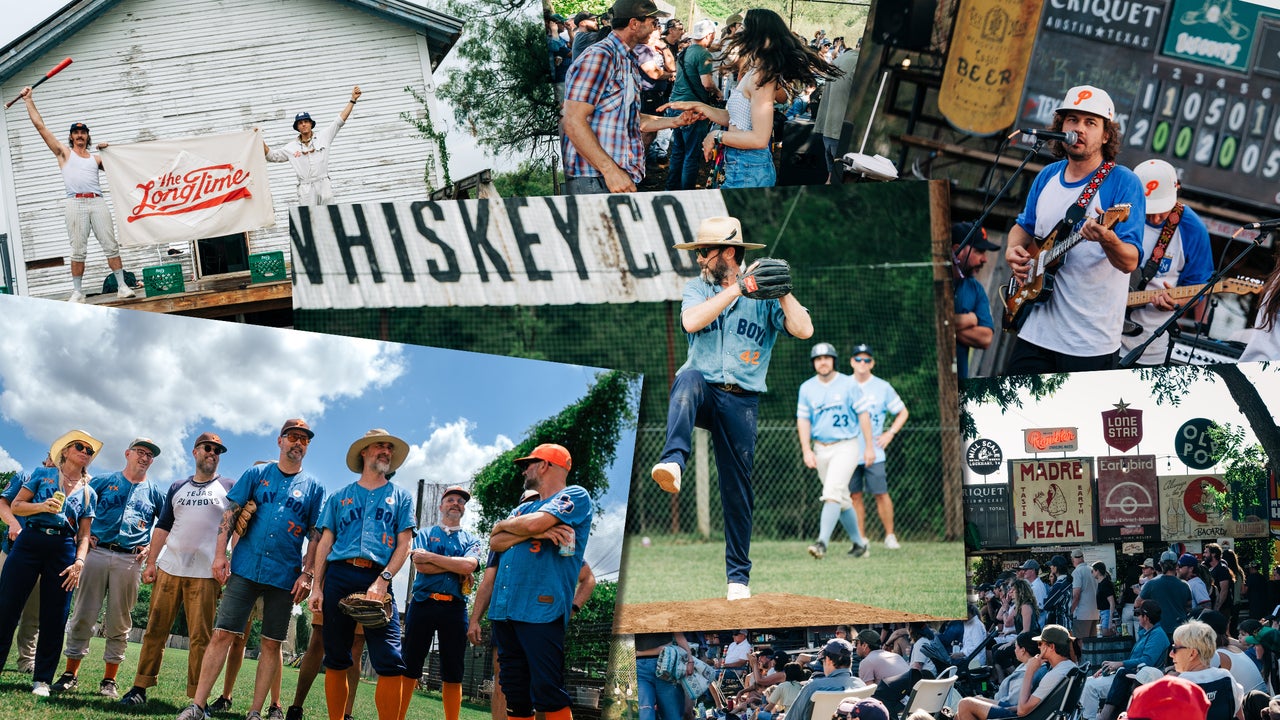
But Morby lingered for one more day, heading about a half hour southeast of the city, past ranchland and new housing developments to a spot where an enormous neon-lit baseball crossed with two bats rose like a pirate flag above the treeline. There, on an unseasonably hot afternoon, he and a loose crew of friends and fellow creatives took the field before an audience of more than 1,000 people. Ben Kweller and Kevin Morby [Photo: Shannon Sutherland] The built-from-scratch venue, called The Long Time, is equal parts concert hall, art compound, and social outpost.
As Morby, an avid athlete in a former life, took the mound, spectators sprawled across lawn chairs and blankets or ambled between the bar, gift shop, and pop-up flea market. Parents chased after scampering kids. A woman sold enchiladas from a cart. Morby has made a habit of stopping by The Long Time whenever he’s in town. He seems, like so many others, captivated by the place’s strange alchemy: live music, throwback jerseys, families, and the game all folded into a single dusty spectacle.
“Someone recently described it as a little league for adults,” he tells me, “which hits the nail on the head.” [Photo: Shannon Sutherland] Over nearly a decade, The Long Time has evolved from a local curiosity into an epicenter locus for players, musicians, artists, and public figures. Jack White has played here a few times (and famously socked a homer ). So has Beto O’Rourke (who famously didn’t ). St. Louis Cardinals great David Freese, an Austin local now, plays on a team.
What began as one man’s eccentric experiment is becoming a blueprint for a revivalist sports culture that is, as Morby puts it, “about bringing that childlike wonder for baseball into our adult lives.” Morby may have been the day’s marquee draw, but Jack Sanders—who purchased the land The Long Time sits on in 2017, built the space, and runs its home team, the Texas Playboys—is the true star of the show, and the person I’d come to see. Walking up to the makeshift ticketing booth (a folding table staffed by a woman with a clipboard), sweat already pooling beneath my arms, I explained that I’m here to speak with him.
Jack Sanders (second from left) [Photo: Shannon Sutherland] Within seconds, I found myself at a shipping container that had been fashioned into a dugout. Sanders, 49, stood just outside, wearing a straw hat and aviators and a denim jersey with “Playboys” etched across the front. At roughly six feet tall, with a salt-and-pepper beard, he looks like a Depression-era ballplayer. We chatted for a short time before Sanders was called back to the field. He excused himself in a thick drawl delivered at what feels like 75% of the average conversational speed.
Article truncated for readability. Read the full piece →
The article highlights a unique intersection of lifestyle branding and community engagement, which is significant for brand strategy professionals looking to create authentic connections, though the concept of blending lifestyle with branding is not entirely new.