Score
Tesla’s new Roadster is a jumping piece of vaporware
Tesla unveiled its new Roadster at SpaceX's rocket test site, showcasing extravagant features like racing upside down and jumping over other Tesla models. However, the event highlighted ongoing issues with Tesla's product delivery and promises, as the Roadster's specifications and release timeline have been significantly delayed since its initial announcement in 2017. Brand strategists can learn from Tesla's approach to product launches that prioritize spectacle over substance, which can lead to consumer skepticism and brand trust issues.
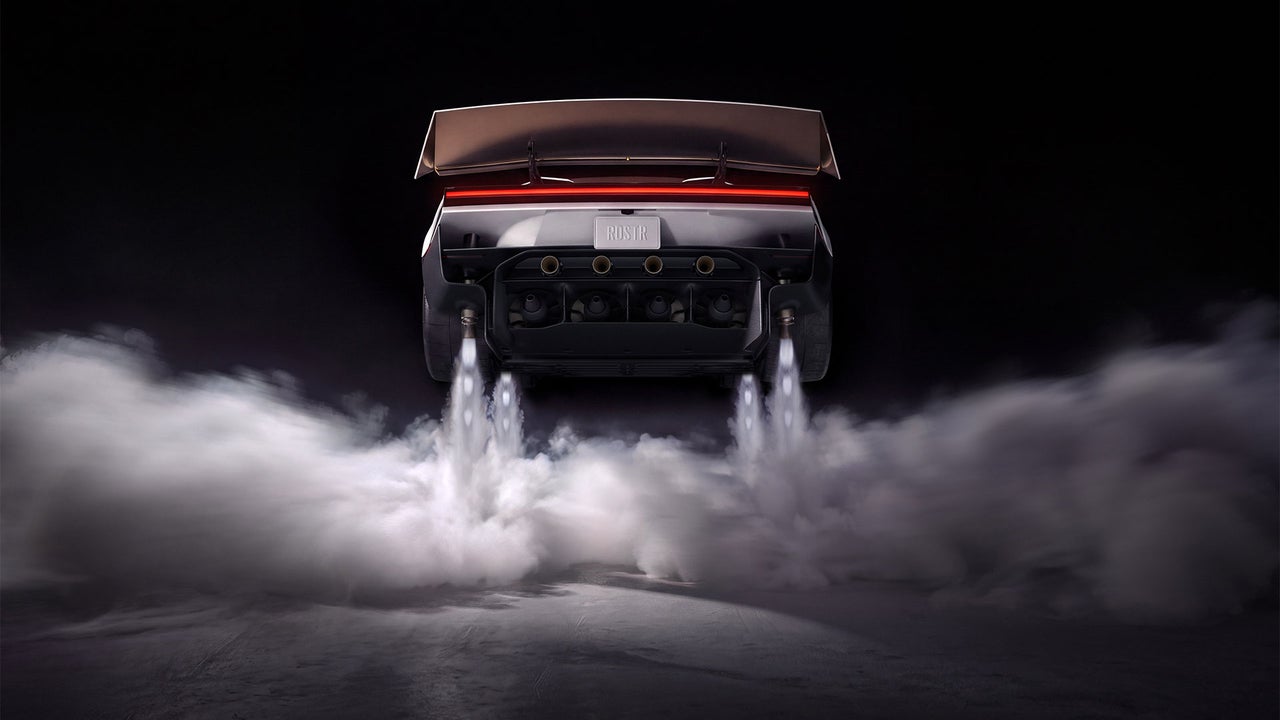
FastCompany: The new Tesla Roadster finally showed up on Thursday night in a cloud of compressed air at SpaceX’s rocket test site in McGregor, Texas. It was the perfect example of Elon Musk’s personal brand: the epic announcement full of grandiose promises, the magic act that keeps the audience staring at the smoke while the real trouble happens backstage (see his delayed Optimus , the delayed Cybercab , and Tesla’s lack of true autonomous driving). The Roadster showed off its ability to do absolutely useless stuff that no car has ever done before. It raced upside down, clinging to a giant inverted ramp like a Hot Wheels car.
It jumped over a Model 3, a Model Y, a Cybertruck, a Tesla Semi, and a Cybercab. The Roadster Fast & Furious’ d its way through a stunt course, flipping in midair and floating down on air thrusters to land back on solid ground, momentarily hiding the car in a puff of gas. What it didn’t do was give us a price or a date anyone should believe. Musk’s latest toy is the most literal case of vaporware in tech history: a product you can’t buy, propelled by actual vapor. Consider what was promised in 2017, when Musk surprised everyone at the Semi truck event with a red Roadster that looked nothing like this new one.
Tesla said it would do 0 to 60 mph in 1.9 seconds, go 620 miles on a charge, seat four in a 2+2 layout, cost $200,000, and reach customers in 2020. Fans put down $50,000 to get in line, or $250,000 to claim one of the 1,000 Founders Series cars. Nine years later, the Roadster’s range claim is “over 300 miles,” not even half the original figure. The back seats are gone. There’s no price at all. And the delivery date has become “2028, actually,” as Musk put it on stage, according to the EV publication Electrek . The deposit for this new car is still $50,000.
[Photo: Tesla] Wedge issue On the design front, the Roadster looks like the unholy son of a Model Y and a Cybertruck. One that dreams of becoming a Lamborghini when it grows up but is just too ugly to ever pull it off. The Roadster has gone from the rounded, almost sensual shape of the 2017 prototype to a white, angular wedge with scissor doors. Tesla pitches it as an aerospace look, with nods to the SR-71 Blackbird spy plane and the F-35 fighter jet that are nowhere to be seen for anyone with eyes. Musk called it “better than any James Bond car.” Better, no. But he’s right that it looks like one.
Its front instantly reminded me of Roger Moore’s Lotus Esprit submarine car from the 1978 film The Spy Who Loved Me . The problem is that every element feels borrowed. The Autopian ’s David Tracy, who likes it, made a list of the cars it resembles: the Lamborghini Murciélago and Countach, the Ferrari Testarossa, the Lotus Esprit, the Lancia Stratos Zero, the Vector W8. “It’s all a familiar wedge-y design and nothing groundbreaking,” he writes. Road & Track places it somewhere between the Cybertruck and the wedge supercars of the 1980s.
I look at it in profile and I see a Model Y’s tall cabin trying to squeeze into a Lamborghini Countach costume, with the faceted Cybertruck surfaces and the Cybercab hubcaps on the stunt car giving away the family tree. The great wedges by Lamborghini’s designer Marcello Gandini were low, tense, and outrageous. But they made sense. Next to the Vector W8, Tracy notes, the Tesla “looks rather tall and upright.” The 1980s posters on our bedroom walls had proportions. This thing doesn’t. [Photo: Tesla] Not everyone agrees.
Article truncated for readability. Read the full piece →
The article discusses a high-profile brand's product launch strategy, which is significant for the industry, offers some novel insights into the pitfalls of prioritizing spectacle, and is highly relevant for brand strategists concerned with consumer trust.
Weekly digest
Get the Signal digest
Every Monday morning — the top 3 brand trends, 10 high-signal articles, and one emerging signal to watch.
No spam. Unsubscribe anytime.