Score
What’s with those bobblehead NFL helmets?
The article discusses the Guardian Cap, a padded helmet cover designed to enhance player safety in the NFL by reducing the impact of hits and concussions. Despite its protective benefits, the cap has faced criticism for its appearance and has seen mixed results in terms of effectiveness in reducing concussions. Brand strategists can learn from the Guardian Cap's evolution that product design and aesthetics play a crucial role in user acceptance, even when safety is a priority.
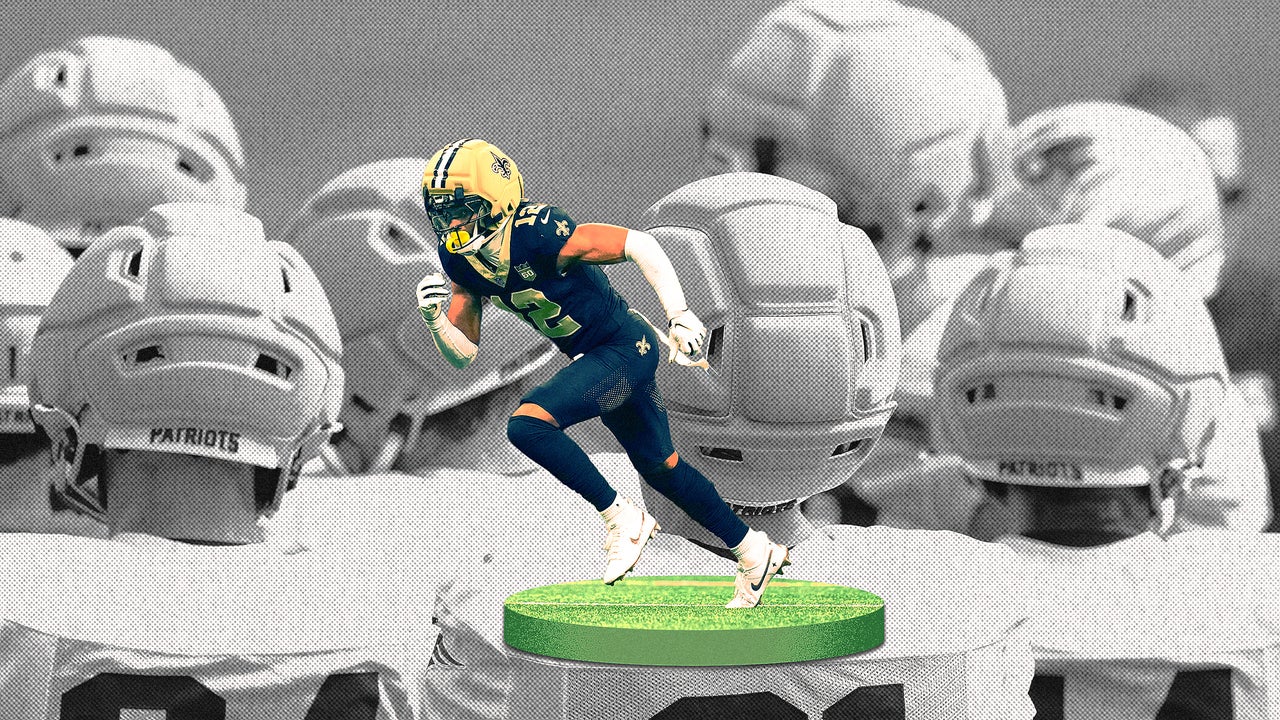
FastCompany: If you’ve been watching the NFL this season, you’ve probably noticed that a few dozen players have pretty big heads. Not in the diva sense, but literally. Take Chris Olave, the New Orleans Saints wide receiver. He wears a Guardian Cap, a padded cover on his helmet for added protection against head trauma. The trade-off is that it makes him look like he just nabbed a mushroom power-up in Super Mario. Olave, who suffered four concussions in his first three NFL seasons, has made peace with that. “Shoot, I got kids now,” he said after the Saints’ season opener. “I want to live a regular life after I’m done with football. I love my kids to death.
So, I don’t really care how it looks no more.” A detail of a guardian cap a protective cover for the helmet for Chris Olave #12 of the New Orleans Saints during the second half of a game against the Minnesota Vikings at Caesars Superdome on October 11, 2026, in New Orleans, Louisiana. [Photo: Derick Hingle/Icon Sportswire/Getty Images] The NFL has spent the past decade trying to bring its concussion numbers down, with mixed results. In-game concussions fell 15% to 129 in the 2024 regular season, then jumped 30% to 168 last year.
Much of that increase came on kickoffs, where a new format designed to bring back more returns sent concussions on the play from 8 in 2024 to 35 in 2025 . Since 2022, when the league made it mandatory in practice, the Guardian Cap has been the NFL’s most noticeable safety measure. It has been optional in games since 2024 , and after a design refresh this offseason, it’s showing up on game days more than ever . The tight ends and offensive players wear guardian caps over their helmets during a New England Patriots practice at Gillette Stadium on August 25, 2026.
[Photo: Danielle Parhizkaran/The Boston Globe/Getty Images] Foam, fabric, and a lot of jokes The cap is made by Guardian Sports, a Georgia company run by Lee and Erin Hanson, a husband and wife whose materials business developed custom polyurethane for products like rocket boosters and golf ball covers . It’s a lightweight foam shell that straps over any standard helmet. It’s designed to compress and slide on impact, absorbing force before the blow reaches the helmet’s hard shell underneath. The Guardian Cap comes in two main versions. NFL players and select college players wear the NXT, which weighs about 12 ounces.
Youth, high school, and most college players wear the XT, a lighter version that weighs about half a pound and sells for up to $89.99 . More than 500,000 athletes across all levels wear one. The company also makes versions for hockey and lacrosse helmets. The NFL allowed the cap in practice in 2020, then required it in practice for linemen, tight ends, and linebackers in 2022. By 2024, everyone but quarterbacks, kickers, and punters was required to wear a Guardian Cap in contact practices, and players could choose to wear it in games. Players hated the look from the start. J.J.
Watt, an All-Pro pass rusher, said it made him feel like a bobblehead. Jason Kelce mocked it by showing up to Philadelphia Eagles camp with bubble wrap around his cap. Jordyn Brooks, a Miami Dolphins linebacker, called them “UFO caps.” The 2024 game-day look wasn’t any better—a fabric sleeve printed with the team logo, stretched over the foam’s ridges like a shower cap on a carton of eggs. This season, the cap finally got a makeover. Running back Roschon Johnson #23 of the Chicago Bears wears a Guardian Cap in a preseason game between the Chicago Bears and the Cincinnati Bengals on August 22, 2026, at Paycor Stadium in Cincinnati, OH.
Article truncated for readability. Read the full piece →
The article highlights an innovative approach to player safety in a major sport, which is significant for brand strategy professionals focused on product design and user acceptance.
Weekly digest
Get the Signal digest
Every Monday morning — the top 3 brand trends, 10 high-signal articles, and one emerging signal to watch.
No spam. Unsubscribe anytime.