Score
Zoom wants to reintroduce itself, courtesy of SNL’s biggest stars
Zoom is actively working to reshape its brand identity from being solely recognized as a video conferencing tool to a comprehensive AI-powered productivity platform. Through humorous advertising campaigns featuring SNL stars, Zoom aims to communicate its expanded service offerings and reinvigorate its brand perception in a competitive market.
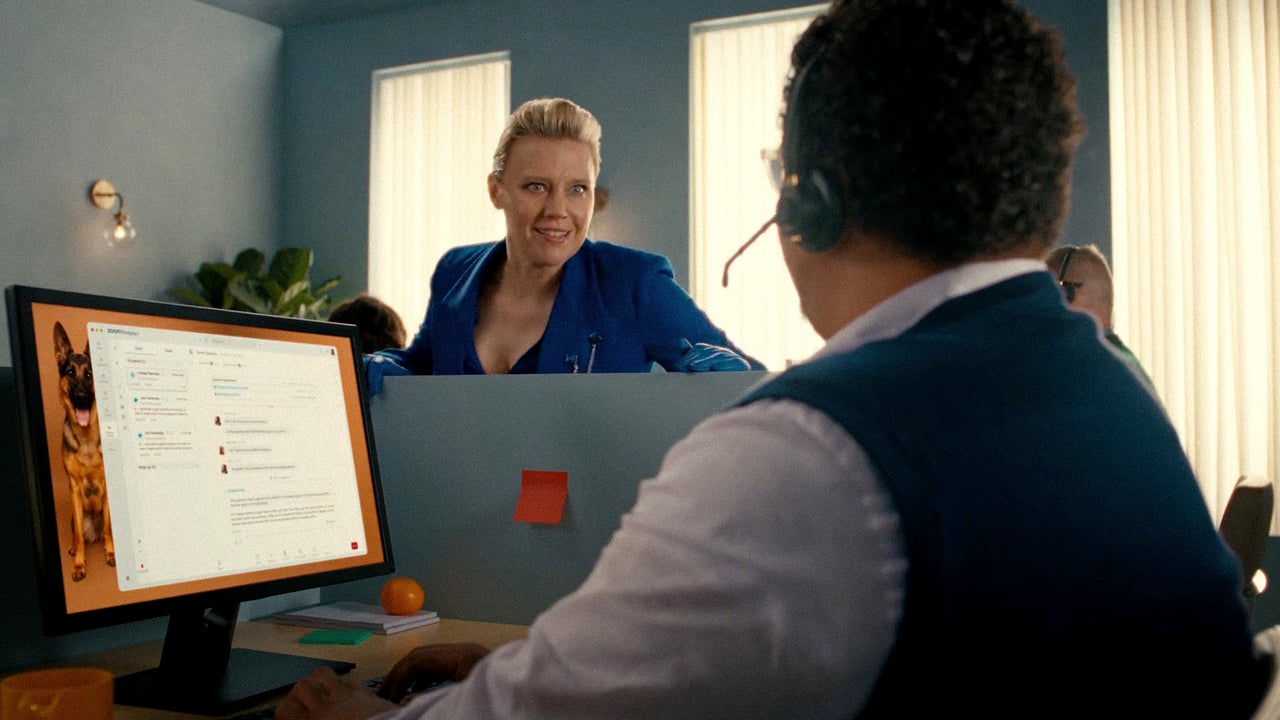
FastCompany: Kate McKinnon ’s supervillain alter ego wants to destroy the productivity platform Zoom once and for all. Unfortunately, all of her minions need Zoom to do her bidding. That’s the plot of Zoom’s latest ad , created in partnership with Colin Jost ’s creative agency No Notes, which debuted on September 14. In the spot, McKinnon’s conniving character discovers all of the myriad uses for Zoom that make it so indispensable to her henchmen. The ad is the second installment of Zoom and No Notes’ campaign “Zoom Ahead,” which debuted via a spot starring Bowen Yang in December.
Both ads use over-the-top comedy to poke at a deeper brand truth for Zoom: Most people know the company only as a video conferencing tool, while in reality, it has spent years expanding its services into other categories. “A typical user has no idea that the breadth of the Zoom portfolio goes so much further,” says Kim Storin, Zoom’s CMO. Since she joined Zoom in April 2025, Storin’s main goal has been to change that perception. Her team has been using new influencer partnerships and an ad campaign studded with former SNL stars to help break Zoom out of the digital meeting box. Zoom’s brand problem Zoom is grappling with a brand conundrum.
The company doesn’t have an issue with getting itself in front of customers. In fact, it’s the opposite: According to a 2026 YouGov survey of about 2,500 Americans, Zoom has 99% brand awareness and recognition among people who use workplace communication tools. The problem is that most people associate Zoom only with its rise as a video conferencing platform during the pandemic, and not what it’s become today.
“It’s not surprising,” Storin says, “because everybody from your mom to Fortune 10 companies were using Zoom at that time for video conferencing.” But that kind of awareness can go only so far, and it’s limiting for a company in the productivity space. To make a convincing value proposition to customers in the artificial intelligence era, it seems, productivity SaaS companies need to pitch themselves as experts in a wide variety of services rather than one niche field.
Notion , for example, has shifted from an app builder to an AI-powered workspace; Superhuman , formerly Grammarly, is no longer just a grammar fixer but rather an all-in-one productivity tool; and Calendly has jumped from owning the calendar to owning the entire work day. Zoom’s goal is to transition its identity from a video conferencing platform to an AI-powered toolkit for the workplace. Beyond facilitating meetings, the company has platforms for customer service, recruiting, employee engagement, and marketing for webinars and events.
It has spent the last several years building out a suite of AI features and capabilities , including agentic search tools, a meeting notetaker, AI sales and design agents, and more. The idea, Storin says, is that Zoom can now take all the conversations you’re having—from internal meetings to external chats with clients and partners—and use AI to act on what’s discussed. That could mean generating a document, sending follow-up messages, or conducting research, for example. The challenge is conveying the shift to customers without sounding too corporate or preachy. That’s where Jost, Yang, and McKinnon come in.
Article truncated for readability. Read the full piece →
Zoom's rebranding effort to position itself as a broader productivity platform is significant for the industry, especially given its prominence during the pandemic, and the use of humor in advertising adds a fresh approach that is highly relevant for brand strategy professionals.