Score
In China, McDonald’s will deliver your Big Mac by drone
McDonald's has launched a dedicated drone delivery service in Shanghai, marking a significant step in its brand strategy by leveraging innovative technology to enhance customer convenience. This initiative not only positions McDonald's as a leader in the fast-food sector but also aligns with China's push towards a low-altitude economy, showcasing the brand's adaptability and forward-thinking approach in a competitive market.
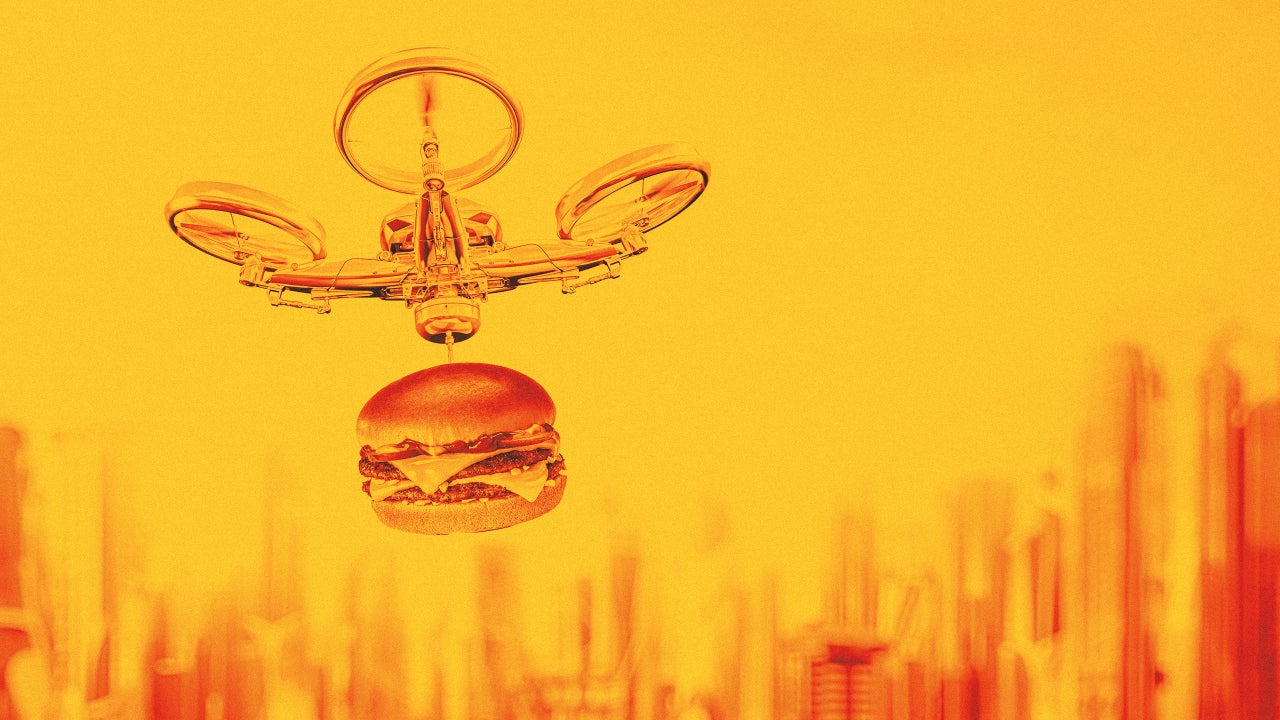
FastCompany: Another day, another point of proof that people in China live in the future . Shanghai residents can now order from McDonald’s and have it delivered by air to kiosks installed in the city’s waterfront neighborhood. You just need to order using Meituan—China’s dominant food-delivery, retail, and local services super-app—and, in a matter of minutes, a drone will zoom by with the classic paper bag with the logo of the golden arches, loaded with Big Macs, McNuggets, or whatever else you want from the fast-food chain. China has spent nearly a decade normalizing drones and robots as delivery infrastructure, not novelty.
They call it “low-altitude economy.” Meituan has been flying paying customers’ meals since 2017 , expanding city by city while regulators built the rules around it rather than the other way around. What’s new today isn’t the concept—it’s the brand. This is the first time McDonald’s has gotten its own dedicated drone corridor, rather than just being one menu among many on somebody else’s flight path. The air link—a 1.93-mile-long hop—went live last week across West Bund , the waterfront district of Xuhui in Shanghai, connecting a McDonald’s kitchen in Xuhui to a cluster of drop-off kiosks along the river.
The usual white-collar workers and tourists in the area can skip the restaurant’s counters. Your food meets you at your chosen handover point—a tall booth in McDonald’s livery with a landing platform on top—just a few minutes after you submit your order. The drones can carry a maximum of 5.29 pounds per flight, according to Meituan. A typical order, the company claims, clears the 10-minute mark from kitchen to kiosk. The drone fleet can keep moving through ordinary Shanghai rain and snow, even holding its course against gusts up to 31 mph.
If operating conditions get worse than that, the system finishes any deliveries already in the air, then grounds the entire fleet until conditions clear. Meituan executive Wei Qijun claims that, after the company spent years working on these drones, the system has a “99.999% safety factor.” According to McDonald’s China chief impact officer Gu Lei, the two companies spent 2026 running experimental trials in Shenzhen before establishing these routes in Shanghai. Following the new deployment as a template, they now want to install scattered flight nodes that will mesh together to offer coverage across every district.
Right now, about 20 brands use Meituan’s drones. The low-altitude economy race In December 2024, reports indicated the company was running just 53 routes and had logged roughly 400,000 completed drops. Meituan told domestic press in May that it had crossed 900,000 paying drone orders network-wide. After the West Bund launch, that total passed 1 million—more than doubling the company’s order count from the December 2024 baseline. Meituan’s ambitions also cross borders.
The company’s Keeta Drone unit picked up the United Arab Emirates’ first-ever commercial beyond-visual-line-of-sight delivery license from the Dubai Civil Aviation Authority in December 2024, opened four routes at Dubai Silicon Oasis the same day, and now ferries hot lunches as well as blood plasma for a hospital partner. Division chief Mao Yinian told Bloomberg in June 2025 to expect more routes over the Dubai Marina. This is all just part of a larger scheme, where fried rice, convenience store products, and Big Macs become the main pillar of Beijing’s low-altitude economy.
Article truncated for readability. Read the full piece →
This article highlights a significant innovation in delivery services by a major brand, showcasing a strategic move that could influence the fast-food industry and brand strategies globally.