Score
Canva Launches Prosuite Bringing Affinity Cavalry Flourish And Leonardo Together With More Than New 100 Features
Canva's launch of ProSuite marks a significant evolution in its brand strategy, as it integrates multiple design tools to cater to both mass-market users and professional designers. By focusing on accessibility and user experience, Canva aims to disrupt the traditional subscription model of design software, positioning itself as a versatile platform that meets the needs of a diverse user base.
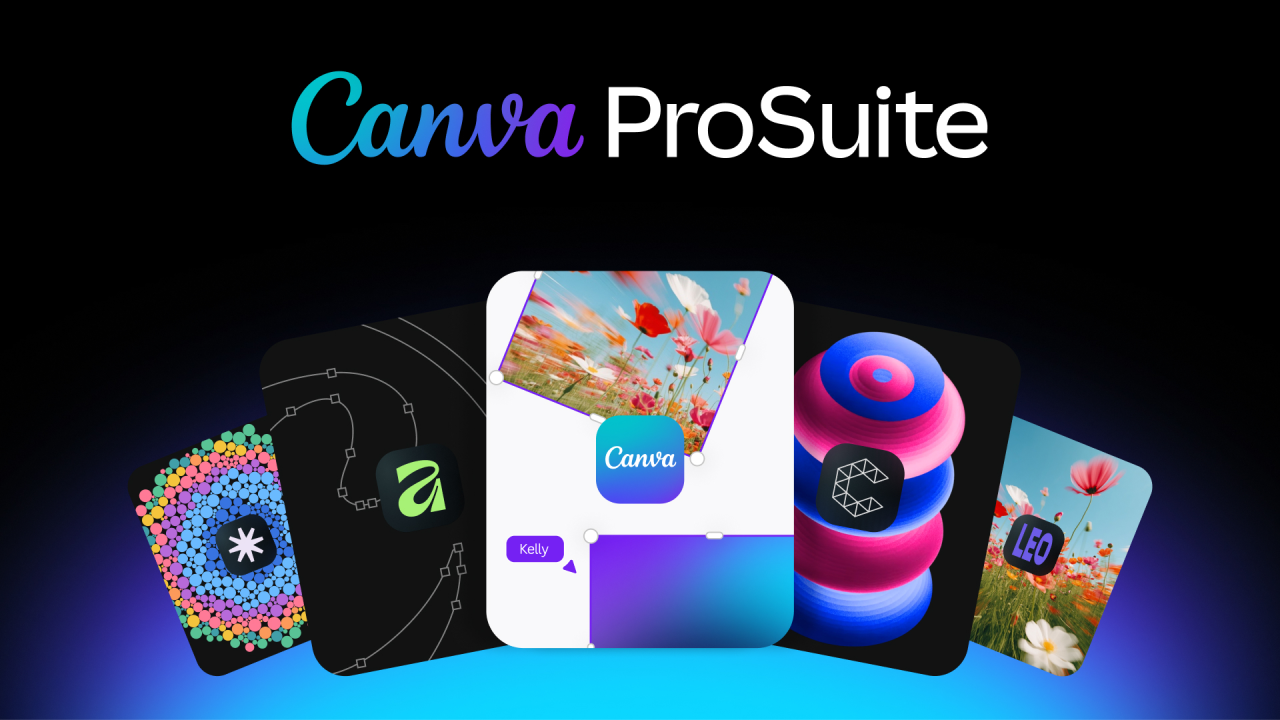
Creative Boom: Canva launches ProSuite bringing Affinity, Cavalry, Flourish and Leonardo together with more than new 100 features Affinity and Cavalry stay free, a long-requested Blend Tool finally arrives (thank God), and Canva makes its biggest move yet to support the professional designer. There's no doubt Canva did things the right way round, even if that was never its intention. Adobe began with the industry and has spent a decade trying to reach everyone else.
But Canva started with the mass market – all 250 million of them, as of this month – and only then turned its attention to the creative pros. Today, it's gone one step further with the launch of Canva ProSuite, a connected set of professional tools that now includes 100 new features, as requested by its design community. The suite includes Affinity for design, photo editing and layout; Cavalry for motion; Flourish for data visualisation; and Leonardo for AI image generation.
And it absolutely promises that the core tools in Affinity and Cavalry will remain free to use. I've been wondering when Canva would make it official and bring all its acquisitions together. I was also hoping it wouldn't get greedy and U-turn on its free products. I was there when Adobe announced the subscription-based model in LA in 2013. I remember the backlash and frustration, given there weren't any decent alternatives at the time. Ironically, Canva was born that same year. Today, Adobe is still the industry standard (for now), and for good reason.
But no one can argue that day marked a shift in how a lot of creatives felt about it. Back then, Canva wasn't focused on the creative industry; it wanted to make design accessible to everyone. That meant small business owners, schools, charities, restaurants... anyone who couldn't afford to hire a professional. The idea was to give people the tools to create their own designs. Ones that didn't require an entire course and years of practice. Making design accessible for all was the theme of much of what Cameron Adams, Canva co-founder and chief product officer, said at a press breakfast in London this morning.
"We wanted to take this incredibly complex workflow that probably only 1% of the world could do and turn it into something that the other 99% of the world could do," he said. "Making complex things simple. That is the underpinning ethos of all of our product development." The mission, he explained, hasn't changed since the beginning, when Canva only had 10 staff and around 50 users. Today, it sees over a billion designs a month, including 224 million in the UK in the last 12 months alone.
Around 750,000 UK small businesses use it each month. For a very long time, Canva was sneered at for its templates and basic designs, but then things started moving quickly. Adobe made an update to its terms and conditions in 2024, a decision that annoyed users who still hadn't gotten over the subscription-based model. The following year, Canva almost broke the industry when it announced Affinity would be free forever – it's since had seven million downloads. OK, not enough to be an immediate threat, but the professionals certainly started showing up. How could they not when it's free? Cameron's argument for why Canva can afford to do this?
Article truncated for readability. Read the full piece →
Canva's ProSuite launch represents a significant shift in the design software landscape, offering new features that appeal to a wide range of users, making it highly relevant and impactful for brand strategy professionals.