Score
AI, ex-Soviet engineers, and the Holy Grail of rocketry: Inside the bold bet to rival SpaceX
Aspire Space Technologies is positioning itself as a formidable competitor to SpaceX by developing the Oryx, a fully reusable orbital rocket that aims to drastically reduce launch costs. By leveraging a collaboration with ex-Soviet engineers and advanced AI technology, Aspire seeks to address the growing demand for satellite launches and provide a high-frequency flight schedule, challenging the current monopolistic tendencies in the commercial space economy.
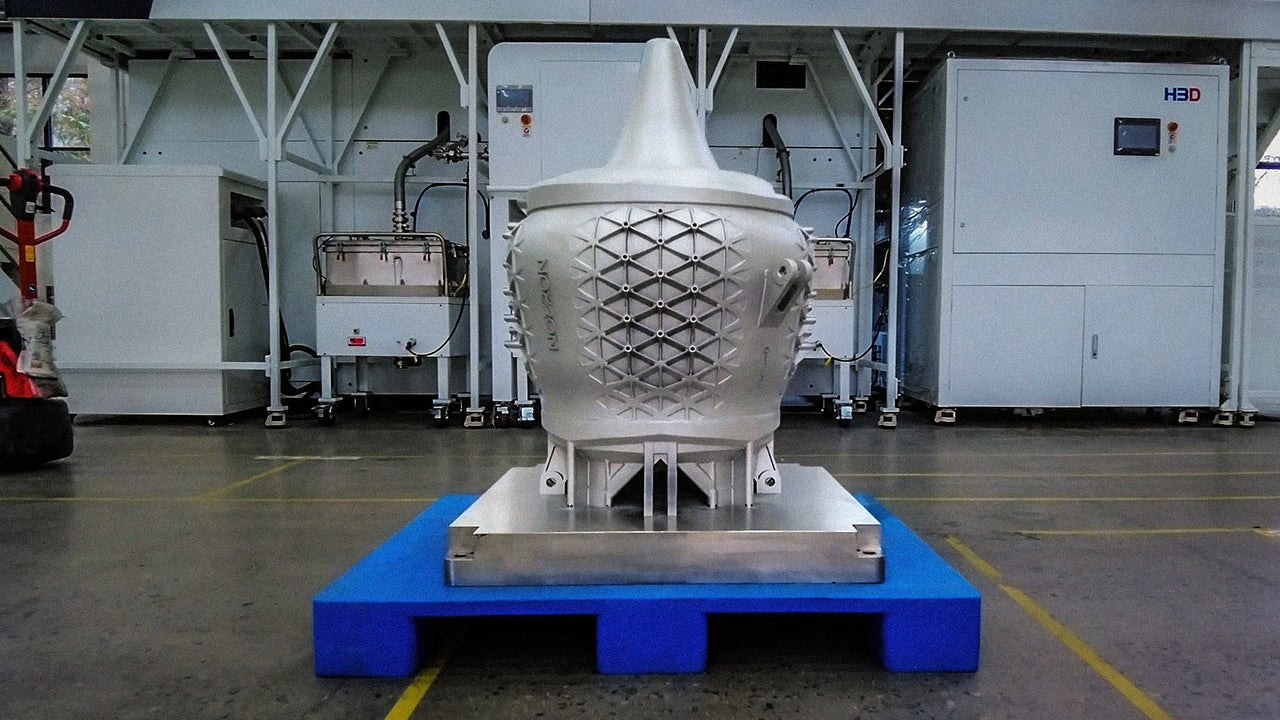
FastCompany: “The engine that we have now could have probably taken seven years and up to half a billion dollars,” Stan Rudenko tells me over a video call from Abu Dhabi. “In our collaboration, it basically took half a year . . . and we already have a first version. It’s mind-blowing.” Rudenko is the CEO of Aspire Space Technologies, and the collaboration he’s talking about is with Leap 71 , a Dubai-based computational engineering startup founded by the aerospace engineer Josefine Lissner and the entrepreneur Lin Kayser.
They have formed an almost sci-fi alliance: A team staffed by the legends of the Soviet space program—engineers who built the Energia rocket and the fully autonomous Buran space shuttle—is joining forces with an autonomous AI software system and HBD, a Shanghai-based large-format metal additive manufacturer. Their goal? To build a fully reusable orbital rocket. If they pull it off, they could become the most formidable enemy to SpaceX’s quasimonopoly on the commercial space economy.
They plan to do it not by copying Elon Musk’s massive Starship, but by resurrecting the decades-old aerospace dream of the aerospike engine, a rocket engine that uses an exhaust cone instead of an exhaust bell, allowing it to work at any altitude. They want to put it on Oryx, a two-stage vehicle that will make space launches cheaper than what’s available today. If it all works and they complete their timeline—from its late 2026 full-scale engine test to its 2031 first flight—Oryx will be the first fully reusable rocket. That’s a big if, since nothing in this industry is guaranteed to work.
[Photo: Aspire] To understand why this is a big deal, you have to look at the current launch market. The laws of orbital physics set a limited number of launches per spaceport, and there is a limited number of spaceports around the world. Currently there are 28, almost half controlled by the U.S. and most of the rest controlled by China and Russia, with Japan, Europe, and India controlling one each. Right now, there are about 2,400 satellites made annually, without counting SpaceX’s own satellites, and 600 of those can’t be launched. Satellite companies face 18- to 24-month timeframes for launch slots.
This is only going to get worse as the space industry grows, according to analysts . Plus, the most active private launch companies today, SpaceX and Blue Origin, are hoarding capacity for their own megaconstellations of AI servers and satellites. “Starship will be launching Elon’s data centers and not StarCloud’s,” Rudenko points out, noting that the commercial launch market is becoming dangerously vertically integrated. There’s a big world outside the U.S. and China—Chinese companies are also using their launch capacity for their own satellites—that is starved for launch slots.
Because the fully reusable Oryx is designed to fly, land, and turn around rapidly like a commercial airliner, it aims to provide a dedicated, high-frequency flight schedule. Aspire is betting that this speed will be the key to absorb the launch backlog. Musk’s answer to everything is Starship, a rocket that is twice as powerful as the Saturn V, stands 394 feet tall, and consumes 1.2 million gallons of fuel in each launch to carry from 220,000 to 300,000 pounds of satellites to orbit. Given that your typical satellite weighs 1,100 to 2,000 pounds, this thing is too big to make sense for many commercial operations.
Article truncated for readability. Read the full piece →
The article discusses a significant development in the aerospace industry that could disrupt the current market, making it highly impactful, while the combination of AI and ex-Soviet expertise presents a novel approach, though the overall concept of competing with SpaceX is not entirely new.
Weekly digest
Get the Signal digest
Every Monday morning — the top 3 brand trends, 10 high-signal articles, and one emerging signal to watch.
No spam. Unsubscribe anytime.