Score
What John Galliano going to Zara tells us about fashion—and everything else
The partnership between John Galliano and Zara signals a significant shift in brand strategy, where traditional competitive advantages in fashion are eroding. As fashion becomes more about individual creative authority rather than institutional legacy, brands must adapt by embracing transient advantages and redefining their competitive landscapes to stay relevant in a rapidly changing market.
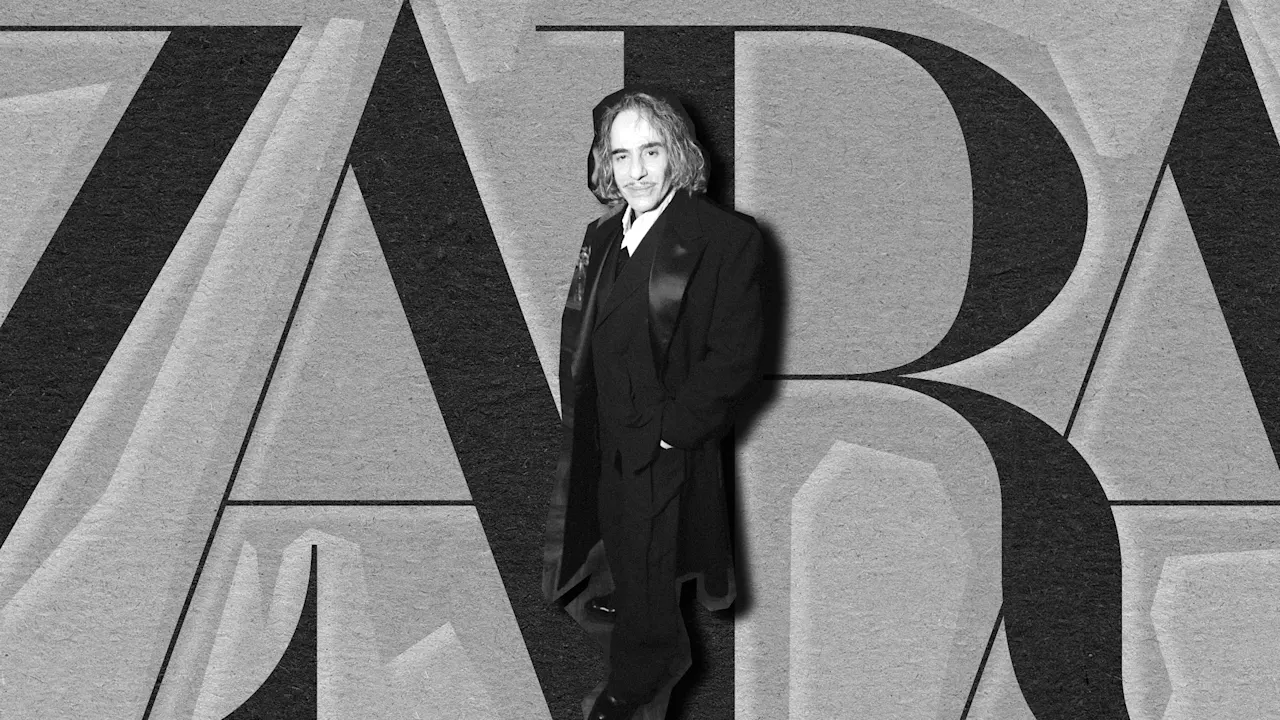
FastCompany: Fashion , it turns out, is a leading indicator. Long before mainstream business commentary catches up to a structural shift in the economy, the runway has usually already staged it . The announcement that John Galliano—arguably the greatest couturier alive—has signed a two-year creative partnership with Zara is one of those moments. It looks like fashion news. It is actually a signal about the future of value creation itself. The most surprising move in fashion in years To understand the shock value, a little context.
Galliano’s career has been defined by the haute maison— Givenchy , his own label, Dior, and then a celebrated decade at Maison Margiela, where he orchestrated some of the most critically lauded runway shows of his generation. These institutions were the frame through which his genius was legitimated, distributed, and priced. The assumption was that a designer of his stature would always find his home inside another of fashion’s storied houses. Instead, he is going to Zara. Not as creative director. Not to relaunch a diffusion line.
But as a “creative partner” who will deconstruct and “re-author” pieces from Zara’s own vast archive—taking the ephemera of fast fashion and subjecting it to a couture process. The first collection drops in September 2026. The fashion world’s reaction ranged from confusion to awe . But strategists should recognize it immediately: this is what the end of competitive advantage looks like in real time. Seasons are dead. So are categories. For most of its modern history, fashion has operated on a set of assumptions so stable they felt like laws of nature. There were four seasons.
There was a clear hierarchy: haute couture at the apex, then ready-to-wear, then high street. There were coherent “looks”—a house had an aesthetic DNA, a consumer had a tribe, and the two found each other through ritual (the show, the magazine, the boutique). All of that is dissolving. Seasons have become continuous flows. TikTok -native consumers don’t cycle through trends on a quarterly basis—they layer them, mix them, reject the premise that a wardrobe needs a coherent sensibility at all. Streetwear bleeds into suiting. Archive Margiela sits alongside H&M finds. The “look” is now personal curation, not institutional affiliation.
When taken as a gestalt, across countries and genres, we can see that this is a structural change in how value is created and captured in any industry organized around taste, knowledge, and creative authority. Fashion just got there first. The Carlota Perez lens: We are at a turning point Economic historian Carlota Perez describes how major technological revolutions move through two phases: an installation period of turbulence and speculation, followed by a deployment period in which the new technology’s possibilities are embedded into social and institutional life.
First, a period of financialization and destruction of old social arrangements, giving way (hopefully) to a golden age of productivity and a broader distribution of gains. We are, right now, in the painful transition between those two phases and fashion, as a great cultural messenger, is reflecting the dislocations. What makes the current moment distinctive is how traditional advantages in fashion are eroding. For most of industrial history, scale was the primary source of competitive advantage. You built large factories, large distribution networks, large marketing operations—and that scale gave you a moat.
Article truncated for readability. Read the full piece →
The collaboration between a high-profile designer and a fast-fashion retailer signifies a noteworthy shift in brand strategy that could influence the entire fashion industry, making it highly relevant and impactful for brand strategy professionals.
Weekly digest
Get the Signal digest
Every Monday morning — the top 3 brand trends, 10 high-signal articles, and one emerging signal to watch.
No spam. Unsubscribe anytime.