Score
Matternet wants to rain hot chicken from the sky
Matternet's launch of the M3 drone delivery system represents a significant shift in last-mile logistics, aiming to decentralize delivery by allowing businesses to integrate their own drone docks. This strategy could redefine convenience in delivery services, but it faces regulatory and community acceptance challenges that could impact its rollout and adoption in the U.S. market.
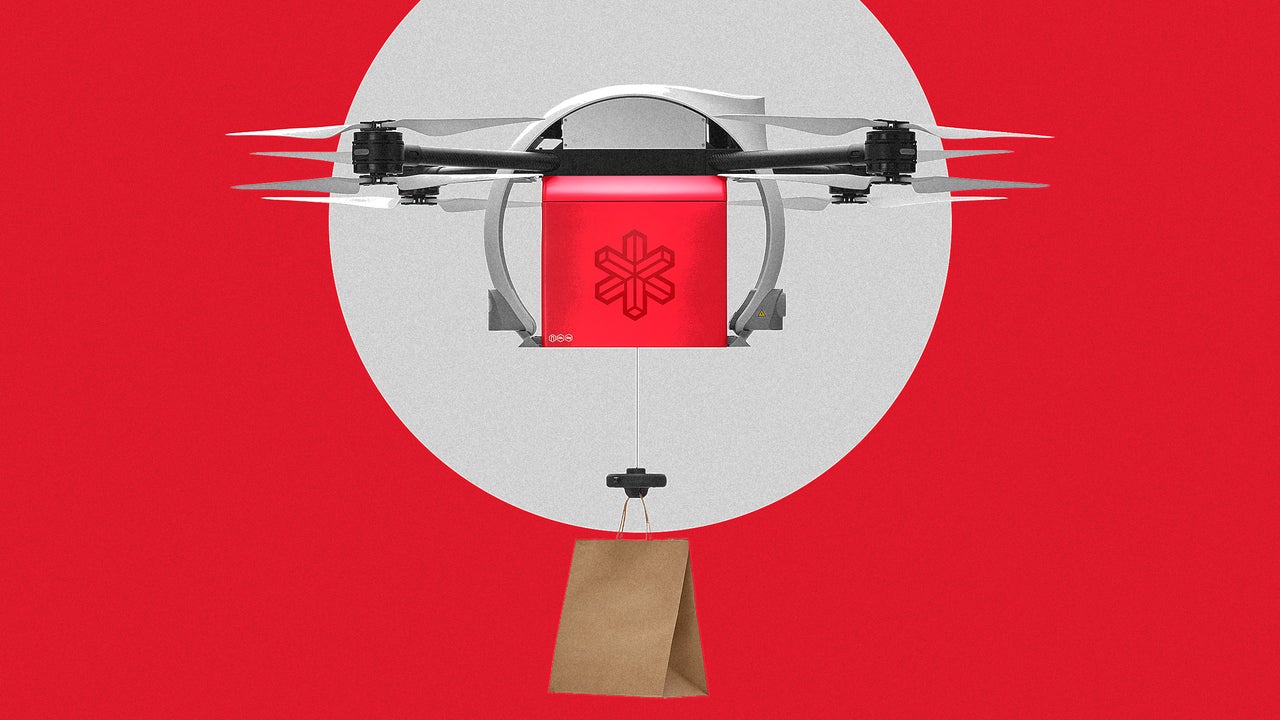
FastCompany: Matternet wants to make fried chicken rain from the sky. To do that, the drone delivery company has developed a new version of its last-mile logistics system, which features a drone that carries up to 11 pounds and simpler, lower-cost dock stations. The company is looking to roll out this delivery system in the second half of 2027. Called the M3, this autonomous architecture puts new, more powerful drones, new drone docks, and drop boxes on the premises of restaurants, retailers, or hospitals. The company’s initial U.S. partner is Dave’s Hot Chicken .
The idea, Matternet CEO Andreas Raptopoulos says, is to turn drone delivery into a utility: “largely invisible, dependable, and low-cost,” something a business connects to “the same way a building connects to water or power.” Matternet is launching the M3 into a nascent U.S. drone delivery market that’s still plagued by regulatory hurdles, opposition from residents, and availability in a limited number of locations. In the U.S., there are already four major players operating in the space: Amazon Prime Air, Flytrex, Wing, and Zipline.
Amazon, for one, flies from sites in the Dallas-Fort Worth area, Houston, Phoenix, Detroit, and Tampa, carrying up to 5 pounds within 7.5 miles , and plans to reach the suburban communities of nearly 500 cities and towns by the end of 2026. Meanwhile, the M3 is at least nine months from commercial service, and the company has provided no order or route counts. At the same time, China is going full steam ahead. Beijing is showing the world that the so-called low-altitude economy works. Meituan began exploring drone delivery in 2017 and launched its first commercial service in Shenzhen in 2021 .
It topped 1 million orders worldwide by the end of June, and recently launched a dedicated McDonald’s route in Shanghai. Research firms put the global drone delivery market in 2026 anywhere from $360 million to $5.06 billion , with the latter projecting $20.98 billion by 2034. The race is on, as Chinese companies—backed by a government whose five-year plan aims to commercialize the airspace just above rooftops—are already expanding their technology overseas. Matternet, headquartered in Silicon Valley, plans to deploy its M3 system in the U.K.
by next year, partnering with medical logistics company Apian and its existing National Health Service drone delivery network in Central London. How it works The M3 provides a new approach. While Amazon and Walmart fly drones from centralized fulfillment centers and shops, Matternet’s network is decentralized. Any business, from a restaurant to a retailer to a hospital, can “plug” into it. Each merchant will get a dock and portal installed on or near their premises. Raptopoulos says the number of drones at a merchant depends on how many deliveries per hour it needs to serve, at about four to five deliveries per hour per drone.
Being decentralized means the entire drone fleet can be shared among all businesses in the Matternet system. “Merchants can have dedicated drone fleets and use other excess capacity if needed,” the company tells me. If a store has a demand peak, for example, Matternet’s cloud will reroute any idle drones to that store automatically to cover its delivery needs. The system has three parts. First there is the drone itself, which the company says can carry up to 11 pounds within a 10-mile radius. It lands in a dock (located on a rooftop or at ground level) that stores and charges it.
Article truncated for readability. Read the full piece →
The launch of Matternet's drone delivery system represents a significant innovation in logistics, which could greatly influence brand strategies in delivery services, though it faces notable challenges.
Weekly digest
Get the Signal digest
Every Monday morning — the top 3 brand trends, 10 high-signal articles, and one emerging signal to watch.
No spam. Unsubscribe anytime.