Score
Kids’ meals are having a ‘Freaky Friday’ moment
The article discusses McDonald's recent introduction of KPop Demon Hunters-themed meals aimed at adults, reflecting a shift in the fast-food industry where kids' meals are increasingly being ordered by adults seeking value and nostalgia. This trend highlights the evolving preferences of both children and adults, with kids gravitating towards more adventurous meal options and adults using kids' meals as a cost-effective dining solution. Brand strategists can learn from this evolution that understanding consumer motivations and adapting offerings to meet changing tastes is crucial for maintaining relevance in a competitive market.
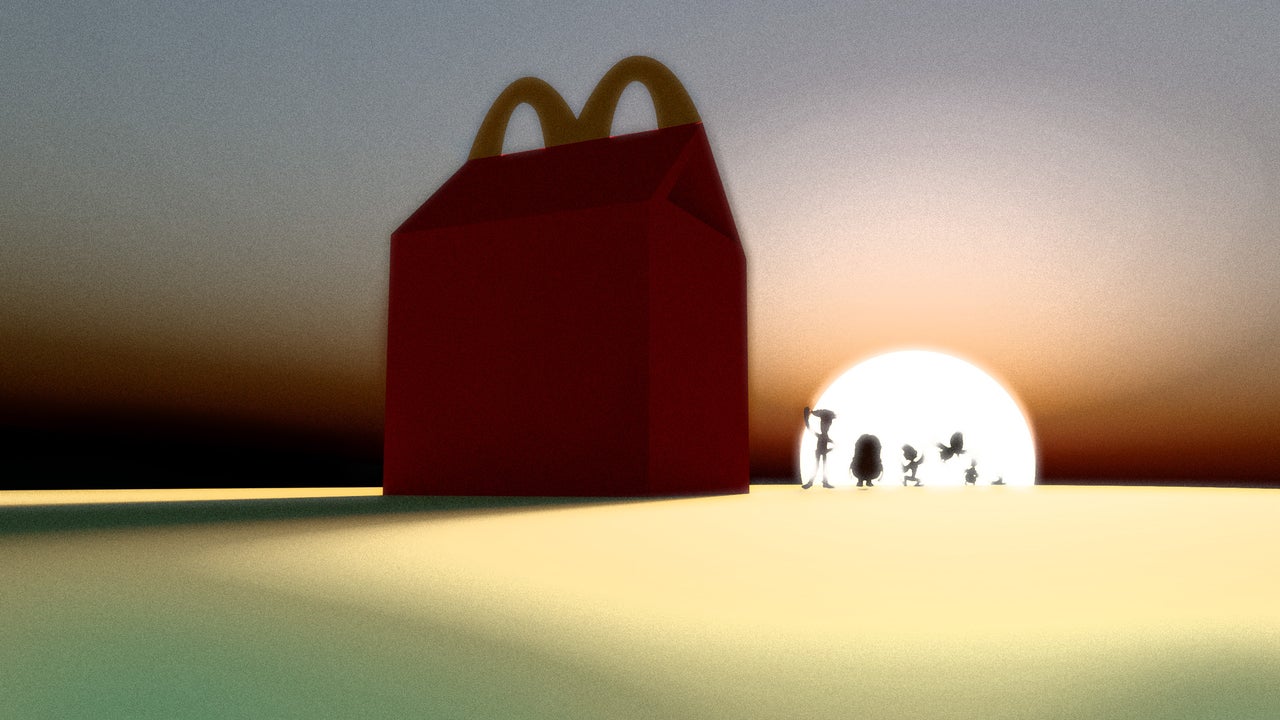
FastCompany: This past March, McDonald’s finally gave KPop Demon Hunters the kids’-meal treatment it was practically begging for. The movie, an animated musical about a K-pop girl group, Huntr/X, and a charming demonic boy band, the Saja Boys, had become the most-watched film in Netflix history, captivating even skeptical parents who found themselves watching it dozens of times. Instead of a cheeseburger and apple slices, fans could choose the Saja Boys Breakfast Meal, with a spicy McMuffin, hash browns, and soda, or the Huntr/X Meal, with McNuggets, Ramyeon McShaker Fries, and purple Demon Sauce.
Their selection corresponded to a vote in McDonald’s “Battle for the Fans.” The prize inside was a pack of collectible photocards and a QR code that would later unlock an exclusive video revealing the winner. (Huntr/X, thankfully.) Analysts estimated that KPop Demon Hunters Meals could bring in $100 million in their first few days. Some fans, though, were confused. “No KPDH Happy Meal toys???” one asked online. But McDonald’s had put it right there in the announcement : These were “dueling adult meals”—a promotion for grownups.
(Honestly, the spicy McMuffin or the QR code should’ve been the tell.) In the nearly 50 years since the burger giant debuted its first Happy Meals (circus wagon-themed boxes featuring McDoodler stencils, McWrist wallets, and McDonaldland character erasers), the kids’-meal offering has expanded through fast food and beyond, with the prizes inside going from physical trinkets to augmented reality portals and hologram cards. Along the way, the value proposition has evolved too.
Gen Alpha is ordering more kids’ meals than ever, but according to the market research firm Circana, they’re increasingly taking their business from drive-through burger chains to chicken chains like Chick-fil-A and restaurants with more adventurous menus, like Chipotle. Meanwhile, adults, squeezed by increasing prices and squeezing their own stomachs with GLP-1s, have started ordering a lot of kids’ meals for themselves. Call it a role reversal. If it was a movie tie-in, it would obviously have to be Freaky Friday . The McDonald’s KPop Demon Hunters meals.
[Photo: McDonald’s] Surprise inside Why would McDonald’s build an adult meal around KPop Demon Hunters —essentially Gen Alpha’s Frozen— instead of making it a Happy Meal? The answer is that the kids’ meal has morphed into a value hack, a light meal, a nostalgia trip, and a collector’s drop, none of which mean much to an actual kid. The kids’ meal emerged in the ’70s, after fast-food marketers discovered that children drove a surprising share of sales.
Yolanda Fernández de Cofiño, a McDonald’s franchisee who had just opened the first location in Guatemala, noticed in 1974 that children were not finishing their food, and created a special “Menú Ronald” for them that drew crowds. McDonald’s had a U.S. version in regional tests three years later. Wendy’s and Burger King followed, packaging kid portions and toys into decorated boxes. [Photo: McDonald’s] Back then, kids rarely expected new toys unless it was Christmas or a birthday, says Gary Cross, a Penn State historian of consumer culture whose books include Kids’ Stuff and The Cute and the Cool .
Article truncated for readability. Read the full piece →
The article highlights a significant trend in the fast-food industry that impacts brand strategy, particularly in how meals are marketed to different demographics, making it relevant and insightful for brand strategists.
Weekly digest
Get the Signal digest
Every Monday morning — the top 3 brand trends, 10 high-signal articles, and one emerging signal to watch.
No spam. Unsubscribe anytime.