Score
MorningStar Farms gets a retro rebrand in the era of the fake meat culture wars
MorningStar Farms has undergone a retro rebrand to emphasize its long history in the plant-based meat sector, aiming to remind consumers that meat alternatives have been around for decades. The rebrand features new typography, a vibrant green color palette, and design elements inspired by the 1970s, positioning the brand as a familiar and approachable option amidst the ongoing cultural debates surrounding fake meat. Brand strategists can learn from MorningStar's approach of leveraging heritage and authenticity to differentiate in a crowded and politically charged market.
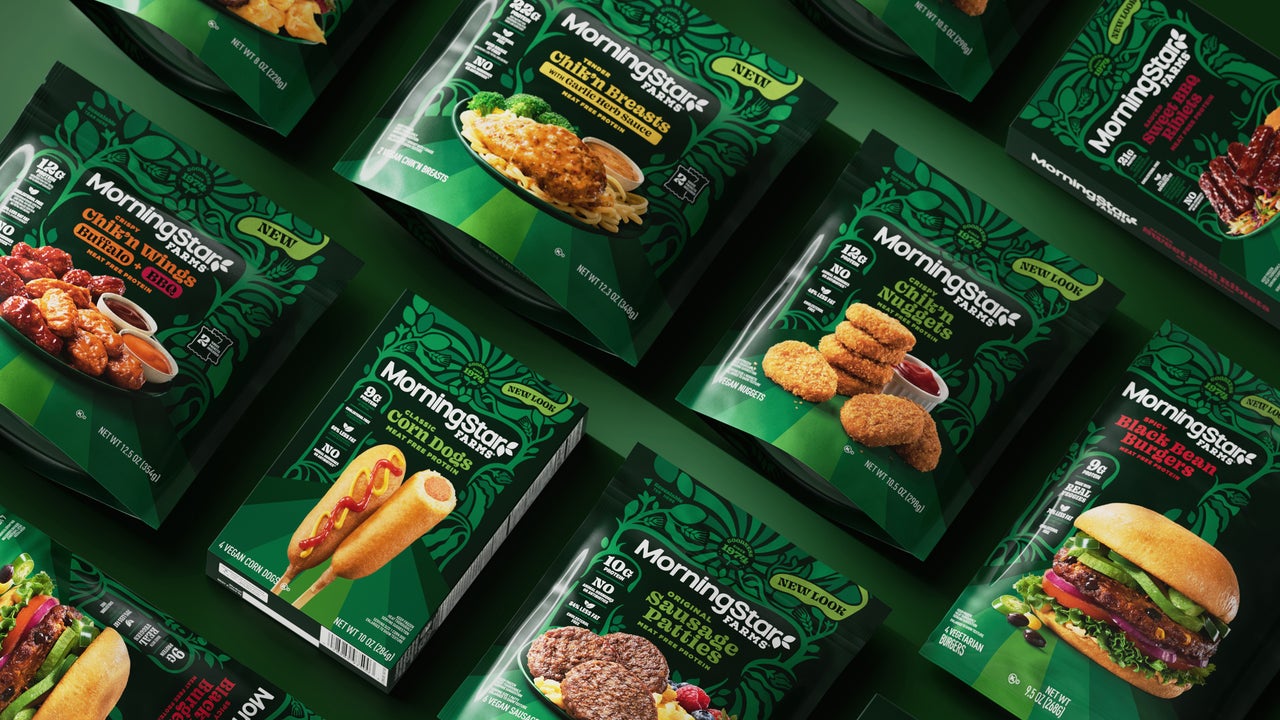
FastCompany: The plant-based meat category has spent the last several years fighting an uphill battle in a cultural climate that’s turned food into a political statement. MorningStar Farms, one of the oldest players in the game, just rebranded to remind people that meat alternatives are nothing new—and they’re not going anywhere. MorningStar has been making plant-based meat long before “plant-based” was its own category in the frozen section. The brand was founded in 1974 and acquired by Kellogg (now Kellanova) in 1999.
Over the last several decades, it’s expanded its offerings from Bacon Strips and Sausage Patties to Korean BBQ Riblets and Buffalo Chik’n Patties. This month, in partnership with the agency Design Bridge and Partners , it’s rolling out a rebrand—complete with new typography, a vibrant green color palette, and a retro look that’s intended to both call back to its heritage and jump out on shelves. [Image: MorningStar Farms] MorningStar’s new look comes at a fraught moment for the broader meat alternative category.
Competitors like Beyond and Impossible Foods are struggling with declining revenue (a challenge both have attempted to meet via their own rebrands ), and others, like the vegan chicken nugget startup Nowadays , have gone out of business entirely. Meanwhile, fake meat has become a flashpoint in a broader culture war, symbolic of a climate-friendly movement that’s been largely drowned out by the carnivorous MAHA crowd. In spite of this, Morningstar Farms’ new brand doesn’t seem very interested in taking sides in the ideological debate over fake meat.
Instead, it intentionally leans on the company’s 52 years in business to send a simple message: Plant-based alternatives have been here for decades, and they don’t have to be unfamiliar or scary. [Image: MorningStar Farms] How fake meat turned into a political flashpoint Just a few years ago, fake meat was a rapidly growing category and investor darling. In 2019, the stock of Beyond (then Beyond Meat) hit an all-time high of $234. Three years later, it formed a partnership with McDonald’s on a meat-free burger called the McPlant . Popular restaurants like New York City’s Eleven Madison Park had recently taken meat off the menu entirely.
By the end of 2022, Impossible reportedly had more than doubled its retail sales. Today, the picture looks drastically different. Beyond’s stock price is down to around $8, an 88% year-over-year decline, and the company ended 2025 with a 19.7% revenue slump. The McPlant is dead in the water . Eleven Madison Park added meat back onto its menu at the end of last year.
At the Semafor World Economy summit in 2025, Peter McGuinness, the Impossible Foods CEO, said that plant-based meat was “not in vogue right now.” Experts argue that meat and meat alternatives have become symbols for right-wing and left-wing viewpoints, respectively, especially in light of the Make America Healthy Again movement. As Fast Company wrote late last year, “the plant-based world—and the public’s desire for bold action for the climate—is in retreat.” Meat alternatives are undoubtedly having a public perception problem, and Impossible and Beyond have both attempted to use design to remedy it, though with opposite strategies.
Article truncated for readability. Read the full piece →
The rebranding of a well-known brand like MorningStar Farms in the context of current cultural debates on fake meat is significant for the industry, offers some novel design elements, and provides actionable insights for brand strategists.
Weekly digest
Get the Signal digest
Every Monday morning — the top 3 brand trends, 10 high-signal articles, and one emerging signal to watch.
No spam. Unsubscribe anytime.