Score
Why legendary sneaker designer D’Wayne Edwards won’t give up his morning routine
D’Wayne Edwards emphasizes a design philosophy centered on problem-solving and creativity, advocating for a flexible approach that adapts to the challenges at hand. His insights into design education highlight the need for a curriculum that mirrors real-world applications and encourages students to explore various creative avenues, ultimately shaping a more effective and relevant design education strategy.
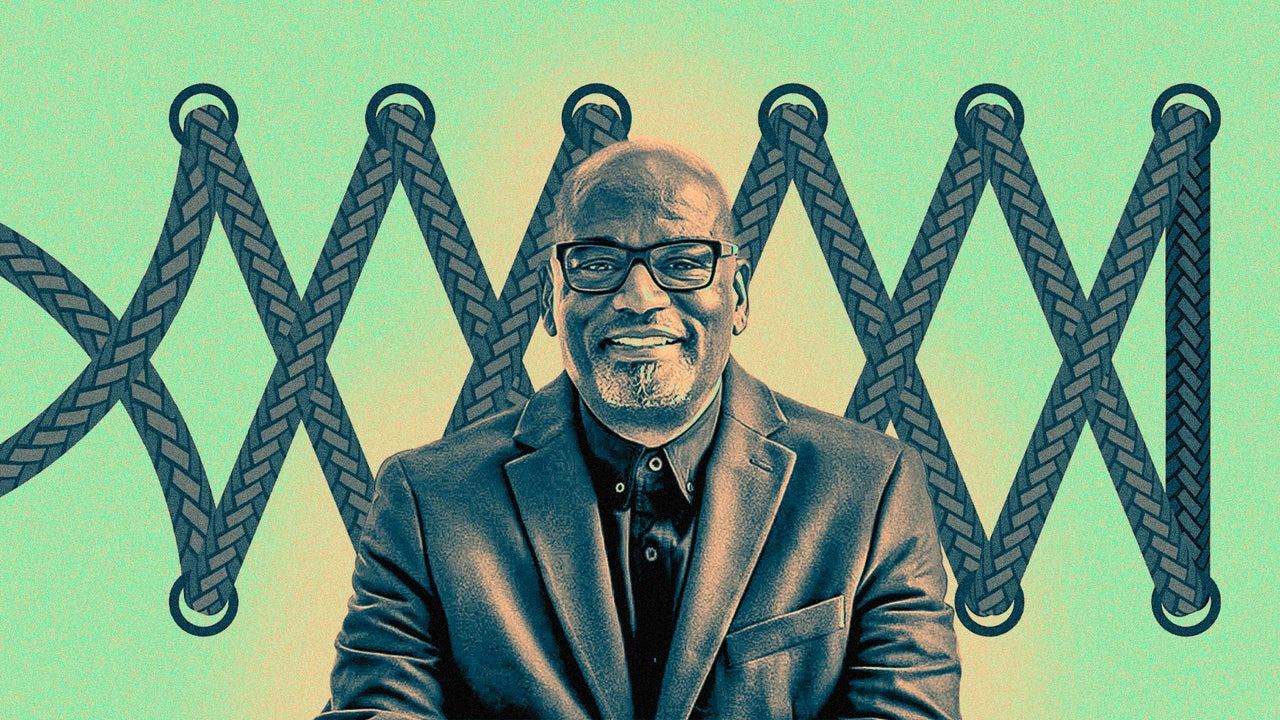
FastCompany: D’Wayne Edwards, legacy sneaker designer at Nike and president of Pensole Lewis College, has been studying Bruce Lee since he was in high school. “I thought he was this guy who did karate,” says Edwards. “But he was an incredible philosopher.” Having received his design education entirely on the job (first at Skechers and then at Nike), Edwards says he gleaned so much of his approach to design from watching and reading Lee’s work. “He doesn’t have a fighting style,” says Edwards. “His fighting style is whatever his opponent forces him to do.
That’s how I look at design.” Edwards says his design philosophy is not about him or his approach, but about the task in front of him: “I focus on becoming the creative or the designer for the problem I’m trying to solve.” He is now leaning on his career in product design to reshape the state and future of design education at Detroit’s Pensole Lewis College of Business & Design, the only design-focused HBCU, and what Edwards hopes sets the standard for a design education of the future. Tethered to these philosophies and his lifelong love of art, Edwards frames design in problem-solving, business, and education. Here are his rules.
Break your life into chapters. I started out as an artist—I could draw anything I saw. Then I discovered design, and I used my artistic ability to become a designer. But the thinking was completely different; now I have to imagine things and make them real. I then started to understand that the human brain dictates my output. That’s when I transitioned from being a designer into being a creative. Make creativity a daily exercise . We’re all creative. I look at creativity as an everyday action of walking down the street. How am I going to get past this pothole? I have to make a decision.
Embracing everything through a lens of creativity is a much more fun, and more open, way to experience life. Wouldn’t you want a creative accountant? A creative lawyer? I would want to put “creative” in front of any person or word that can make my life better. You won’t get the same results. You won’t get the same static thing. To best honor the task in front of you, avoid a design style. I have a visual design language that comes through when you see my work. If there is a philosophy, I’d say focus on becoming the creative or the designer for the problem you’re trying to solve. Look at other industries for insight.
I started meeting other types of designers or creatives, who live in different places and have a different approach to life. I developed creative circles that I can tap into for conversations, because something will come out of it. These people are energy givers. You are way better than before you talked to them. Then, there are energy takers, and there are way more of them in the world than givers. You have to be disciplined with who you allow in your life. Have a morning routine. I developed mine when I was 20 and worked at Skechers. I wanted to know why Robert Greenberg, the chairman of Skechers, got in so early.
When I got in “early” at 8 a.m., the dude was already there. It became a game. I showed up and he showed up. It was 5 a.m. He asked me, “Why are you here?” I said, “I’m trying to understand why you’re here.” He had a routine. He read industry and business information. He used a dictaphone from which his assistant wrote out his daily schedule. He settled himself before the day came. Now, I read inspirational quotes. I read industry information. I read sports. I protect what I receive. I’m not on social media. Good in, great out. Bad in, worse out. Go into everything empty, with the goal of filling your cup.
Article truncated for readability. Read the full piece →
While D'Wayne Edwards' insights into design education and problem-solving are valuable, they reflect ongoing discussions in the industry rather than groundbreaking changes, making it moderately impactful and relevant.