Score
American Girl is bringing back its original dolls. Moms might be excited but will your seven-year-old care?
American Girl's decision to reintroduce its original historical dolls marks a strategic pivot aimed at reconnecting with nostalgic millennial mothers while also appealing to a new generation of children. This move highlights the importance of brand heritage and emotional connection in driving consumer interest, especially in a market where adult spending on toys is increasing.
FastCompany: In 1990, my mother discovered a four-year-old startup called American Girl, and she liked what she saw: Books about different eras in American history, told through the eyes of a girl roughly her daughter’s age, with an 18-inch doll based on each character. It was more educational and wholesome than Barbie, so she was happy to buy them for me. My favorite character was Molly McIntire, a 9-year-old living through World War II in Illinois, whose father had been sent to the front lines and hadn’t written home in months.
What I loved about the books was that they trusted children to process difficult things—slavery, mortality, war—that adults typically shielded us from. American Girl stories were meant to illustrate that difficult things might happen to us in life, but we will be all right. [Photo: American Girl] In the four decades since, American Girl was acquired by Barbie’s parent company, Mattel, for $700 million and drifted steadily away from what made it special. The historical characters were retired, replaced by contemporary dolls reflecting girls’ lives today—dolls that look indistinguishable from other dolls on the market.
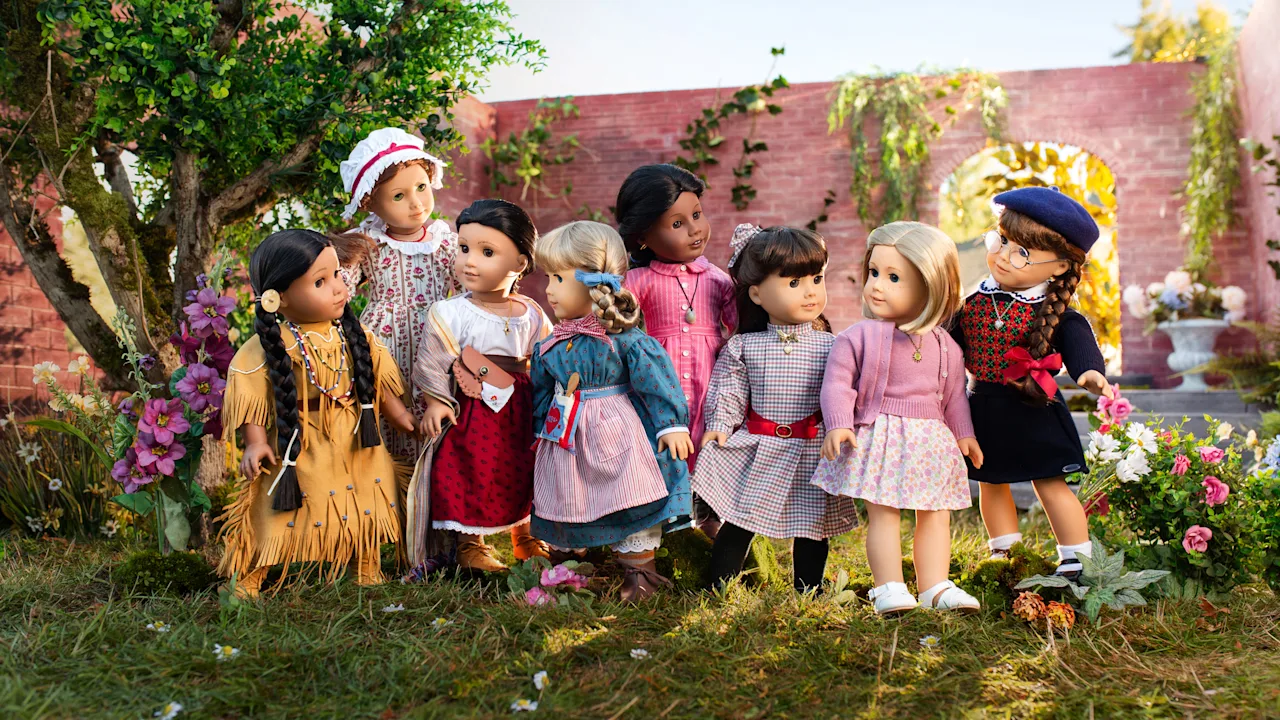
Millennial mothers who had once begged their parents for American Girl catalogs were no longer buying the dolls for their own daughters. This week, in a 40th anniversary collection, American Girl announced it is bringing back eight of its most beloved “Historical Characters,” whose stories were set between 1764 and 1943, and were first released in the 1980s and 1990s. These include Addy Walker who escapes slavery; Kaya, a native American whose village is attacked by enemy raiders; and Josefina Montoya who is grieving the loss of her mother in colonial New Mexico.
The dolls are bundled with their original outfits, accessories, and books, in packaging modeled on the original 1986 design. They’re now available for pre-order and will ship in May. “This collection is our love letter to the original fans and a tribute to the women who formed such meaningful connections with these dolls as kids,” says Jamie Cygielman, global head of dolls at Mattel, “[while also] introducing a new generation to the stories and characters that helped define the brand.” [Photo: American Girl] Mattel has been working to revitalize the American Girl brand, which has posted five consecutive quarters of sales growth heading into i
ts anniversary year, but revenue remains well below its mid-2010s peak . In Mattel’s most recent earnings, American Girl was called out as a bright spot in an otherwise mixed dolls category — Barbie, the flagship, actually declined . One of Mattel’s strategies is now to target adults, not just children. By late 2024, spending on toys by adults 18 and older had surpassed that for children ages 3 to 5, according to Circana —and that cohort continued to drive industry growth into 2025. [Photo: American Girl] The relaunch might also be a reaction to a misstep.
Earlier this year, American Girl unveiled a “Modern Era” collection, featuring redesigned versions of the historical characters with contemporary styling. Molly turned up in chain loafers and mini-skirts that would have outraged society in the 1940s. Addy, the formerly enslaved girl, now has locs and a shift dress. The internet responded with something between outrage and grief. “Kirsten didn’t endure six weeks on a boat across the Atlantic and lose her best friend to cholera for you to give her the Ozempic treatment and space buns,” went one widely-shared post .
Article truncated for readability. Read the full piece →
The reintroduction of original dolls by American Girl is significant for brand strategy as it taps into nostalgia and emotional connections, which are crucial in the toy market, making it relevant for brand professionals.