Score
Canvas Tom Carey On Why Imperfection Might Be Your Greatest Creative Weapon
Tom Carey's insights suggest that brand strategy should embrace imperfection and human character as key differentiators in a landscape increasingly dominated by AI-generated content. Brands that leverage unique, instinctual creativity rather than technical polish will stand out, making the case for a more human-centric approach to design and marketing.
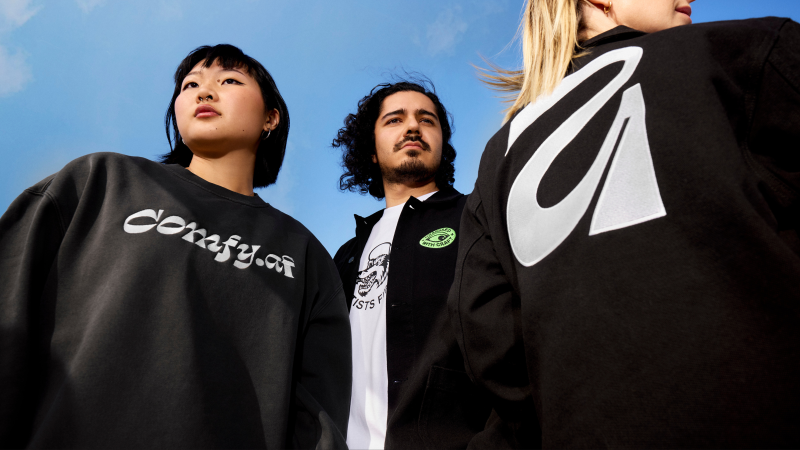
Creative Boom: Insight Creative Industry Canva's Tom Carey on why imperfection might be your greatest creative weapon The creative director chats to us about AI, human instinct, and why making deliberately imperfect work could be your sharpest competitive edge. Written By: Tom May 31 March 2026 Here's a thought that should make you think. Chess grandmasters, the finest strategic minds in the world, have started making deliberately imperfect moves. Not because they have lost their touch, but because perfect play has become the machine's territory. To beat AI at chess, you have to stop playing like one.
Tom Carey, creative director at Canva, came across this idea in a recent Bloomberg article, and it has clearly lodged itself somewhere important. "I think the best work isn't 'perfect': it's different, it's awkward, and it makes you think differently," he says. "Producing work that doesn't feel perfect, it feels unusual, different and wonderfully weird." How to differentiate yourself Tom believes the same logic is heading straight for the creative industry, and that those who grasp it earliest will be the ones who pull ahead. And if you think about it, this makes perfect sense.
Tom Carey For decades, creatives have competed largely on technical polish: craft, execution, outputs. Now that AI can produce technically competent work at an industrial scale, polish alone is becoming table stakes. The differentiator is something stranger and harder to systematise: instinct, character, the fingerprints of a specific human mind. The floor has risen. Now raise the ceiling. Tom is, as you'd expect, a cheerful evangelist for tools that make design more accessible. Canva's mission, "empower the world to design", is one he describes with the kind of conviction that sounds genuine rather than scripted.
"As a designer, it connects to a belief in my soul that everything can and should be well designed," he says. "Good design just makes the world better, more helpful, more beautiful and more enjoyable." He's equally candid, though, about what that democratisation means for those who design professionally. "Just because more people can design doesn't mean everyone's at the same level," he reasons. "Yes, the floor has been raised, which is a good thing, but for professional creatives, the challenge and opportunity is in raising the ceiling." And these aren't just idle words: the company he works for is putting meat on those bones too.
For instance, Canva's acquisition of Affinity and, more recently, the animation software Cavalry both represent a deliberate bet that serious creative professionals need serious creative tools, not a simplified alternative to them. Making Affinity free for everyone last October, in Tom's view, was a direct expression of the company's values in practice. "For a freelancer in Lagos or a student in São Paulo, free access to genuinely professional tools is the difference between being able to pursue a creative career or not," he argues. He is also clear about what Canva itself is becoming.
"We're no longer just a design platform with AI features," he maintains. "We're an AI platform where design, creativity and imagination live at the centre." The human in the loop If there is a central argument running through Tom's thinking, it is this: AI handles the repetitive, the scalable, and the technically demanding, but taste, judgment, and human experience remain stubbornly irreplaceable. He's not dismissive of the anxiety many creatives feel. "I understand the uncertainty, I've felt it too," he stresses. But he pushes back on the idea that the right response is to resist or retreat.
Article truncated for readability. Read the full piece →
The article addresses a significant shift in brand strategy towards embracing imperfection, which is highly relevant in today's AI-driven landscape, making it impactful and novel for professionals in the industry.
Weekly digest
Get the Signal digest
Every Monday morning — the top 3 brand trends, 10 high-signal articles, and one emerging signal to watch.
No spam. Unsubscribe anytime.