Score
How F1 is revving up its U.S. takeover at the Miami Grand Prix
The Miami Grand Prix is a pivotal part of Formula 1's strategy to deepen its presence in the U.S. market, transforming the race into a comprehensive cultural experience that attracts a diverse audience. By integrating local culture and entertainment, F1 aims to engage new fans and create lasting connections, highlighting the importance of adapting brand strategies to local markets.
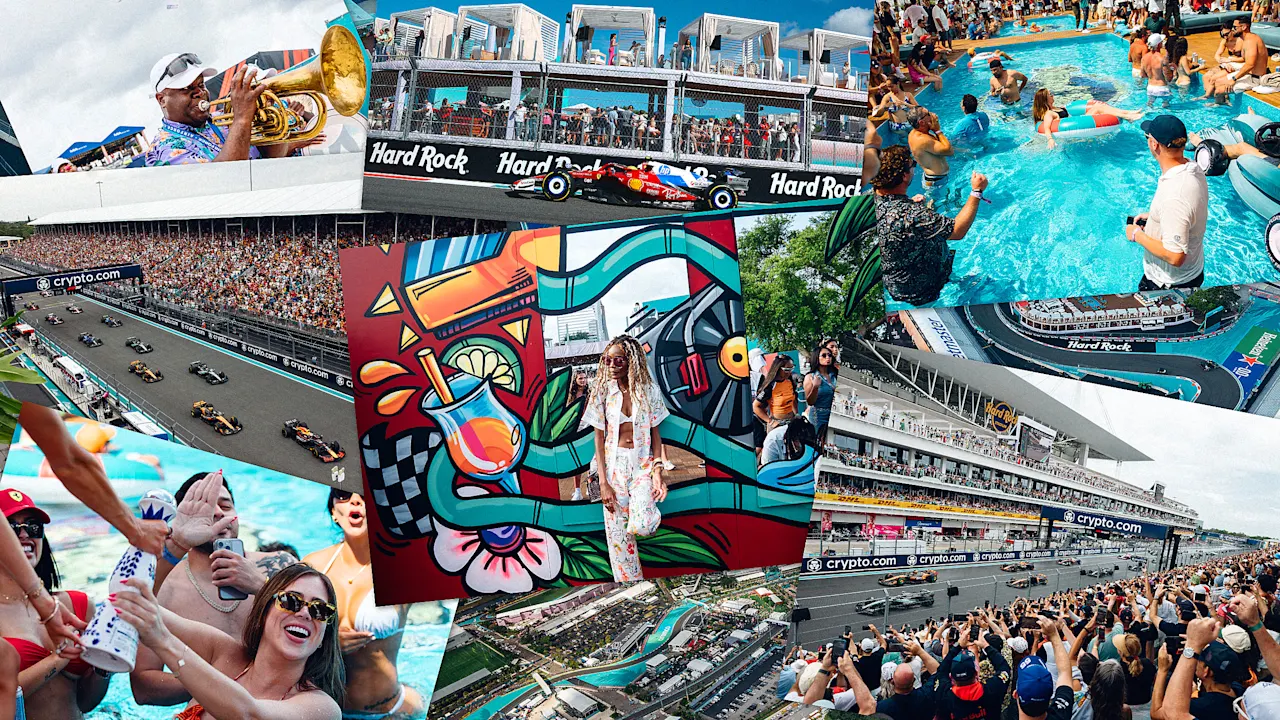
FastCompany: The Miami Grand Prix, hosted at the Hard Rock Stadium’s 3.3-mile Miami International Autodrome, will look and feel different this year. In its fifth year, the race will spotlight the city with new experiences, activations like the MSC Yacht Club, and new sight lines for spectators. While relatively new to Formula 1’s 24 Grand Prix race season, the Miami GP’s agreement to serve as a host city until 2041 is an indicator that F1 is focused on investing in the U.S. market. It’s a big departure from F1’s history. “ We used to turn up in the U.S., race, and [then] expect everyone in the U.S.
to continue to stay in love with us, engage with us, and that was probably arrogant,” says Liam Parker, chief communications and corporate relations officer at Formula 1. Aerial helicopter view of the Formula 1 Crypto.com Miami Grand Prix on May 5, 2024, in Miami Gardens, Florida [Photo: Carlos Goldman/F1 Miami GP] But in 2017, that changed when Liberty Media Corp. acquired F1, recognizing the “ enormous opportunity to grow the sport .” F1, currently valued at roughly $3.6 billion , doubled down on the U.S. as a strategic market with its first modern U.S. race, Austin’s Circuit of the Americas. To deepen its U.S.
presence, F1 wished for an international, cultural destination. “It was the second race to join us from the U.S. It was a big test case,” Parker says. “If Miami hadn’t gone well, people might have started to say ‘Can F1 really make a success of the U.S.’?” As the U.S. circuit’s first race, Miami GP is designed to set the tone for the rest of the calendar and plays a key role in growing F1 commercially stateside. [Photo: Vanessa Diaz/F1 Miami GP] Designing the Miami Grand Prix Parker recognizes that F1 is not competing with legacy sports like the NFL, NBA, and MLB, but rather with entertainment and people’s attention.
For that reason, F1’s recipe for relevancy in the U.S. market has to go beyond the race. Parker says it centers on “people’s mindsets, news feeds, and their lifestyle.” The first Miami GP prioritized a high-quality race, garnering nearly 243,000 spectators and 2.6 million television viewers. That race faced a number of challenges, including extreme heat on the track and in the paddock, which were later resolved. Since then, attendance has grown to around 275,000 people . F1 Miami Grand Prix President Katharina Nowak and her team saw an opportunity to boost the race’s profile by turning the event into a full-on Miami experience.
Spectators walk the grounds of the F1 Miami Grand Prix on May 2, 2025. [Photo: Alex Hayes/F1 Miami GP] This year, the Miami GP team is embracing the city’s allure, focusing on three core elements: its inaugural fan fest, a man-made marina activation, and its race campus modeled after specific Miami neighborhoods. An art installation featuring a grass-covered car welcomes visitors to the Paddock Club at the 2025 F1 Miami Grand Prix.
[Photo: Spencer Ostrander/F1 Miami GP] “We’re starting to think about how we turn the Miami Grand Prix into more than just a three-day weekend and starting to think about this as a full week,” Nowak says, noting that the target audience includes more than purist motorsports fans. The race’s first, free official citywide fan fest seeks to attract newer, casual fans with a “FOMO experience” steeped in entertainment programming, music, brand activations, and food and beverage offerings. Katharina Nowak , president of the F1 Miami Grand Prix [Photo: Formula 1/Crypto.com Miami Grand Prix] “We want to make that the first touchpoint,” Nowak says.
Article truncated for readability. Read the full piece →
The article discusses a significant event in F1's strategy to penetrate the U.S. market, showcasing innovative branding efforts that are relevant to brand strategy professionals, though the concept of adapting brand strategies to local markets is not entirely new.
Weekly digest
Get the Signal digest
Every Monday morning — the top 3 brand trends, 10 high-signal articles, and one emerging signal to watch.
No spam. Unsubscribe anytime.