Score
Quince copied its way to a $10 billion empire. Now it’s looking for a new story
Quince is transitioning from being perceived as a 'dupe factory' to establishing a more robust brand identity that emphasizes quality and transparency. With the hiring of a new head of brand strategy, the company aims to reshape consumer perceptions and create a compelling narrative that goes beyond its low-cost offerings, thereby enhancing its long-term brand strategy and sustainability in the market.
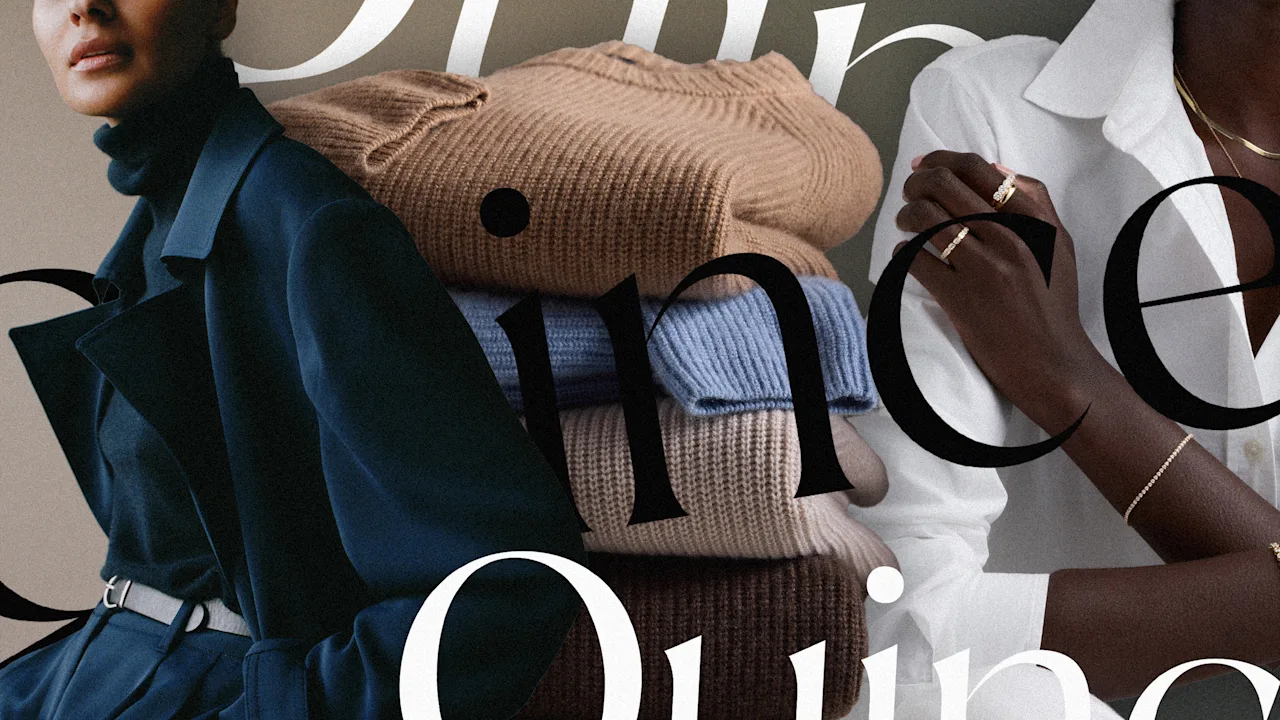
FastCompany: There’s a $298 midi dress on Reformation’s website with delicate lace details and a button front that allows you to show some leg—it’s the kind of dress the brand is known for, versatile and a little seductive. On Quince , there’s what appears to be the same dress: It has the same silhouette, the same fabric, the same drape. The Quince version costs $69.90. That $228 difference is Quince’s entire business model. At a time of inflation, when consumers are looking to curb their spending, Quince’s approach has been wildly successful.
Eight years after launch, Quince generates upwards of $1 billion in annual revenue, has a 1,000-strong staff, adds hundreds of new items to the site per week, and has expanded beyond clothing to furniture and home goods, menswear and kids, wellness products like collagen peptides, and even food. (Its $125 caviar has been a huge hit.) This week, Quince snagged $500 million in Series E funding, valuing the company at $10.1 billion. Quince hasn’t achieved this scale without blowback. It has been sued by the parent companies of Coach and UGG for copying their designs, and Williams-Sonoma has taken aim at its comparative advertising practices.
Most recently, Quince has been hit by a consumer class action lawsuit claiming its pricing is deceptive. All of this has shaped the public perception of Quince as a company that makes cheap knockoffs. Now, Quince is betting that it isn’t enough to be known as a dupe factory. It needs something more: a brand. In a sign of this evolution, Quince hired Dakota Kate Isaacs—who previously built the cult skincare brand the Ordinary—to be its first head of brand strategy and narrative. “My role is not to create a new story,” she tells Fast Company .
“It’s to humanize Quince.” [Photo: Quince] The Copycat’s Playbook In 2018, Sid Gupta, his wife Zunu Mittal, and two others launched Quince in Palo Alto, California. These founders believed they had identified enormous inefficiencies in the retail industry that consumers end up paying for. Whereas direct-to-consumer brands educated consumers about how bypassing department stores allowed them to cut out retail markups, Quince was built to go deeper into the system and be, in its parlance, a “manufacturer-to-consumer” brand.
By working directly with factories—cutting unsold inventory that inflate prices and eliminating brokers, suppliers, and other middlemen—they could sell products at a fraction of the price of competitors, including $50 cashmere sweaters, $80 silk blouses, and $100 linen sheets. Quince isn’t shy about the fact that it is actively monitoring what consumers are searching for on the internet and figuring out how to make cheaper versions of other brands’ best-selling products.
In a radical move that has ruffled the industry, Quince points out on each product page how much other brands charge for items that look indistinguishable; they are often two, three, or five times more expensive. [Photo: Quince] Can Quince Become a Real Brand? Quince brought on Isaacs to create an identity for the company that goes beyond being a copycat. Isaacs built her career at the Ordinary, a cult skincare label that disrupted the beauty industry with transparent pricing and ingredient-forward marketing . Starting as a PR manager, Isaacs quickly proved her mettle and spent five years building the company’s entire U.S.
Article truncated for readability. Read the full piece →
The article discusses a significant shift in brand strategy for a rapidly growing company, which is highly relevant to industry professionals looking to understand brand evolution and consumer perception management.
Weekly digest
Get the Signal digest
Every Monday morning — the top 3 brand trends, 10 high-signal articles, and one emerging signal to watch.
No spam. Unsubscribe anytime.