Score
One company’s obsessive, decade-long quest to make American cheese that’s actually cheese
Sargento's decade-long quest to create a natural version of American cheese highlights the importance of innovation and consumer insight in brand strategy. By recognizing a shift in consumer preferences towards natural ingredients, Sargento successfully tapped into a lucrative market, demonstrating that even iconic products can be reimagined to meet evolving demands. This approach not only revitalizes a traditional category but also positions the brand as a leader in the natural cheese segment.
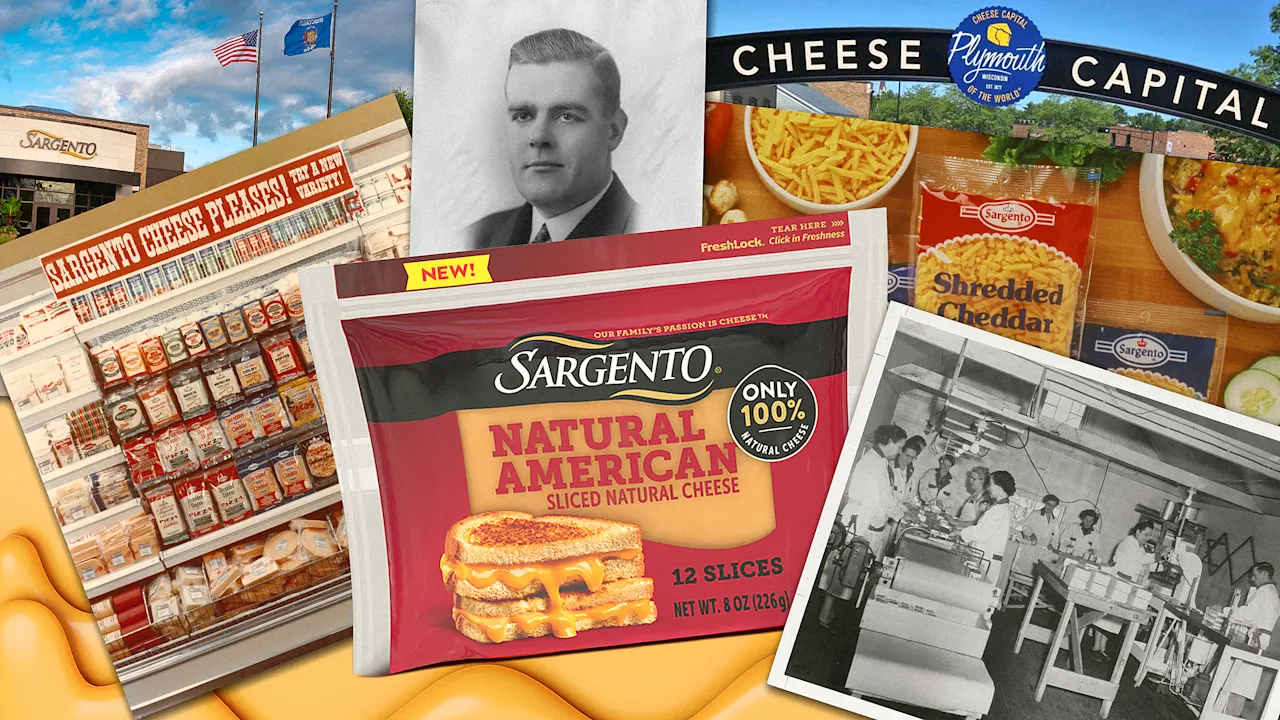
FastCompany: Bad, yet still pretty good, American cheese refuses to expire—and not just because of all the preservatives. American cheese—pasteurized, processed, and super-melty—is, for better or worse, arguably the 20th century’s most iconic food product. And yes, “pasteurized, processed cheese food” is what federal regulators call it instead of “cheese.” It is a paradox embraced shamelessly by some of the most elite food names around. From Salt Fat Acid Heat author Samin Nosrat (“I have a secret love of American cheese, the yellow kind that has a plasticky quality when it melts”), to J.
Kenji López-Alt , whose The Food Lab dedicates a chapter to the science of melting cheese (“damn right it’s gonna be American”), to even the, er, killer high-end chef in The Menu , played by Ralph Fiennes (“American cheese is the best cheese for a cheeseburger, because it melts without splitting”), the culinary world has simply never found a substitute. What makes American cheese “American”—its uniformity, gooey texture, the way it behaves—are ingredients that don’t naturally lend themselves to being made fresher, fancier, or healthier.
Most brands have largely left the recipe alone, making just cosmetic adjustments (a cleaner ingredient or two, something spicy for an exciting kick) even as attitudes about food have shifted. About two decades ago, the family-owned natural cheese company Sargento, founded in Wisconsin in 1953, began asking a question seemingly nobody else was asking: Can you make an exceptional American cheese from real ingredients without destroying what makes it distinctive?
Or, as Louie Gentine, who, as the company’s third-generation CEO (who notably did not grow up eating American cheese at home) puts it: “If these consumers really are attached to that cheese, can we take advantage of that—bring them a natural cheese option for what they love?” The answer, improbably, was yes. Sargento’s Natural American Cheese, which started hitting grocery shelves nationwide in March 2025, was the result of a secret R&D operation that spanned a decade. The bet behind it was that those bland 3.5-by-3.5-inch yellow squares represented serious untapped market potential.
[Photo: courtesy Sargento] “It’s a $2 billion category,” COO Michael Pellegrino says with a shrug. There are more than 400 million pounds of American cheese sold each year, or more than a pound per American person. Sargento estimated that a natural version could become a $100 million product. The push and pull of American cheese By the mid 2010s, the writing was clear. Consumers had officially broken from their boomer forebears, turning their backs on processed foods to chase more natural options, and now the cheese police were out in force.
A report from the Food and Drug Administration that was circulated widely in 2016 found that some shelf-stable pre-grated “100% Parmesans” contained no Parmesan at all, instead relying on a mixture of mostly Swiss, mozzarella, white cheddar, and wood pulp. As the category’s standard bearer, American cheese was squarely in the crosshairs. Online, videos went viral of people trying to melt a Kraft Single over an open flame , only to watch it turn black like a piece of plastic. By 2018, the entire processed-cheese category had posted four straight years of sales declines.
Article truncated for readability. Read the full piece →
The article discusses a significant innovation in a staple food category, showcasing how a major brand adapts to consumer preferences, which is highly relevant for brand strategy professionals.
Weekly digest
Get the Signal digest
Every Monday morning — the top 3 brand trends, 10 high-signal articles, and one emerging signal to watch.
No spam. Unsubscribe anytime.