Score
One major decongestion experiment is surprising the haters
New York City's Decongestion Pricing program serves as a successful model for urban transportation strategy, demonstrating that charging fees for driving in congested areas can lead to significant reductions in traffic and improvements in public transit efficiency. This approach not only enhances mobility and environmental conditions but also provides financial support for low-income residents, showcasing a holistic strategy that other cities can adopt to alleviate urban congestion.
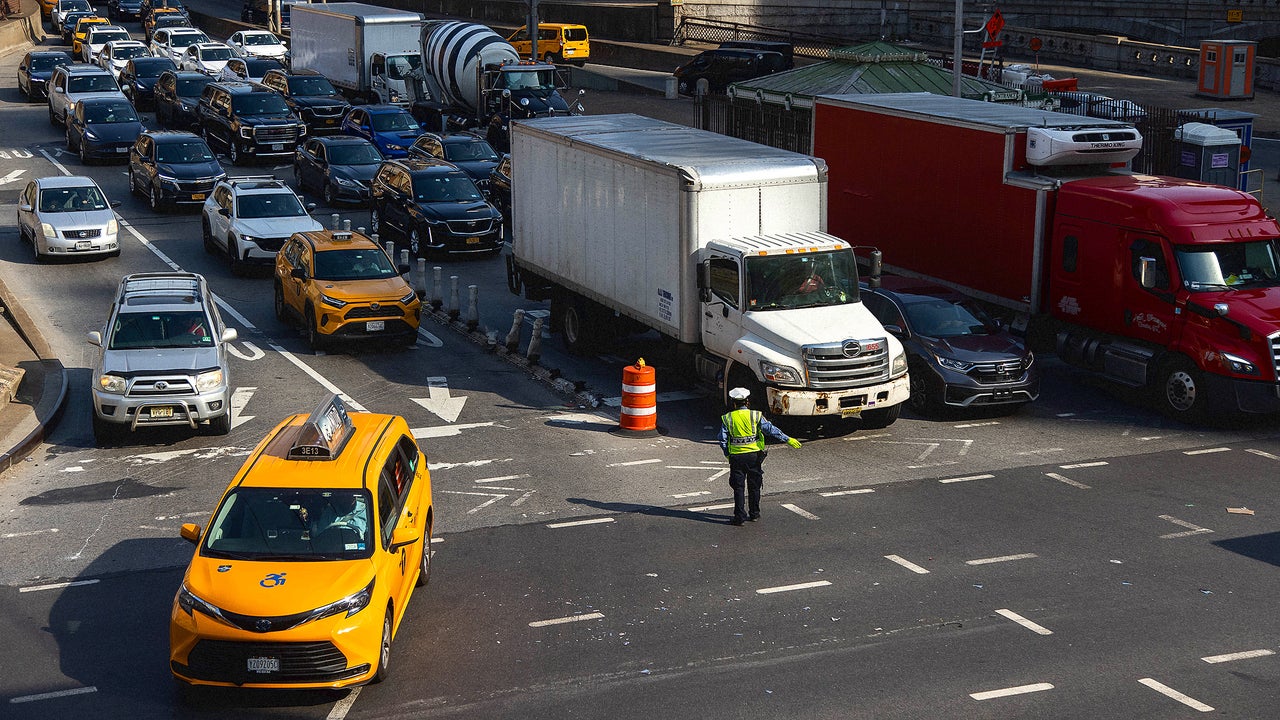
FastCompany: American cities are choking on traffic . From Los Angeles to Chicago, Atlanta to Boston, gridlock is miserable for everyone. New York City’s Congestion Relief Zone offers a data-rich blueprint for cities willing to treat transportation as a system, rather than focusing on one form of travel at a time. Launched in January 2025, the program charges most drivers entering Manhattan’s core business district during peak hours. The Metropolitan Transportation Authority’s (MTA) first comprehensive evaluation report, released in January 2026, shows clear success across mobility, environment, revenue, and equity metrics. The haters are flummoxed.
{"blockType":"mv-promo-block","data":{"imageDesktopUrl":"https:\/\/images.fastcompany.com\/image\/upload\/f_webp,q_auto,c_fit\/wp-cms-2\/2025\/12\/speakeasy-desktop.png","imageMobileUrl":"https:\/\/images.fastcompany.com\/image\/upload\/f_webp,q_auto,c_fit\/wp-cms-2\/2025\/12\/speakeasy-mobile.png","eyebrow":"","headline":"\u003Cstrong\u003ESubscribe to Urbanism Speakeasy\u003C\/strong\u003E","dek":"Join Andy Boenau as he explores ideas that the infrastructure status quo would rather keep quiet.
To learn more, visit \u003Ca href=\u0022http:\/\/urbanismspeakeasy.com\/\u0022\u003Eurbanismspeakeasy.com.\u003C\/a\u003E","subhed":"","description":"","ctaText":"SIGN UP","ctaUrl":"http:\/\/urbanismspeakeasy.com\/","theme":{"bg":"#f5f5f5","text":"#000000","eyebrow":"#9aa2aa","subhed":"#ffffff","buttonBg":"#000000","buttonHoverBg":"#3b3f46","buttonText":"#ffffff"},"imageDesktopId":91453933,"imageMobileId":91453932,"shareable":false,"slug":"","wpCssClasses":""}} More movement Decongestion Pricing works by making drivers pay a fee towards the cost of clogging city streets.
Even with a modest $9 in one of the world’s most congested areas, the results are impressive: Vehicle entries into the zone fell 11%, with more than 27 million fewer entries in the first year. Vehicle miles traveled inside the zone dropped 7.1%. Speeds rose 4.6% year-over-year during toll hours across the zone and key roadways. Morning peak speeds on major crossings into Manhattan (bridges and tunnels) improved an average of 23%, with standout gains like the Holland Tunnel at +51%. Trucks moved 5.6% faster. Travel times became more reliable, without commuters or delivery trucks causing widespread spillover delays on surrounding corridors.
Commuters who used to drive alone are shifting some trips to off-peak times, spreading demand and reducing the worst bottlenecks. Real benefits for low-income residents “But what about people who can’t afford a $9 toll” was one of the early questions. MTA’s Low-Income Discount Plan provides a 50% discount on peak tolls for eligible drivers with incomes ≤ $50,000 or in qualifying assistance programs. Residents inside the decongestion zone with incomes under $60,000 can claim a state tax credit covering tolls paid.
Most low- and moderate-income households in metro areas already depend on buses, trains, and walking rather than driving into downtown. Faster bus speeds, growing ridership, and revenue-funded upgrades deliver disproportionate benefits. For families without cars (the majority in many urban low-income households) the program means quieter streets, safer crossings, fewer health impacts from pollution, and a better-funded transit network that connects them to jobs and opportunity.
Article truncated for readability. Read the full piece →
The article discusses a significant urban transportation strategy that could influence brand and design professionals focused on sustainability and urban planning, though similar concepts have been explored before.